The Call to Repentance: John the Baptist's Message in the Wilderness
“John did baptize in the wilderness, and preach the baptism of repentance for the remission of sins.” — Mark 1:4
Mark 1:4 states, "John did baptize in the wilderness, and preach the baptism of repentance for the remission of sins." This passage, though brief, opens vast insights into the heart of God and His desire for humanity to draw near to Him through repentance. It sets the stage for the coming of the Messiah, demonstrating how essential repentance is in our journey of faith.
John the Baptist is one of the most compelling figures in the New Testament. His very existence was a fulfillment of prophecy, heralding the arrival of Christ. Mark locates John in the wilderness, a place often associated with desolation yet also a region of profound revelation and transformation. Just as the Israelites encountered God in the wilderness, John, too, found his calling amidst the dusty trails and wild terrain. This choice of location is no accident. The wilderness represents a stripping away of distractions, a space where one can hear the still, small voice of God. Here, John’s voice cries out, echoing the words of the prophets of old, preparing the hearts of the people who are yearning for redemption.
The essence of John’s ministry was "the baptism of repentance for the remission of sins." In Hebrew thought, repentance (or ‘teshuva’) is not merely a feeling of sorrow but a transformative act of returning to God, a decision to turn away from sin and towards the holiness of God. Baptism, in John's context, was an outward sign of this inward change. The people who came to him were required to confront their sins actively and acknowledge their desperate need for God’s grace. This was not a mere ritual; it was a demonstration of willingness to abandon their old lives for the promise of a new one.
The term "remission of sins" speaks to the profound nature of God's forgiveness. ‘Remission’ implies a release from the bondage of guilt and shame. It offers an assurance that no sin is too great to separate us from God’s love. Through repentance and acceptance of baptism, individuals are invited into a transformative relationship with God where their past is washed away and they are presented anew.
In our modern world, the concept of repentance may seem archaic or burdensome, yet it is precisely what many seek in their quest for peace and fulfillment. We observe how society is often sated with superficial pursuits, leading to an existence devoid of genuine connection with the Creator. In this respect, John’s message echoes ever louder: we must be willing to set aside our pride and stand before God in humility, acknowledging our wrongdoings.
Furthermore, John's calling was radical—much like the call of God in our own lives. It invites us to think deeply about our responses to sin and about how we approach our spirituality. Are we merely going through motions, or are we genuinely engaging in introspection and allowing God to work within us? The wilderness experience is a powerful metaphor for the journey we must take. It isn't comfortable, and it requires vulnerability, but it is in this space that God meets us.
The message of repentance prepares our hearts to fully embrace the grace that comes through Jesus Christ. It allows us to see our need for a Savior in a profound way. As we reflect on Mark 1:4, we find that our response must be twofold: to repent of our sins and to welcome Christ into every aspect of our lives. The act of repentance is a doorway that opens up to a rich relationship with God, leading us into the fullness of life He desires for each of us.
As we meditate on John’s baptism of repentance, let us approach the Lord with sincerity, being willing to lay down our sins, and to accept the remissions He freely offers through Jesus Christ. Let today be a day where we step into the wilderness with faith, seeking Him for transformation and renewal, confident that He is ready to meet us there.
Get our apps


Artwork for Mark 1:4
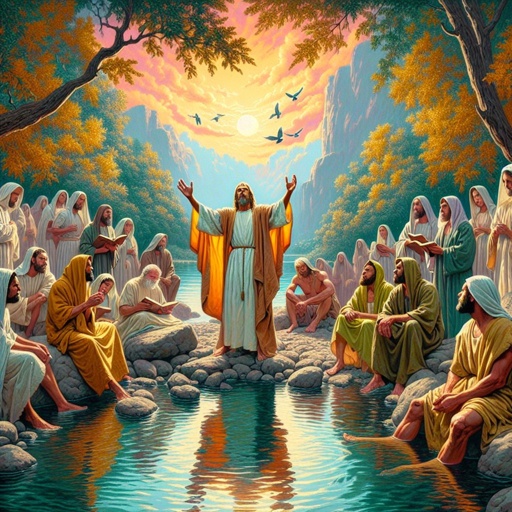
Mark 1:4 - "John did baptize in the wilderness, and preach the baptism of repentance for the remission of sins."

"John did baptize in the wilderness, and preach the baptism of repentance for the remission of sins." - Mark 1:4

Mark 2:4

mark 2:4

mark 2:4

mark 2:4

mark 2:4

Mark 4:41

Mark 4:41

mark 2:4

Mark 4:41

mark 2:4

Mark 4:41

Mark 4:1 - "And he began again to teach by the sea side: and there was gathered unto him a great multitude, so that he entered into a ship, and sat in the sea; and the whole multitude was by the sea on the land."

Mark 4:14 - "¶ The sower soweth the word."

Mark 4:36-37

Mark 4:36-37

Mark 16:4-5

Mark 16:4-5

Mark 16:4-5

Mark 4:35-37

Mark 4:35-41

Mark 4:4 - "And it came to pass, as he sowed, some fell by the way side, and the fowls of the air came and devoured it up."

Mark 4:18 - "And these are they which are sown among thorns; such as hear the word,"

Mark 4:3 - "Hearken; Behold, there went out a sower to sow:"

Mark 9:2 Show only 4 people Show a mountain area According to Mark 9:2

"¶ The sower soweth the word." - Mark 4:14

Mark 16:4 - "And when they looked, they saw that the stone was rolled away: for it was very great."

Mark 4:23 - "If any man have ears to hear, let him hear."

Mark 9:4 - "And there appeared unto them Elias with Moses: and they were talking with Jesus."