The Weight of Grief and the Promise of Resurrection
“And when his disciples heard of it, they came and took up his corpse, and laid it in a tomb.” — Mark 6:29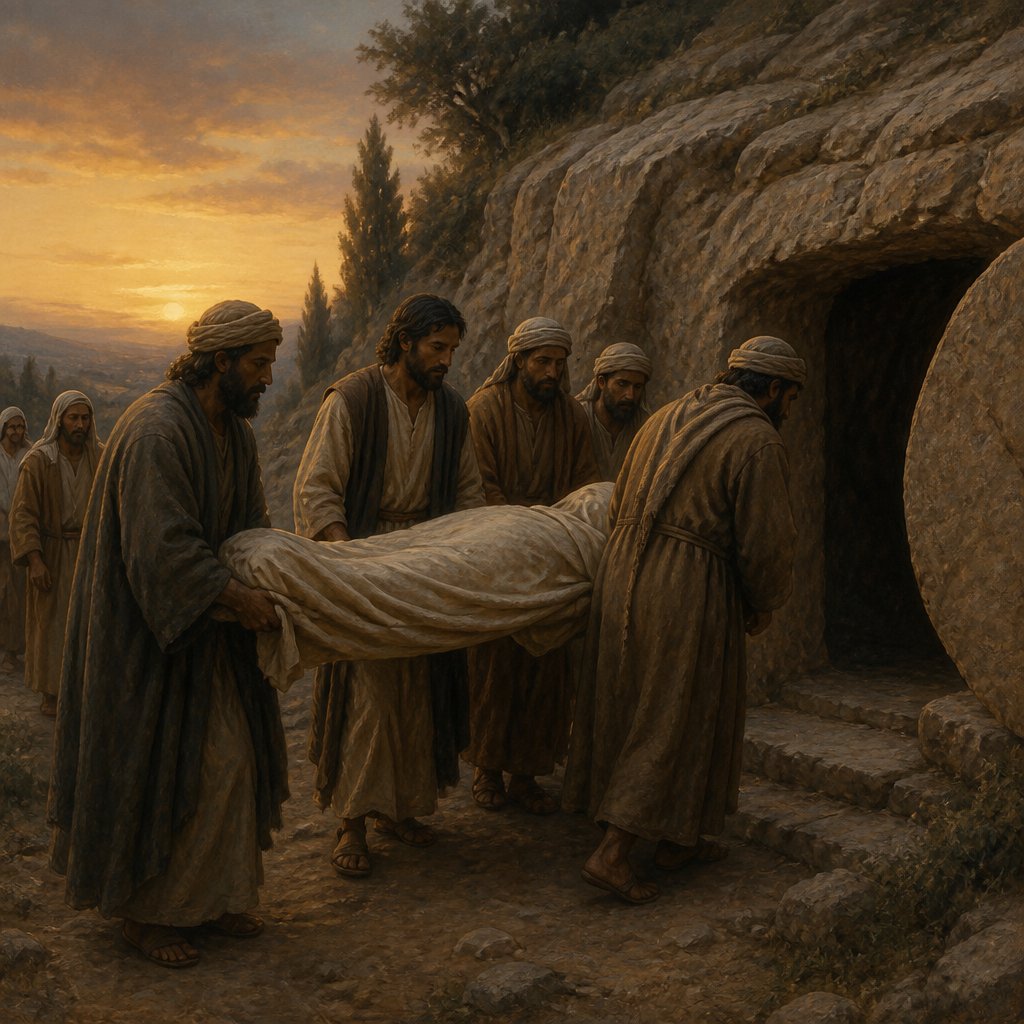
Mark 6:29 reads, "And when his disciples heard of it, they came and took up his corpse, and laid it in a tomb." This scripture alludes to one of the profound moments in the New Testament—the aftermath of the beheading of John the Baptist. The narrative captures the deep sorrow and profound loss that the disciples felt as they dealt with the death of their beloved leader.
Grief is part of the human experience, and in this verse, we witness the pain of loss in a profound way. The disciples had witnessed countless miracles and teachings alongside John, and his tragic end must have felt surreal and devastating. Their grief symbolizes the universal experience of mourning; it reminds us that even the holiest among us are not shielded from sorrow. In a world often filled with uncertainty, we may find ourselves standing at various tombs of grief—whether due to the loss of a loved one, a broken relationship, a lost dream, or any number of heartbreaking circumstances. In those moments, our faith can seem fragile, and our understanding of God's plan can feel endlessly elusive.
Yet, as we consider the actions of the disciples in this verse, we gain insight into how to navigate our own grief. They did not leave John’s body unattended nor did they ignore their heartbreak. Instead, they mourned his death honorably and respectfully. They took the time to gather his remains, laying them in a tomb—the final act of love and respect for a prophet who had dedicated his life to God’s service. There is a lesson in their response: it’s vital to confront our grief rather than avoid it. We are encouraged to acknowledge our pain, to grieve openly and honestly, and to provide ourselves and others the space necessary to heal.
The act of laying John’s body in a tomb also symbolizes the transition from life to death—a physical act that reflects the spiritual battles we all must confront. In laying him to rest, they acknowledged the finality of death. The tomb, however, also serves as a potent symbol of hope. Jesus, who would soon demonstrate the ultimate triumph over death, would teach that death is not the end but merely a transition to a new beginning. The resurrection of Christ assures us that just as He rose from the dead, there is hope beyond the grave.
In our moments of despair, we must remember that while we may lay to rest our dreams and loved ones, we do not lay to rest our faith. In fact, it is precisely in those graves of loss where our faith can be refined. Just as the disciples demonstrated their love for John in his burial, we can express our love for those we’ve lost through acts of remembrance, celebration of their lives, and impacting the world as they did. We can turn our sorrow into service and honor their memory by living out the values and principles they taught us.
Moreover, as we confront our losses, we ought to be mindful of the transformative power of community. The disciples banded together during this sorrowful time, providing one another with the support they needed. In our trials, let us lean on our church family, friends, and loved ones. We, too, can be agents of comfort for one another in times of grief and despair, bearing each other’s burdens and sharing in others’ joys and sorrows.
In conclusion, Mark 6:29 is a powerful reminder that grief is real and should be honored. But, it is also a prelude to the promise of resurrection and hope. As we carry our own corpses of pain, let us be reminded of the empty tomb, that even in the depths of our sorrow, there is a promise of life anew. May we rest in the assurance that every grave can become a garden, and every painful goodbye can lead to a profound hello when we place our trust in God.
Get our apps


Artwork for Mark 6:29

Mark 6:29 - "And when his disciples heard of it, they came and took up his corpse, and laid it in a tomb."
"And when his disciples heard of it, they came and took up his corpse, and laid it in a tomb." - Mark 6:29

Mark 6:1-6

Mark 14:29 - "But Peter said unto him, Although all shall be offended, yet will not I."

Mark 4:29 - "But when the fruit is brought forth, immediately he putteth in the sickle, because the harvest is come."

Mark 9:29 - "And he said unto them, This kind can come forth by nothing, but by prayer and fasting."

Mark 1:29 - "And forthwith, when they were come out of the synagogue, they entered into the house of Simon and Andrew, with James and John."

Mark 5:29 - "And straightway the fountain of her blood was dried up; and she felt in her body that she was healed of that plague."

Mark 7:29 - "And he said unto her, For this saying go thy way; the devil is gone out of thy daughter."

Isaiah 29:6

Mark 15:29 - "And they that passed by railed on him, wagging their heads, and saying, Ah, thou that destroyest the temple, and buildest it in three days,"

Genesis 29-6

Mark 12:29 - "And Jesus answered him, The first of all the commandments is, Hear, O Israel; The Lord our God is one Lord:"

Mark 16:6-8

Mark 16:6-8

Mark 6:6 - "And he marvelled because of their unbelief. And he went round about the villages, teaching."

Mark 13:29 - "So ye in like manner, when ye shall see these things come to pass, know that it is nigh, even at the doors."

Mark 16:6-8

Mark 6:32 - "And they departed into a desert place by ship privately."
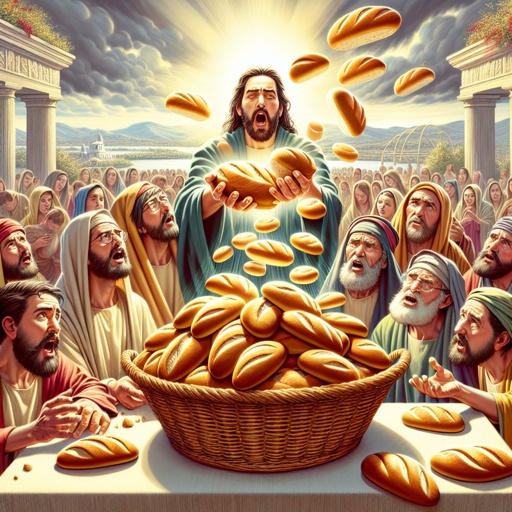
Mark 6:52 - "For they considered not the miracle of the loaves: for their heart was hardened."

Mark 6:9 - "But be shod with sandals; and not put on two coats."

Mark 6:40 - "And they sat down in ranks, by hundreds, and by fifties."

Mark 6:42 - "And they did all eat, and were filled."

Mark 8:29 - "And he saith unto them, But whom say ye that I am? And Peter answereth and saith unto him, Thou art the Christ."

Mark 2:6 - "But there were certain of the scribes sitting there, and reasoning in their hearts,"
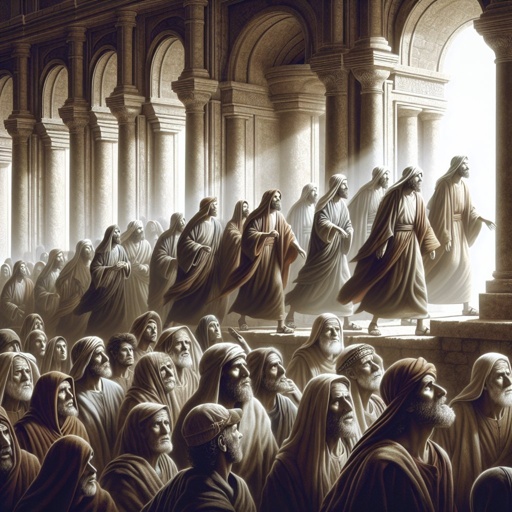
Mark 6:12 - "And they went out, and preached that men should repent."

Mark 6:43 - "And they took up twelve baskets full of the fragments, and of the fishes."

Mark 9:6 - "For he wist not what to say; for they were sore afraid."

Mark 6:44 - "And they that did eat of the loaves were about five thousand men."

Mark 6:15 - "Others said, That it is Elias. And others said, That it is a prophet, or as one of the prophets."