Cleansing the Heart: The True Nature of Purity
"And when they come from the market, except they wash, they eat not. And many other things there be, which they have received to hold, as the washing of cups, and pots, brasen vessels, and of tables." - Mark 7:4
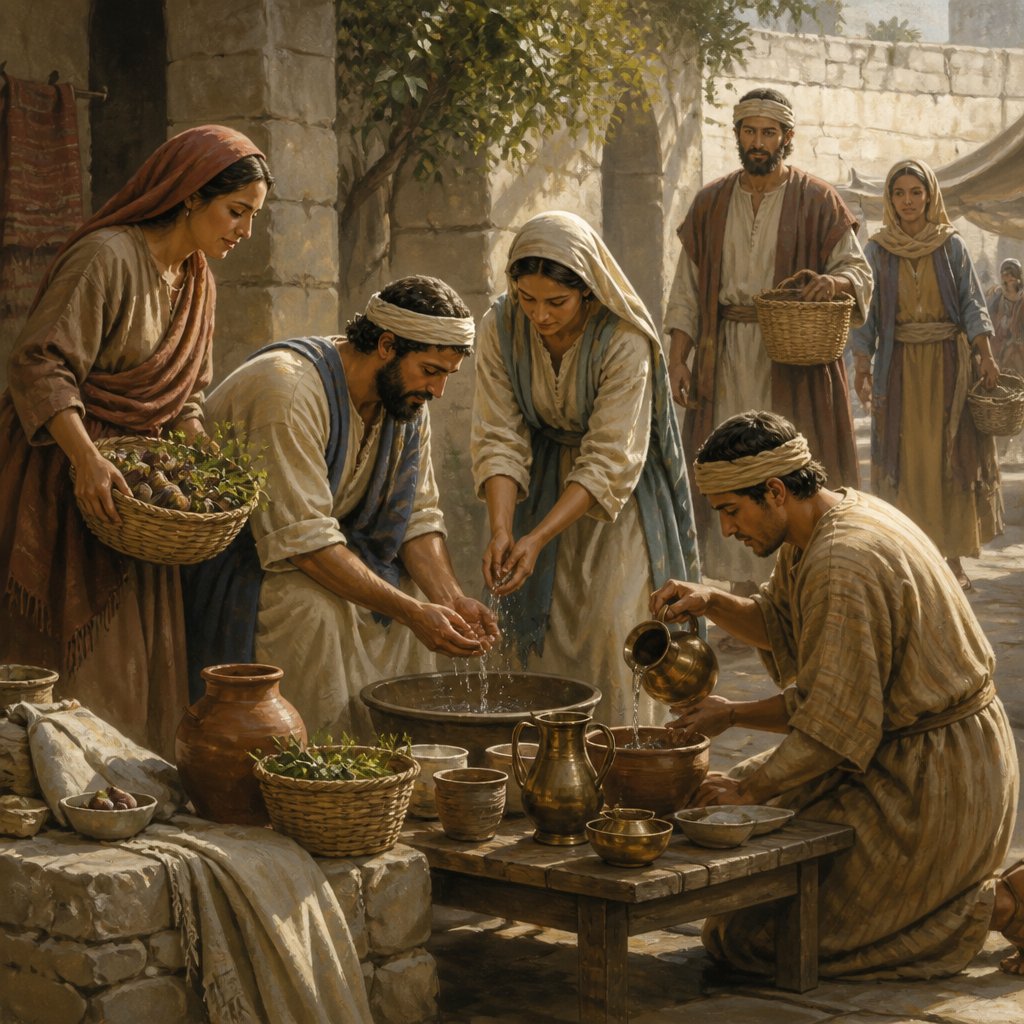
In Mark 7:4, we encounter a powerful reminder of the heart's true intentions in relation to the traditions of ritual purity. The verse states, "And when they come from the market, except they wash, they eat not. And many other things there be, which they have received to hold, as the washing of cups, and pots, brasen vessels, and of tables." This scriptural passage speaks volumes about the external practices that people have a tendency to prioritize over the internal attitude of the heart.
At first glance, the act of washing oneself or one's possessions before meals may seem like a reasonable and even sensible practice. Indeed, cleanliness is essential in our everyday lives. However, in the context of the Jewish leaders of Jesus' time, such rituals had evolved from practical health guidelines into legalistic traditions that overshadowed the moral requirements of the Law. The Pharisees and scribes upheld these customs with such conviction that they added unnecessary burdens to the faithful, twisting God's intentions for purity into mere external observances.
This understanding challenges us to reflect on our own lives and practices in light of our faith. How often do we find ourselves focusing on actions that appear righteous on the surface but lack the genuine sincerity of an honest heart? Jesus' confrontation with the scribes highlights the necessity to examine the origins of our worship, filtering out the noise of tradition that distracts from our spiritual core. In looking towards the marketplace of our own lives, we must ask ourselves—it is not enough to simply wash our hands if our hearts remain unclean.
In both Jesus’ teaching and in our examination of this verse, we recognize that purity is not solely defined by outward behaviors and rituals. Instead, it resides in the depths of our hearts and minds. Our actions may reflect righteousness, but does our motivation come from a place of love for God? Does our behavior align genuinely with our faith in Jesus Christ? When we come to God, do we bring everything we are—our worship, our prayers, our service—washed in the cleansing power of His forgiveness? Or do we present to Him the stained remnants of a heart that has been untouched by grace?
Furthermore, the descriptions of the items—the cups, pots, brasen vessels, and tables—symbolize aspects of life that often carry baggage from our transactional relationships with the world around us. Each of these vessels can hold within them physical representations of our spirituality. A cup filled but dirty can represent prayers uttered without sincerity; pots that are meticulously washed but never filled can symbolize acts of charity done for approval rather than love. We must strive to ensure that the vessels of our lives not only maintain an appearance of cleanliness but also overflow with the Living Water that is Jesus Christ.
Looking beyond the purview of physical cleanliness, Mark 7:4 invites us to embrace a deeper understanding of inward transformation, echoing the sentiments of Isaiah 29:13: "Wherefore the Lord said, Forasmuch as this people draw near me with their mouth, and with their lips do honour me, but have removed their heart far from me, and their fear toward me is taught by the precept of men." True worship requires an alignment of our hearts, motivations, and actions.
In this season, let us bring our lives into alignment with the heart of God. May we abandon empty traditions and superficial commitments and press into a genuine relationship with Him. We are called to be vessels of righteousness, not merely washed cups, for the greatest purification comes through Christ, who can make our hearts whole and holy. Pray for that cleansing, lean into true intimacy with your Creator, and find that the most profound rituals originate from the love and grace given to us freely in Christ.
Want to reflect more on Mark 7:4?
Continue your spiritual journey with Bible Chat — an AI-powered tool for exploring God's Word through conversation. Ask questions, discover connections, and deepen your understanding.
Get Our Apps


Mark 7:4 Artwork

Mark 7:4 - "And when they come from the market, except they wash, they eat not. And many other things there be, which they have received to hold, as the washing of cups, and pots, brasen vessels, and of tables."
"And when they come from the market, except they wash, they eat not. And many other things there be, which they have received to hold, as the washing of cups, and pots, brasen vessels, and of tables." - Mark 7:4

Mark 4:7 - "And some fell among thorns, and the thorns grew up, and choked it, and it yielded no fruit."

"And some fell among thorns, and the thorns grew up, and choked it, and it yielded no fruit." - Mark 4:7

Mark 13:7

Mark 13:7

Mark 8:7

Mark 13:7

Mark 7:7 - "Howbeit in vain do they worship me, teaching for doctrines the commandments of men."

mark 2:4

mark 2:4

mark 2:4

mark 2:4

Mark 4:41

Mark 4:41

mark 2:4

Mark 4:41

Mark 2:4

mark 2:4

Mark 4:41

Mark 7:31-37

Mark 7:31-37

Mark 4:36-37

Mark 4:36-37

Mark 16:4-5

Mark 16:4-5

Mark 16:4-5

Mark 4:35-37

Mark 4:14 - "¶ The sower soweth the word."

Mark 4:35-41