The Overflow of Grace: Lessons from the Seven Baskets
“And when the seven among four thousand, how many baskets full of fragments took ye up? And they said, Seven.” — Mark 8:20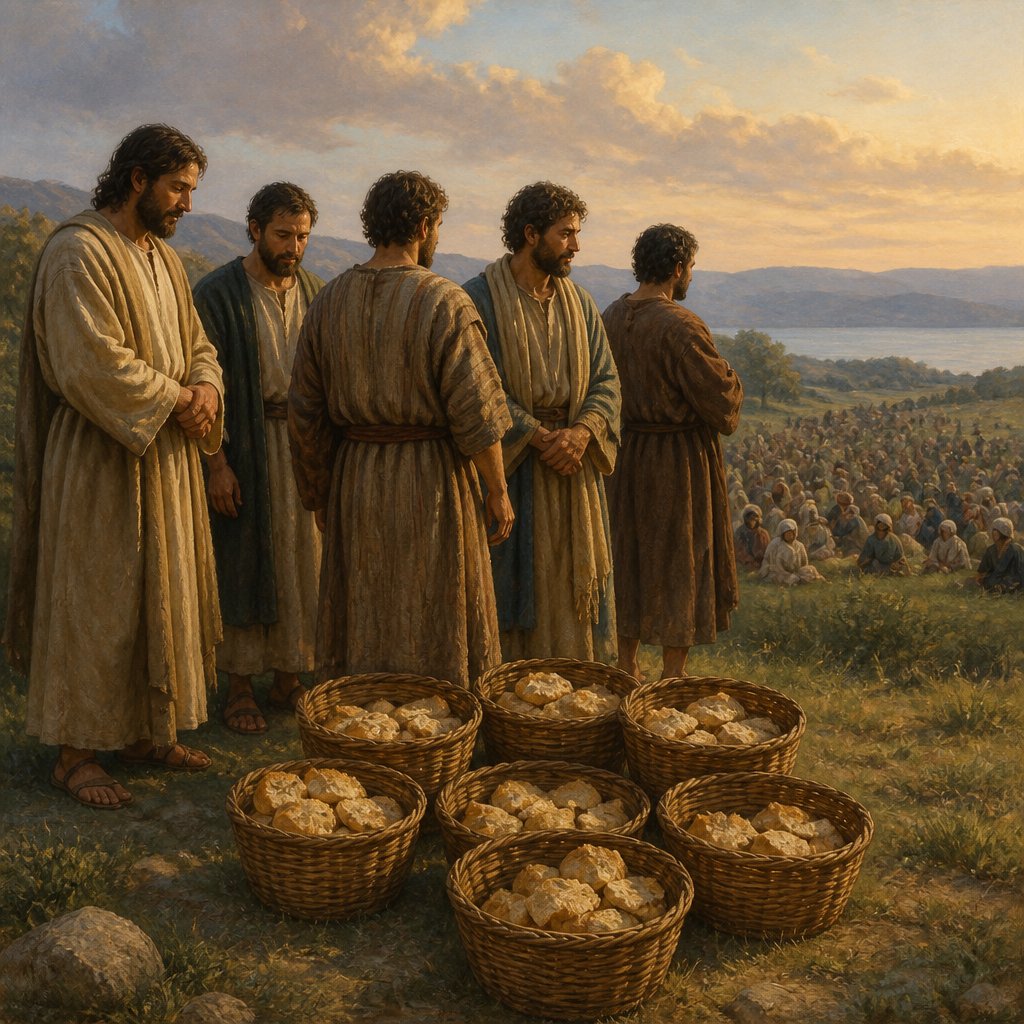
As we turn to Mark 8:20, we find ourselves in the midst of a miraculous feeding—an event that showcases not only the power of Jesus but also the profound lessons about abundance, faith, and God's provision. The King James Version (KJV) of this verse states, "And when the seven among four thousand, how many baskets full of fragments took ye up? And they said, Seven." This inquiry from Jesus following the feeding of the four thousand serves not just as a historical reference but as a powerful reminder of God’s overwhelming grace and sufficiency.
In the context of this passage, Jesus had just performed a miracle, feeding four thousand men, not including women and children, with just seven loaves of bread and a few fish. Like other narratives of provision in scripture, this event illustrates a central theme of God’s Kingdom: divine abundance. Often, we find ourselves feeling inadequate or overwhelmed by the needs around us, just as the disciples did. They questioned how they could possibly feed such a large crowd with so little. Yet, Jesus invites them to recognize that when brought to Him, even our meager provisions can become more than enough.
When Jesus asked how many baskets were left over, the disciples responded, "Seven." Seven in biblical numerology often symbolizes completeness and perfection. In this context, it serves as a sign that, despite the limitations of the resources available, God has a way of providing that is perfect and sufficient for every need. The overflow of fragments in seven baskets suggests a reminder that when we trust in God's ability to provide, we don’t just receive what we need, but, joyfully, far more than we could ever imagine.
This moment beckons us to pause and reflect on our own lives. How often do we find ourselves in situations where we feel like we lack? Perhaps it’s in our finances, our relationships, or even in our spiritual walks. We can easily become consumed by the scarcity we perceive, missing out on the fullness of His provision. Just as in this passage, the first step is recognizing the little we have—our seven loaves and fish, if you will—and bringing them before the Lord.
Moreover, this passage encourages us to remember that God's mathematics is unlike ours. Where we see limited resources, He sees the potential for multiplication. The act of gathering the fragments—the leftovers—speaks volumes about God's abundant care for every detail in our lives. Nothing is wasted; every crumb carries importance in God’s economy. It poses a challenge to us to be diligent stewards of what has been entrusted to us, not overlooking the seemingly insignificant.
Let's also consider the symbolism of the baskets. They are vessels of gathering, representing our hearts and lives. God invites us to be those baskets that hold and share His provisions with others in need. In doing so, we participate in the miraculous work of God, just as the disciples did. When we trust Him, our lives can become overflowing baskets of grace, compassion, and abundance for those around us.
In conclusion, Mark 8:20 calls us to a deeper understanding of God’s ability to provide. Whether we are in want or abundance, we must remember to count our blessings and offer up our needs and resources to Him. As we do, let us expectantly witness how God can take our meager offerings—and sometimes our very struggles—and transform them into abundant blessings. Let us walk in the assurance that from the leftovers, He can do exceedingly abundantly above all that we ask or think (Ephesians 3:20), leaving us with reminders of His faithfulness to inspire our hearts to trust Him more deeply every day.
Get our apps


Artwork for Mark 8:20
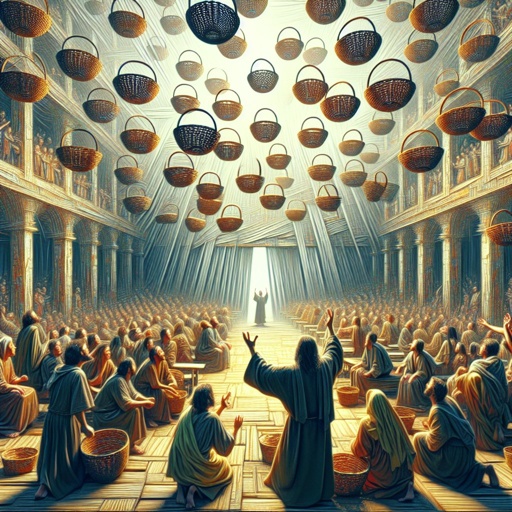
Mark 8:20 - "And when the seven among four thousand, how many baskets full of fragments took ye up? And they said, Seven."
"And when the seven among four thousand, how many baskets full of fragments took ye up? And they said, Seven." - Mark 8:20

Mark 16:20
Mark 16:20

Mark 16:20

Mark 16:20
Mark 16:20

1 Samuel 20:20 - "And I will shoot three arrows on the side thereof, as though I shot at a mark."

Mark 8:35

Mark 8:35

Mark 12:8

Mark 13:8
Mark 13:8

Mark 8:35

Mark 13:8

Mark 8:7

Mark 8:35

Mark 12:8

Mark 2:8

Mark 8:27 - 35

Mark 8:27 - 35

Mark 16:6-8

Mark 8:27 - 35

Mark 8:27 - 35

Mark 16:6-8

Mark 7:20 - "And he said, That which cometh out of the man, that defileth the man."

Mark 8:27 - 35

Mark 16:6-8

Mark 11:20 - "¶ And in the morning, as they passed by, they saw the fig tree dried up from the roots."

Mark 8:8 - "So they did eat, and were filled: and they took up of the broken meat that was left seven baskets."