Embracing the Divine's Controversial Embrace: The Wisdom of Sonship
"The Son of man came eating and drinking, and they say, Behold a man gluttonous, and a winebibber, a friend of publicans and sinners. But wisdom is justified of her children." - Matthew 11:19
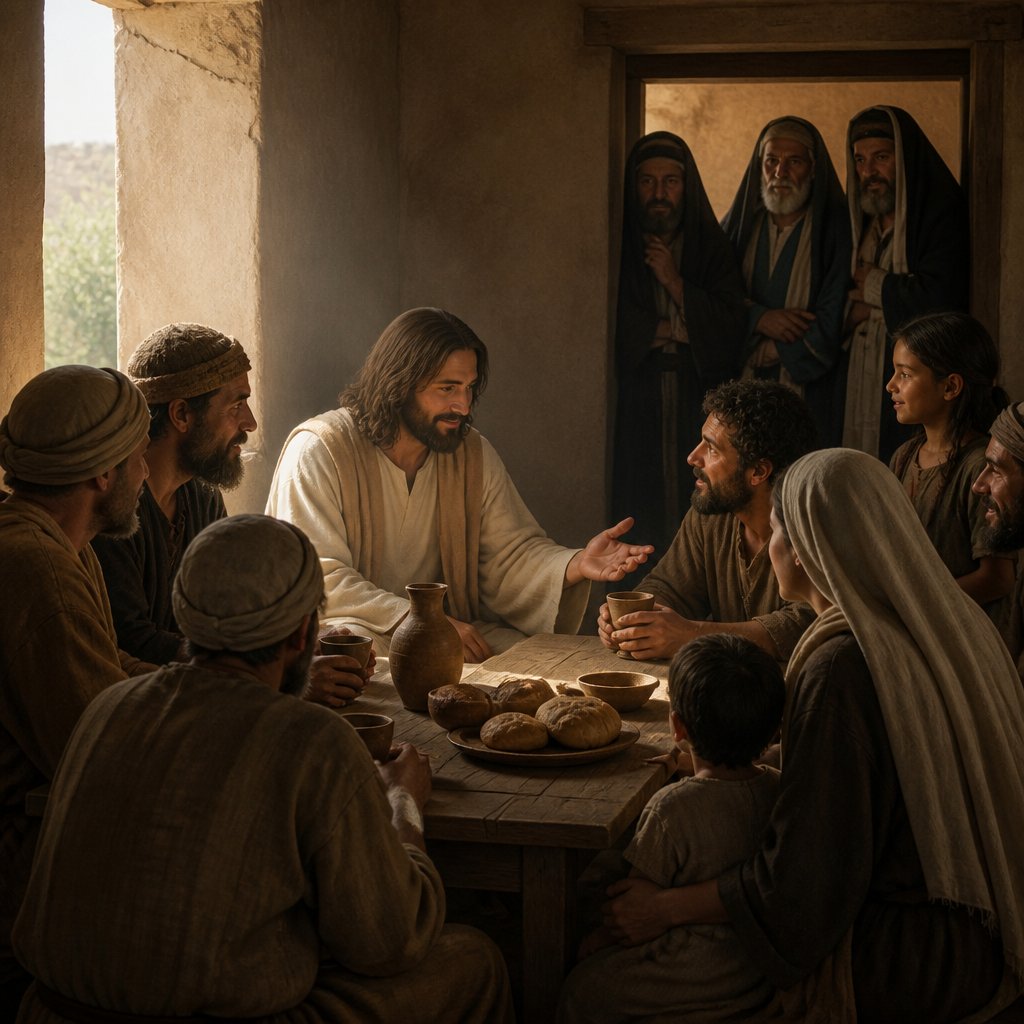
In Matthew 11:19, we encounter a crucial moment that reveals some of the misunderstandings about the ministry and nature of Jesus Christ: "The Son of man came eating and drinking, and they say, Behold a man gluttonous, and a winebibber, a friend of publicans and sinners. But wisdom is justified of her children." This verse encapsulates the very heart of Jesus’ radical message and the identity of those who accept it, prompting us to reflect deeply on what it means to follow Christ in a world filled with judgment.
At first glance, this verse presents a startling contrast: the Savior of the world, God incarnate, engaging in the most human activities—eating and drinking. This should evoke a sense of familiarity and comfort; yet, it seemed to provoke the ire of the religious elite of His time. They called him "gluttonous" and a "winebibber," terms that were meant to invoke disdain and disapproval. Yet we see here a profound aspect of Jesus’ ministry—His willingness to share in the very fabric of human life.
To understand the depth of this passage, we must first recognize the context. During His earthly ministry, Jesus surrounded Himself with the marginalized and the outcast, engaging with publicans (tax collectors) and sinners. These were individuals whom society deemed unworthy of respect or love, yet they were the very ones whom Jesus sought to uplift, redeem, and embrace. In calling Jesus a "friend of publicans and sinners," His opponents were not paying Him a compliment; they were accusing Him of compromising purity and piety. However, this accusation reveals the heart of the Gospel—that Jesus came to seek and save the lost (Luke 19:10).
In this light, the phrase "wisdom is justified of her children" resonates powerfully. Wisdom here is personified, linking back to Proverbs, where wisdom calls out to humanity, inviting us into a relationship that often contradicts societal norms and expectations. Jesus embodies this wisdom—coming not to condemn those labeled as outcasts but to offer them healing and a right relationship with God. His choices reflected the priorities of heaven, which often stood at odds with human expectation. For those who encountered Jesus, the wisdom of His actions was validated through the lives transformed by His love and grace—"justified of her children."
As believers, we are called to emulate the heart of Christ. This means adopting a stance of radical love and inclusion, much like Jesus did, challenging our perceptions of who deserves acceptance. In a world that often emphasizes boundaries and divides, we must ask ourselves: Who are the "publicans and sinners" in our context? In what ways do we draw lines that Jesus would not? Are we willing to dine with those who seem unworthy in the eyes of society? Christ's example urges us to extend grace and mercy freely, recognizing that we too are recipients of divine love that surpasses our failings.
In our personal and communal lives, embracing this wisdom challenges us to reassess our attitudes toward those who differ from us—whether regarding lifestyle, beliefs, or social status. The Gospel calls us to an open-heartedness that seeks to understand and engage rather than to judge. We are reminded that our "friendship" with Christ should lead to friendships with those marginalized by the world. Each story of transformation, grace, and acceptance in the life of another serves as a testament to the wisdom of God’s ways manifesting in our generation.
Let this truth sink deep into our hearts—Jesus did not shy away from the messiness of humanity but instead dwelled in it, revealing that love is often found in unexpected places. As we journey forward, may we, like Christ, be bearers of love who courageously reach out into our communities, embodying the wisdom that is justified by the transformations in the lives of those whom we touch. May our lives reflect the graciousness and boldness shown by our Savior, pointing others to the radical love of God in a world desperately in need of it.
Want to reflect more on Matthew 11:19?
Continue your spiritual journey with Bible Chat — an AI-powered tool for exploring God's Word through conversation. Ask questions, discover connections, and deepen your understanding.
Get Our Apps


Matthew 11:19 Artwork

Matthew 11:19 - "The Son of man came eating and drinking, and they say, Behold a man gluttonous, and a winebibber, a friend of publicans and sinners. But wisdom is justified of her children."
"The Son of man came eating and drinking, and they say, Behold a man gluttonous, and a winebibber, a friend of publicans and sinners. But wisdom is justified of her children." - Matthew 11:19

Matthew 19:11 - "But he said unto them, All men cannot receive this saying, save they to whom it is given."

Matthew 11:3

"But he said unto them, All men cannot receive this saying, save they to whom it is given." - Matthew 19:11

matthew 28:19

Matthew 19:26

matthew 28:19

Matthew 19:13

Matthew 19:19 - "Honour thy father and thy mother: and, Thou shalt love thy neighbour as thyself."

Matthew 3:11

Matthew 3:11

Matthew 3:11

Matthew 3:11

Matthew 3:11

Matthew 3:11

Matthew 28:19-20

Matthew 3:11-12

Matthew 3:11-12

Matthew 28: 19-20

Matthew 28:19-20

Matthew 19:16-17

Matthew 28:19-20

Matthew 3:11

Matthew 3:11

Matthew 3:11

Ezekiel 28:11-19

Ezekiel 28:11-19

Matthew 11:1

Matthew 11:1