The Law of Love: Healing Beyond Boundaries
“And, behold, there was a man which had his hand withered. And they asked him, saying, Is it lawful to heal on the sabbath days? that they might accuse him. And he said unto them, What man shall there be among you, that shall have one sheep, and if it fall into a pit on the sabbath day, will he not lay hold on it, and lift it out? How much then is a man better than a sheep? Wherefore it is lawful to do well on the sabbath days.” — Matthew 12:10-12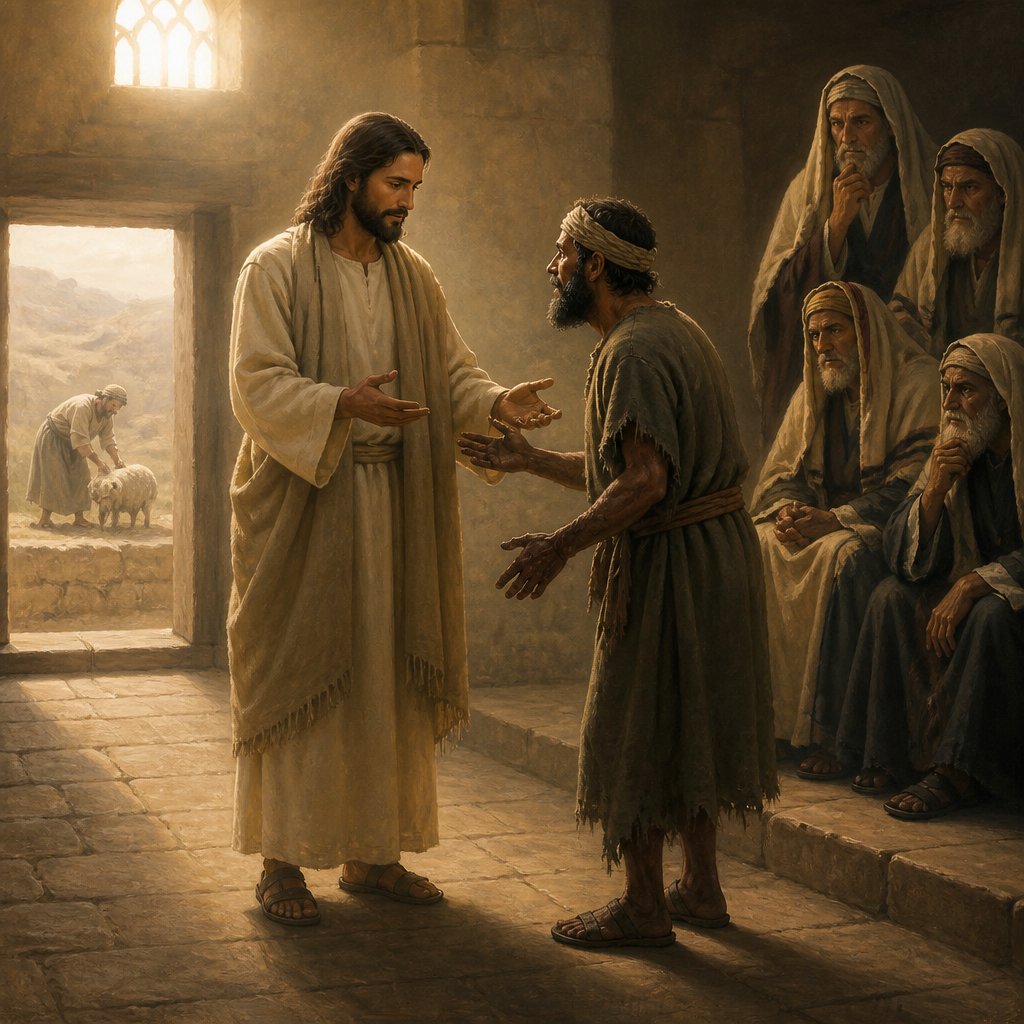
In the Gospel of Matthew, chapter 12, verses 10-12, we are presented with a poignant encounter that encapsulates the essence of Jesus’ ministry and the very heart of God’s law. The verses state: "And, behold, there was a man which had his hand withered. And they asked him, saying, Is it lawful to heal on the sabbath days? that they might accuse him. And he said unto them, What man shall there be among you, that shall have one sheep, and if it fall into a pit on the sabbath day, will he not lay hold on it, and lift it out? How much then is a man better than a sheep? Wherefore it is lawful to do well on the sabbath days."
At first glance, the plot unfolds with judicial intent. The Pharisees, deeply entrenched in their own understanding of the Law, confront Jesus not merely with a question but with a scheme to entrap Him. Their intent was clear—they sought to find grounds to accuse Him of violating the Sabbath. The man with the withered hand—his condition serving as both a physical manifestation of suffering and a living testimony to the limitations of strict legalism—stands in the midst of this theological battleground.
In framing their question, the Pharisees placed the law above compassion. Yet, in response, Jesus demonstrates profound wisdom. He reframes the debate by invoking a relatable scenario: if one of their sheep—a valued possession—were to fall into a pit on the Sabbath, wouldn’t they act to rescue it? His question cuts through their rigid reasoning, emphasizing that mercy and love are the true fulfillments of the Law. Herein lies a pivotal truth: the compassion of God transcends the mere observance of rules.
Jesus’ logic is compelling. If care for an animal is permissible, how much more should the healing of a person—a being created in the image of God—be allowed? This simple, yet profound, parable reveals an essential principle of God’s heart: the prioritization of human welfare over ritualistic observances. How often do we find ourselves caught in a similar quagmire of legalism, where rules overshadow relationships? In our desire to adhere to expectations—whether they be societal, religious, or personal—do we sometimes neglect the call to love and extend grace?
The message of healing on the Sabbath emphasizes that God’s law is rooted in love. If we are to live out our faith effectively, we must understand that love is the motivation behind every commandment. This incident invites each of us to re-evaluate our approach to Church, community, and life in general. Are we known for our mercy, our acts of kindness, and our willingness to assist those in distress? Or do we find ourselves more often arguing about the ‘rules’ than acting in love?
This passage also serves as a potent reminder of our responsibility as the hands and feet of Christ. We are called to be agents of healing, both physically and spiritually, irrespective of the ‘day’ or rules imposed upon us. Each opportunity to help, each moment to extend grace, is a divine invitation from God to reflect His character in a broken world.
Reflecting further on the significance of the Sabbath, we must consider its original intent. The Sabbath was designed not only as a day of rest but as a day to focus on God and our relationship with Him. Jesus affirmed its sanctity while simultaneously redirecting hearts toward the essence of love that undergirds all of God’s commandments. We ought to embrace the Sabbath not merely as a day devoid of work, but as an opportunity to engage in acts of service that honor God and uplift our fellow man.
In conclusion, Matthew 12:10-12 challenges us to embody a faith that acts in love, transcending the strict confines of law. We are called to make compassion our primary rule. Let us draw closer to Jesus, asking Him to shape our hearts so that our lives may reflect this balance of love, mercy, and obedience—so that in all circumstances, we may choose to do well, even on the Sabbath.
Get our apps


Artwork for Matthew 12:10-12

Matthew 12:10-12 - "And a man was there whose hand was withered. And they questioned Jesus, asking, "Is it lawful to heal on the Sabbath?"—so that they might accuse Him. And He said to them, "What man is there among you who has a sheep, and if it falls into a pit on the Sabbath, will he not take hold of it and lift it out? How much more valuable then is a man than a sheep! So then, it is lawful to do good on the Sabbath.""
"And a man was there whose hand was withered. And they questioned Jesus, asking, "Is it lawful to heal on the Sabbath?"—so that they might accuse Him. And He said to them, "What man is there among you who has a sheep, and if it falls into a pit on the Sabbath, will he not take hold of it and lift it out? How much more valuable then is a man than a sheep! So then, it is lawful to do good on the Sabbath."" - Matthew 12:10-12

Matthew 10:12 - "And when ye come into an house, salute it."

"And when ye come into an house, salute it." - Matthew 10:12
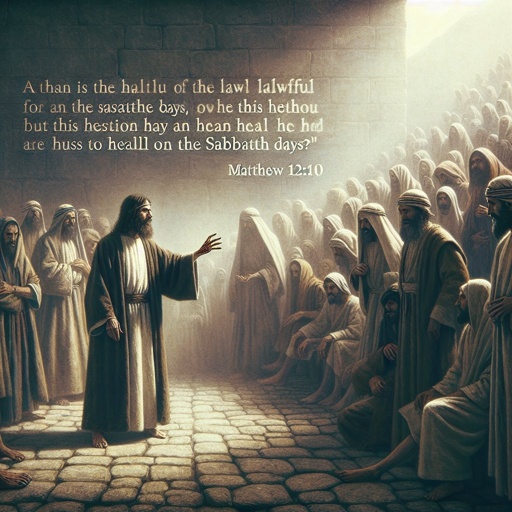
Matthew 12:10 - "¶ And, behold, there was a man which had his hand withered. And they asked him, saying, Is it lawful to heal on the sabbath days? that they might accuse him."

Matthew 3:11-12

Matthew 3:11-12

Matthew 12:12 - "How much then is a man better than a sheep? Wherefore it is lawful to do well on the sabbath days."

Matthew 3:12

Matthew 3:12

Matthew 23:12

Matthew 7:12

Matthew 23:12

Matthew 7:12

Matthew 3:12

Matthew 2:1-12

Matthew 12:36-37

Matthew 5:1 a 12

Matthew 5:8-12

Matthew 2:1-12

matthew 12:36-37

Matthew 2:1-12

Ezra 10:10-12

Matthew 5:1 a 12

Matthew 2:1-12

Matthew 12:36-37

Matthew 12:21 - "And in his name shall the Gentiles trust."

Exodus 10:12

Exodus 10:12

Exodus 10:12