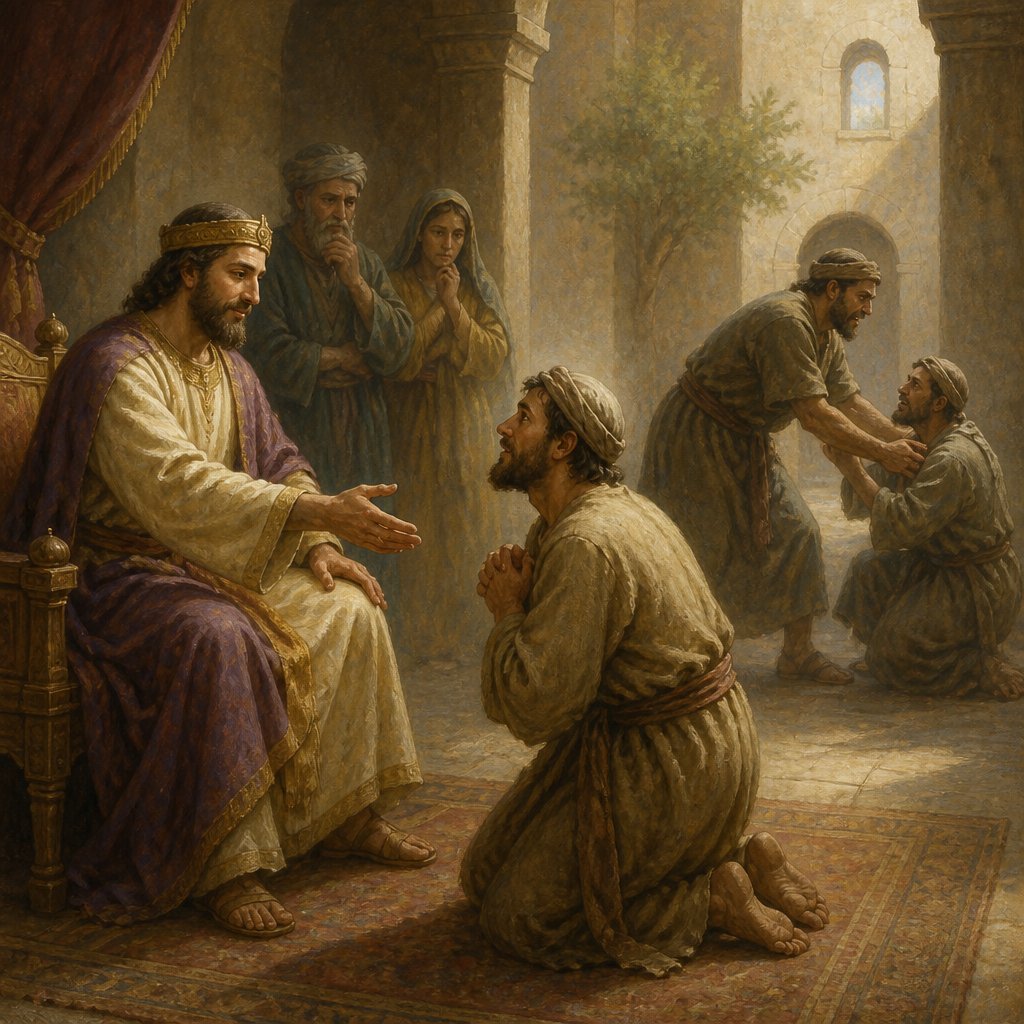
In Matthew 18:23-35, we encounter one of the most compelling parables of Jesus, often referred to as the Parable of the Unforgiving Servant. This parable draws a striking contrast between the immense debt forgiven by the king and the trivial debt demanded by the servant. The teachings within this passage invite us to reflect deeply on the nature of forgiveness, grace, and our responsibilities towards one another in light of the mercy we have received.
The passage begins with a vivid illustration: "Therefore is the kingdom of heaven likened unto a certain king, which would take account of his servants." The king symbolizes God, who seeks to assess our lives and actions. In His righteousness, He knows the true state of our hearts. The account reveals a servant brought before the king who owes him an astronomical sum—ten thousand talents. Understanding the gravity of this debt is crucial; it represents a debt that could never be repaid within a lifetime. This is our condition before God. We come to Him with sins beyond our capacity to repay.
When faced with this insurmountable debt, the servant recognizes his desperate situation and humbly begs for patience: "Lord, have patience with me, and I will pay thee all." Yet, what follows is nothing short of astonishing; the king, moved with compassion, chooses to forgive the debt entirely. He demonstrates grace in its purest form—the kind of grace that does not require repayment but instead sets the debtor free.
Herein lies the first point of reflection for us: God’s forgiveness is limitless and is rooted in compassion rather than obligation. We are often quick to forget that we have been recipients of such extravagant grace. Our sins, however great or small they may seem to us, have been washed away by the sacrificial love of Christ. It begs the question: if we have been forgiven so much, can we not extend that same grace to others?
Tragically, this servant fails to grasp the enormity of his own forgiveness and immediately encounters a fellow servant who owes him a mere hundred pence. Instead of showing the same compassion that he was afforded, he violently demands payment and refuses to grant mercy. His actions demonstrate an alarming short-sightedness. In sickness, we often become blind to our own transgressions while magnifying the faults of those around us.
What follows is a powerful indictment of our behavior: "So when his fellowservants saw what was done, they were very sorry..." Others around us take note of our actions. As believers, how we treat others in light of the forgiveness we have received is a testament to our understanding of God's grace. When we declare that we are forgiven, we must also embody that forgiveness.
When the king learns of the servant’s unforgiving heart, he responds with righteous anger. "O thou wicked servant...Shouldest not thou also have had compassion on thy fellowservant, even as I had pity on thee?" This revealing question highlights the expectation of reciprocity in the kingdom of heaven. It begs us to consider the very nature of our hearts. True forgiveness cannot be conditional on the worthiness of another's actions; it flows from our comprehension of the depths of our own grace.
The parable concludes with a stern warning: "So likewise shall my heavenly Father do also unto you, if ye from your hearts forgive not every one his brother their trespasses." It’s a clarion call to reflect on our hearts. Are we harboring resentment? Are we unwilling to let go of grievances?
As we meditate on this passage, let us remember that forgiveness is not merely a transaction; it is transformation. Each time we forgive, we mirror the heart of God. Each time we withhold forgiveness, we choose to live in bondage rather than in the freedom grace provides. Let us humble ourselves to reflect on the greatness of our own pardon, allowing it to inspire a spirit of compassion towards others. In doing so, we participate in the divine nature that reflects the Kingdom of Heaven.
Get our apps


Artwork for Matthew 18:23-35
"Therefore, the kingdom of heaven is like a king who wanted to settle accounts with his servants. As he began the settlement, a man who owed him ten thousand bags of gold was brought to him. Since he was not able to pay, the master ordered that he and his wife and his children and all that he had be sold to repay the debt. At this, the servant fell on his knees before him. ‘Be patient with me,’ he begged, ‘and I will pay back everything.’ The servant’s master took pity on him, canceled the debt and let him go. But when that servant went out, he found one of his fellow servants who owed him a hundred silver coins. He grabbed him and began to choke him. ‘Pay back what you owe me!’ he demanded. His fellow servant fell to his knees and begged him, ‘Be patient with me, and I will pay it back.’ But he refused. Instead, he went off and had the man thrown into prison until he could pay the debt. When the other servants saw what had happened, they were outraged and went and told their master everything that had happened. Then the master called the servant in. ‘You wicked servant,’ he said, ‘I canceled all that debt of yours because you begged me to. Shouldn’t you have had mercy on your fellow servant just as I had on you?’ In anger his master handed him over to the jailers to be tortured, until he should pay back all he owed. This is how my heavenly Father will treat each of you unless you forgive your brother or sister from your heart." - Matthew 18:23-35
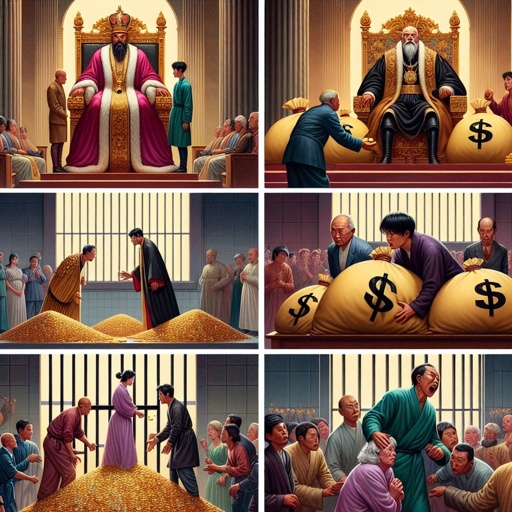
Matthew 18:23-35 - "Therefore, the kingdom of heaven is like a king who wanted to settle accounts with his servants. As he began the settlement, a man who owed him ten thousand bags of gold was brought to him. Since he was not able to pay, the master ordered that he and his wife and his children and all that he had be sold to repay the debt. At this, the servant fell on his knees before him. ‘Be patient with me,’ he begged, ‘and I will pay back everything.’ The servant’s master took pity on him, canceled the debt and let him go. But when that servant went out, he found one of his fellow servants who owed him a hundred silver coins. He grabbed him and began to choke him. ‘Pay back what you owe me!’ he demanded. His fellow servant fell to his knees and begged him, ‘Be patient with me, and I will pay it back.’ But he refused. Instead, he went off and had the man thrown into prison until he could pay the debt. When the other servants saw what had happened, they were outraged and went and told their master everything that had happened. Then the master called the servant in. ‘You wicked servant,’ he said, ‘I canceled all that debt of yours because you begged me to. Shouldn’t you have had mercy on your fellow servant just as I had on you?’ In anger his master handed him over to the jailers to be tortured, until he should pay back all he owed. This is how my heavenly Father will treat each of you unless you forgive your brother or sister from your heart."

Matthew 18:23-34

Matthew 18:23-34

Matthew 18:23-34

Matthew 18:23-34
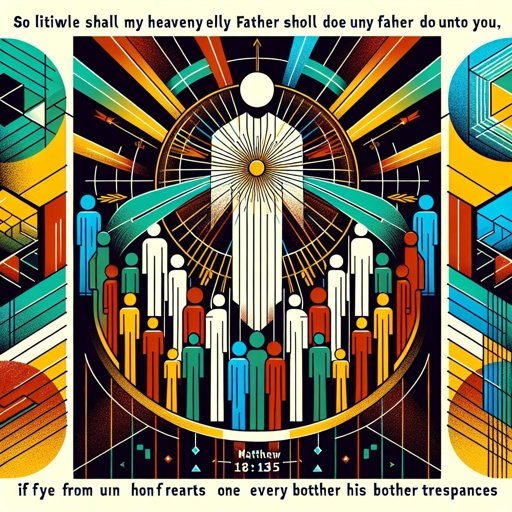
Matthew 18:35 - "So likewise shall my heavenly Father do also unto you, if ye from your hearts forgive not every one his brother their trespasses."

Matthew 23:18 - "And, Whosoever shall swear by the altar, it is nothing; but whosoever sweareth by the gift that is upon it, he is guilty."

Titus 2:3-5

Matthew 18:23 - "¶ Therefore is the kingdom of heaven likened unto a certain king, which would take account of his servants."

Matthew 23:35 - "That upon you may come all the righteous blood shed upon the earth, from the blood of righteous Abel unto the blood of Zacharias son of Barachias, whom ye slew between the temple and the altar."

Titus 2:3-5

Titus 2:3-5

Matthew 24:35

Matthew 24:35

Matthew 24:35

Matthew 24:35

Matthew 24:35

Matthew 24:35

Matthew 24:35

Matthew 24:35

Matthew 24:35

Matthew 24:35

Matthew 27:35

Salmo 45, 2-3. 5-6. 8-9

Matthew 23:18 And, Whosoever shall swear by the altar, it is nothing; but whosoever sweareth by the gift that is upon it, he is guilty.

Matthew 23:18 And, Whosoever shall swear by the altar, it is nothing; but whosoever sweareth by the gift that is upon it, he is guilty.
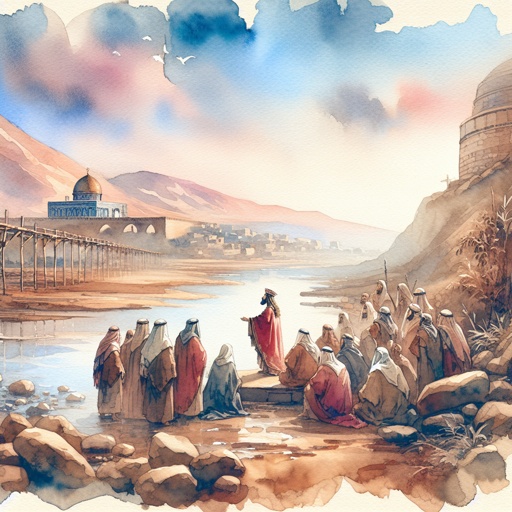
2 Chronicles 35:23

Matthew 23:18 And, Whosoever shall swear by the altar, it is nothing; but whosoever sweareth by the gift that is upon it, he is guilty.

2 Samuel 23:35 - "Hezrai the Carmelite, Paarai the Arbite,"