The Weight of Unforgiven Debt
“And when he had begun to reckon, one was brought unto him, which owed him ten thousand talents.” — Matthew 18:24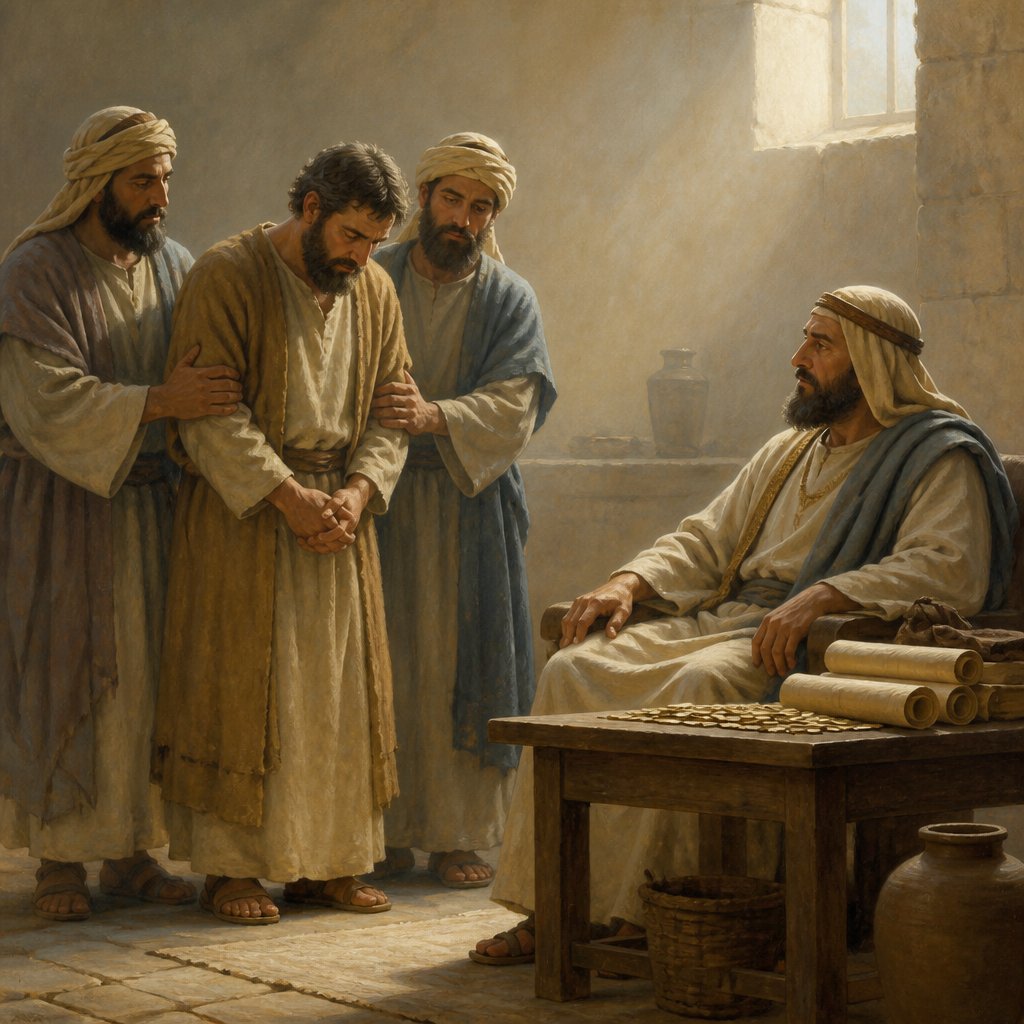
**Scriptural Context**
In the Gospel of Matthew, chapter 18, Jesus shares a parable that cuts to the heart of human relationships and the nature of forgiveness. In verse 24, we read, "And when he had begun to reckon, one was brought unto him, which owed him ten thousand talents." The context of this verse is essential as it sets the stage for an illuminating insight into God’s mercy contrasted with human attitudes toward forgiveness and debt.
**Understanding the Debt**
To fully grasp the significance of the 'ten thousand talents', we must first understand the magnitude of this amount. A talent was a significant unit of weight, and in terms of currency, one talent was worth about 20 years' wages for a laborer. Therefore, the debt of ten thousand talents equates to approximately 200,000 years of wages! In today's terms, this staggering amount represents an insurmountable debt — one that signifies complete helplessness and total desperation.
This man's debt symbolizes our own sinfulness and the weight of our transgressions before a holy God. No amount of good works could ever repay this debt. As Paul writes in Romans 3:23, "For all have sinned, and come short of the glory of God." We, like this servant, owe a debt we could never repay on our own.
**The Reckoning**
Here, Jesus uses the term "reckon" which means to account for, to calculate, or to settle an assessment. The reckoning signifies the point at which our debts (both physical and spiritual) are brought to light. It is a moment of truth where hidden things are revealed. In our lives, God often brings us to this point through circumstances, the dealings of His Spirit, or through His Word. It is here we must confront our own debts and acknowledge our need for His grace.
**Implications for Forgiveness**
The Master in this parable represents God, and the servant represents us. The situation calls for an evaluation of grace! In the face of such a monumental debt, one might expect judgment; however, in the subsequent verses, we find a different response. The Master forgives the entire debt because of compassion (Matthew 18:27). Likewise, God, in His boundless mercy, forgives our insurmountable debt of sin through the sacrificial death of Jesus Christ. This is the essence of the Gospel — we have received grace we do not deserve, and a pardon we cannot earn.
**A Call to Extend Grace**
Despite receiving such grace, the same servant went out and confronted a fellow servant who owed him a much smaller debt — a hundred pence, or about three months of wages (Matthew 18:28). The contrast here is staggering! While he was forgiven the equivalent of billions, he could not extend a fraction of that mercy to another. This part of the parable reveals a critical truth: to truly accept God’s grace, we must also be willing to extend grace to others.
How often do we hold grudges against those who have wronged us? The spirit of unforgiveness only chains us to bitterness and resentment. Forgiveness not only relieves the debt owed to us but liberates our own hearts in the process.
**Practical Steps for Today**
As we reflect on the depth of our sin and the majesty of God's grace in forgiving those debts, we are also called to forgive others. It may not be easy; it may be painful. But here are a few practical steps to help us navigate this journey:
1. **Reflect**: Daily, consider the weight of your unrepentant heart before God, and the grace He extends.
2. **Pray**: Ask God to help you see the person who has wronged you through His eyes.
3. **Take Action**: Extend forgiveness in tangible ways, whether that be through conversation, a letter, or simply releasing the burden mentally and emotionally.
4. **Embrace Growth**: Engage in pursuits that foster a forgiving heart, such as reading Scriptures about forgiveness, attending small groups, or counseling if necessary.
**Conclusion**
In conclusion, Matthew 18:24 not only highlights the vastness of the debt we owe to God but underscores the urgency and necessity of mercy in our lives. Let us carry the understanding of our divine pardon into our daily interactions. May we forgive as we have been forgiven, breaking the cycle of debt, and instead propagating grace.
Reflecting on this transformative truth, we fulfill the law of Christ — to love and forgive.
In His Mercy,
Amen.
Get our apps


Artwork for Matthew 18:24

Matthew 18:24 - "And when he had begun to reckon, one was brought unto him, which owed him ten thousand talents."

"And when he had begun to reckon, one was brought unto him, which owed him ten thousand talents." - Matthew 18:24

Matthew 24:18 - "Neither let him which is in the field return back to take his clothes."

Matthew 1:18-24 The angel of the Lord appeared to Joseph in a dream

"Neither let him which is in the field return back to take his clothes." - Matthew 24:18

Matthew 24:35

Matthew 24:35

Matthew 24:35

Matthew 24:35

Matthew 24:35

Matthew 24:35

Matthew 24:35

Matthew 24:35

Matthew 24:35

Matthew 24:35

Matthew 24:27

Matthew 24:15

Matthew 6:24

Matthew 24:8

Matthew 6:24

Matthew 6:24

Matthew 6:24

Matthew 24:8 - "All these are the beginning of sorrows."

Matthew 24:30-31

Matthew 24:30-31

Matthew 24:30-31

Matthew 24:30-31

Matthew 24:30-31

Matthew 24:30-31

Matthew 24:30-31