From Babylon to Restoration: A Journey of Hope
"And after they were brought to Babylon, Jechonias begat Salathiel; and Salathiel begat Zorobabel;" - Matthew 1:12
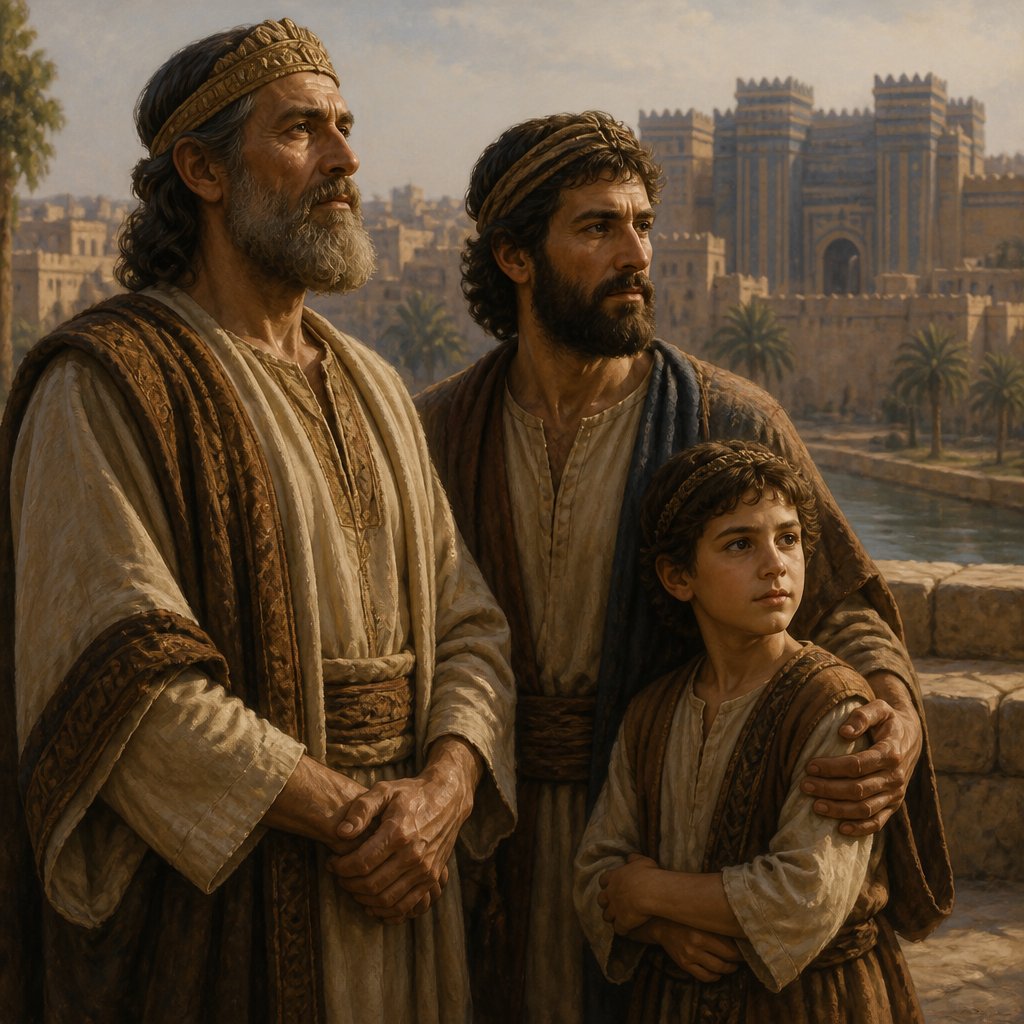
As we delve into the genealogy presented in Matthew 1:12, "And after they were brought to Babylon, Jechonias begat Salathiel; and Salathiel begat Zorobabel;" we find ourselves at a pivotal moment in biblical history. The mention of Babylon conjures images of exile, destruction, and despair. Yet within this context of suffering and uncertainty lies a profound message of hope, renewal, and divine sovereignty that resonates even today.
The phrase "after they were brought to Babylon" serves as a reminder of the Babylonian Exile that marked a significant period for the people of Israel. This event was not simply a historical fact but a culmination of disobedience, idolatry, and a rejection of God's covenant. The chosen people found themselves uprooted from their homeland, living in a foreign land under the rule of an oppressive empire. This was a time of deep sorrow, as they remembered Jerusalem and lamented their loss.
However, God is never absent in moments of darkness. Through this verse, we see His promise of restoration beginning to unravel. Jechonias, whose lineage is traced through Matthew's genealogy, is a descendant of King David, and though he faced humiliation and displacement in Babylon, the lineage does not cease. As Jechonias begat Salathiel, we witness God's commitment to continue His plan for redemption through a remnant of His people.
Salathiel’s name itself means "I have asked of God," a striking reminder to us of the relational aspect of prayer and petition. It implies that even amid exile, when all seemed lost, the heart of the people was still inclined to seek God. In our own lives, we may face trials or periods that feel like exile—separation from our hopes, dreams, or the presence of God Himself. Yet we can find encouragement in Salathiel’s name, understanding that in desolate moments, we must ask God. This act of asking is not just in the form of petitions for our wants but seeking His face, His presence, and His intuitive guidance.
Following Salathiel, we are introduced to Zorobabel, whose name means "born in Babylon." His name encapsulates the narrative of transformation—from exile to restoration. Zorobabel is not only significant for being the grandson of Jechonias but also for his role in leading the people back to Jerusalem and overseeing the rebuilding of God's temple. Zorobabel represents hope, a beacon of light amidst despair, showing that the narrative of loss can be rewritten into one of restoration.
In our spiritual journey, we too have our own Zorobabels—those moments, people, or experiences that remind us of God’s redemptive power. Just as Zorobabel took practical steps toward rebuilding the temple, we must be active participants in the restoration process God lays out for us. What is it that we need to rebuild in our lives? Is it faith, relationships, or perhaps our sense of purpose? God often uses our trials as the ground from which His greatest works are birthed.
As we reflect on this verse, we recognize that history is not merely a sequence of events but a tapestry woven by the hands of God, stitching together our stories with threads of grace. The genealogy of Matthew serves as a testament that no matter how far we stray or how bleak our circumstances appear, God’s redemptive plans are never thwarted. He continually invites us to trust Him during our Babylon, knowing that, ultimately, He holds the power to transform our grief into joy and our chaos into order.
Therefore, let us approach God with the heart of Salathiel, asking for His wisdom and direction. Let us be encouraged by Zorobabel, who exemplified courage and leadership in challenging times. And above all, let us anchor our hope in the assurance that God’s plans for us do not end in Babylon; they lead us back to our promised land, where restoration and flourishing await.
Want to reflect more on Matthew 1:12?
Continue your spiritual journey with Bible Chat — an AI-powered tool for exploring God's Word through conversation. Ask questions, discover connections, and deepen your understanding.
Get Our Apps


Matthew 1:12 Artwork

Matthew 1:12 - "And after they were brought to Babylon, Jechonias begat Salathiel; and Salathiel begat Zorobabel;"
"And after they were brought to Babylon, Jechonias begat Salathiel; and Salathiel begat Zorobabel;" - Matthew 1:12

Matthew 1:2

Matthew 1:2 - "Abraham begat Isaac; and Isaac begat Jacob; and Jacob begat Judas and his brethren;"

Matthew 2:1-12

Matthew 5:1 a 12

Matthew 2:1-12

Matthew 2:1-12

Matthew 5:1 a 12

Matthew 2:1-12

"Abraham begat Isaac; and Isaac begat Jacob; and Jacob begat Judas and his brethren;" - Matthew 1:2

Matthew 12:1 - "At that time Jesus went on the sabbath day through the corn; and his disciples were an hungred, and began to pluck the ears of corn, and to eat."

Matthew 3:11-12

Matthew 3:11-12

Matthew 3:12

Matthew 3:12

Matthew 23:12

Matthew 7:12

Matthew 23:12

Matthew 7:12

Matthew 3:12
Matthew 1:11-12 - "And Josias begat Jechonias and his brethren, about the time they were carried away to Babylon: And after they were brought to Babylon, Jechonias begat Salathiel; and Salathiel begat Zorobabel."

Hosea 1:2-11;2:14;3:5

Matthew 12:36-37

matthew 12:36-37

Matthew 5:8-12

Matthew 12:36-37

Matthew 12:12 - "How much then is a man better than a sheep? Wherefore it is lawful to do well on the sabbath days."

Matthew 10:12 - "And when ye come into an house, salute it."

Matthew 12:21 - "And in his name shall the Gentiles trust."