The Lord's Divine Purpose: Responding to His Needs
"And if any man say ought unto you, ye shall say, The Lord hath need of them; and straightway he will send them." - Matthew 21:3
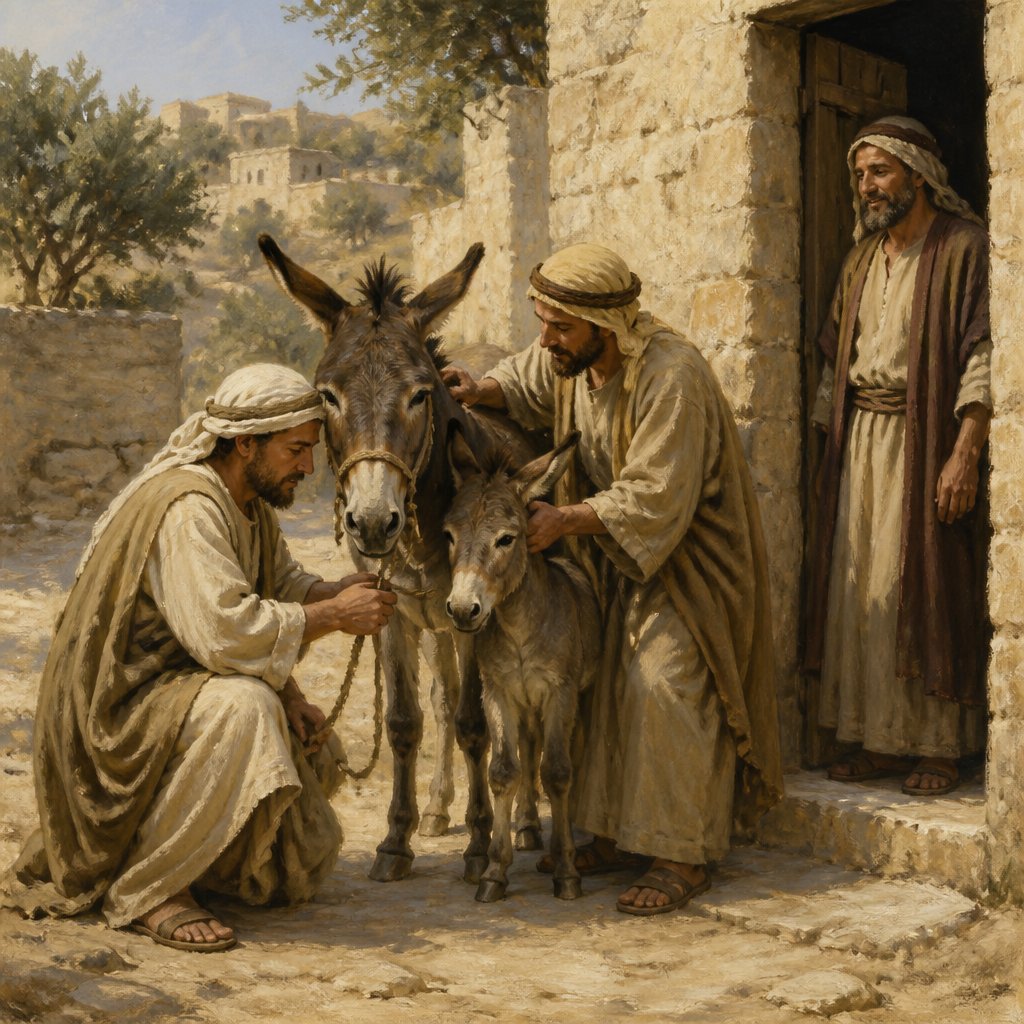
In the Gospel of Matthew, chapter 21, verse 3, we find an intriguing instruction given by Jesus: "And if any man say ought unto you, ye shall say, The Lord hath need of them; and straightway he will send them." This short passage carries profound theological implications and speaks to the nature of our relationship with Christ—His ownership, our stewardship, and the surprising ways in which we can respond to His needs.
Jesus’ command appears within the context of His triumphal entry into Jerusalem, a pivotal moment that fulfills Old Testament prophecies. Before entering the city, He instructs His disciples to procure a donkey and a colt. This wasn’t merely an logistical request; it was a significant and intentional fulfillment of Zechariah 9:9, which proclaims, "Rejoice greatly, O daughter of Zion; shout, O daughter of Jerusalem: behold, thy King cometh unto thee: he is just, and having salvation; lowly, and riding upon an ass, and upon a colt the foal of an ass."
The phrase, "The Lord hath need of them," begs us to pause and ponder the implications of need in the Kingdom of God. How is it that the Creator of the universe, the omnipotent and omniscient God who needs nothing from humankind, declares that He has need of something? This paradox challenges our understanding of need. God does not need our possessions, time, or abilities in a way that reflects human frailty. Instead, He invites us into participation in His divine plan.
Imagine the scene: the disciples approaching a stranger's property and asking for a donkey and its colt. What audacity! But, rooted in their trust and understanding of Jesus’ authority, they answer the challenge boldly. The promise that they would be sent by the owner of the donkey as soon as they declare that the Lord has need of them illustrates trust not only in Jesus but also in the community's awareness of His authority. The owner of the donkey responds "straightway," signifying readiness to assist in the Lord’s purpose.
In our own lives, we often encounter moments where God nudges us with an opportunity, something He's asking us to offer up. It might be our resources, our time, our energy, or even our talents. Just as the owner of the donkey could have been bewildered, uncomfortable, or resistant, we too may feel hesitant when we hear God’s call to give of ourselves. But herein lies the beautiful truth: when we surrender what we possess to Christ, we become active participants in His will. We reclaim our divine purpose.
Reflect on this: What is it that God is asking you to release into His hands today? Is it a decision, a relationship, or perhaps a dream you hold tightly? When we hear a whisper of divine calling, we can respond with confidence: "The Lord hath need of this." Such acknowledgment not only affirms Christ's sovereign lordship over our lives but also brings us into alignment with His Kingdom’s work.
Moreover, we must consider in what ways are we prepared to respond to the needs of others in the name of the Lord. The instruction to the disciples involves them being accessible and obedient to the master's call. Our lives are meant to reflect this willing spirit of servitude and readiness to respond to Christ's need for our hands and feet in the world today. When we proclaim, “The Lord hath need of them,” it should extend beyond the possessions He asks of us; it reminds us of the heart of service we are called to embody for those around us.
Finally, as we meditate on Matthew 21:3, let us embrace the truth that when we respond to His need, we unlock a life filled with purpose, joy, and the deeper fulfillment of being part of something far greater than ourselves. We, too, become vessels of His grace, His peace, and His love—ready to respond, ready to serve, ready to declare the necessity of the Lord in every facet of our daily lives.
Want to reflect more on Matthew 21:3?
Continue your spiritual journey with Bible Chat — an AI-powered tool for exploring God's Word through conversation. Ask questions, discover connections, and deepen your understanding.
Get Our Apps


Matthew 21:3 Artwork
Matthew 21:3 - "And if any man say ought unto you, ye shall say, The Lord hath need of them; and straightway he will send them."
"And if any man say ought unto you, ye shall say, The Lord hath need of them; and straightway he will send them." - Matthew 21:3

Matthew 9:21

Matthew 9:21-22

Matthew 21

Matthew 9:21-22

Matthew 9:21-22

Matthew 9:21-22

Matthew 9:21-22

Matthew 25:21

Matthew 25:21

Matthew 21:31

Matthew 21:25

Matthew 2:21

Matthew 21:1-11

Matthew 14:13-21

Matthew 17:14-21

Matthew 21:21 Philippians 4:6-7 Ephesians 6:10-18 Put the words on the photo

Matthew 12:21 - "And in his name shall the Gentiles trust."

Matthew 21:6 - "And the disciples went, and did as Jesus commanded them,"

Matthew 17:21 - "Howbeit this kind goeth not out but by prayer and fasting."

Matthew 6:21 - "For where your treasure is, there will your heart be also."

Matthew 3:11

Matthew 3:16

Matthew 3:11

Matthew 3:11

Matthew 3:11

Matthew 3:11

Matthew 21:11 - "And the multitude said, This is Jesus the prophet of Nazareth of Galilee."

Matthew 21:18 - "Now in the morning as he returned into the city, he hungered."