In the Shadow of Authority: Understanding Our Response to Earthly Power
“Tell us therefore, What thinkest thou? Is it lawful to give tribute unto Caesar, or not?” — Matthew 22:17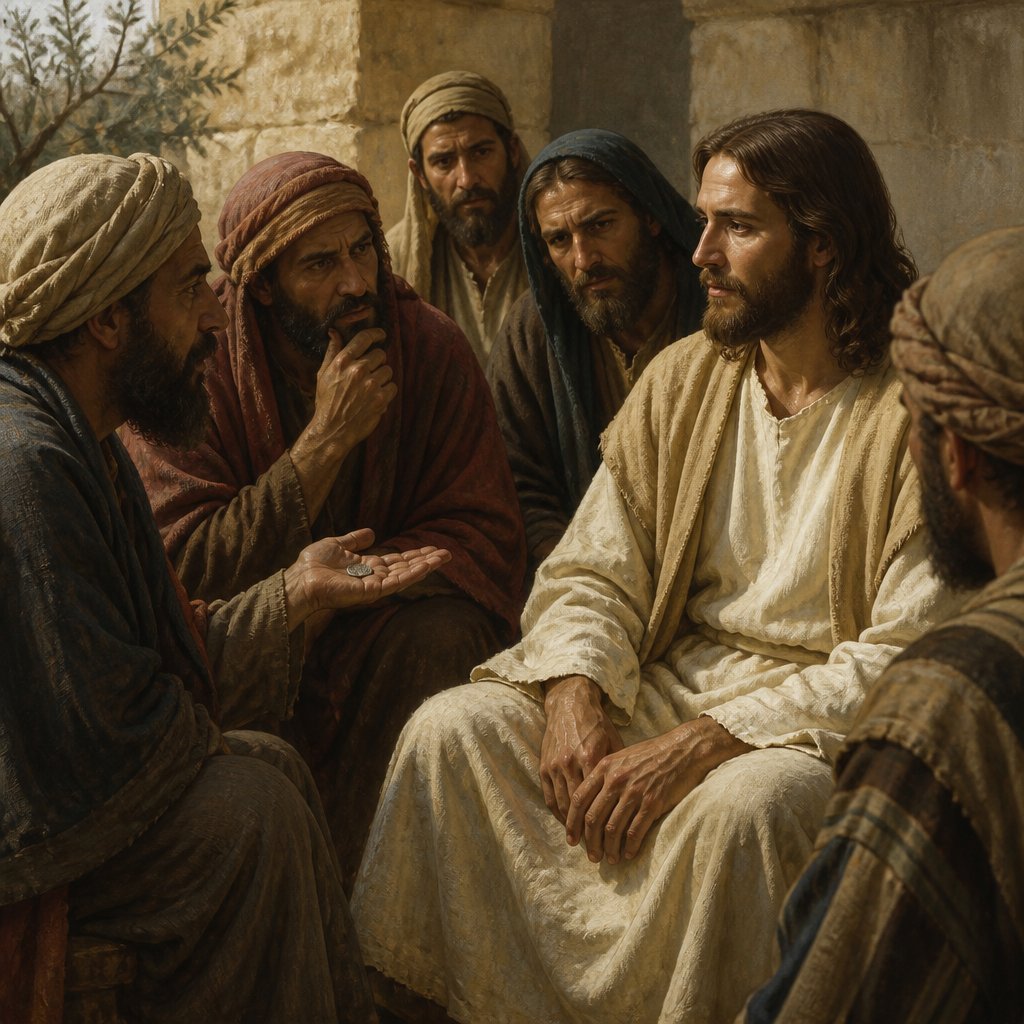
In Matthew 22:17, the Pharisees posed a challenging question to Jesus, ‘Tell us therefore, What thinkest thou? Is it lawful to give tribute unto Caesar, or not?’ This verse invites us into a profound dialogue regarding authority, obedience, and our ultimate allegiance. As we delve into this question, we discover insights not only into the socio-political landscape of Jesus’ time but also into our lives as followers of Christ today.
The context of this moment is crucial. The religious leaders aimed to trap Jesus between the Roman authorities and the expectations of the Jewish people. If He said it was lawful to pay tribute to Caesar, He could be accused of disloyalty to His people. If He counseled against paying the tax, He could be charged with sedition against the Roman government. This dilemma reveals the contentious atmosphere surrounding Jesus as He taught truths that challenged the established order.
Jesus’ response, as we learn shortly after, shifts the parameters of the conversation entirely. His request for a coin and His subsequent question about whose image it bore is telling. He replied, ‘Render therefore unto Caesar the things which are Caesar’s; and unto God the things that are God’s’ (Matthew 22:21 KJV). In this profound teaching, Jesus distinguishes between earthly authority and heavenly authority, shedding light on how we are to navigate our responsibilities in both realms.
First, we must acknowledge that Jesus does not dismiss the requirement to engage with earthly authorities. In our present day, this translates to understanding our role within society—fulfilling our obligations as citizens, such as paying taxes, upholding laws, and contributing positively to our communities. The question isn’t so much whether or not to engage with these authorities, but rather how we engage. Are we doing so with integrity and according to the values of the Kingdom of God?
Moreover, Jesus' teaching highlights a profound truth that transcends the material duty of taxation. He calls us to consider the greater question of allegiance— for whom do we truly live? This reality gives us pause to reflect on whether our hearts ultimately belong to earthly pursuits or heavenly aspirations. When we render to God the things that are God’s, we must evaluate our priorities, commitments, and how they align with our faith in Christ. It challenges us to consider our resources, be it time, talent, or treasure, and how we steward them for greater purposes beyond ourselves.
Furthermore, the tension between the Kingdom of God and earthly authorities invites us to engage in civil discourse without being overwhelmed by the political climate. In our polarized society, we are called to present our views with grace, seeking to influence according to God’s wisdom rather than succumbing to the pressures of division. Jesus’ example urges us to speak the truth in love, representing the hope of the Gospel amidst chaos.
Ultimately, through this text, we are reminded of the sovereignty of God over all earthly powers. Even in challenging circumstances, as followers of Christ, we can take comfort in knowing that God is sovereign above all. Our earthly tribulations will not stretch beyond His grace or authority. This acknowledgment gives us courage and strength to stand firm in our conviction, knowing that our calling transcends the boundaries of any earthly governance.
As we contemplate the question posed by the Pharisees and Jesus' profound answer, let us remember our conduct towards civil authority should be marked by respect, honesty, and integrity, but our ultimate allegiance must always remain with God. Let us render unto Caesar what belongs to Caesar, but let us render our lives fully to God, serving Him with our whole heart, soul, and mind.
Get our apps


Artwork for Matthew 22:17

Matthew 22:17 - "Tell us therefore, What thinkest thou? Is it lawful to give tribute unto Caesar, or not?"
"Tell us therefore, What thinkest thou? Is it lawful to give tribute unto Caesar, or not?" - Matthew 22:17

Matthew 17:22 - "¶ And while they abode in Galilee, Jesus said unto them, The Son of man shall be betrayed into the hands of men:"

Matthew 17:22-23 - "And while they were gathering together in Galilee, Jesus said to them, "The Son of Man is going to be delivered into the hands of men; and they will kill Him, and He will be raised on the third day." And they were deeply grieved."
"¶ And while they abode in Galilee, Jesus said unto them, The Son of man shall be betrayed into the hands of men:" - Matthew 17:22

Matthew 17:17-18

Matthew 17:17-18

Matthew 9:21-22

Matthew 9:21-22

Matthew 9:21-22

Matthew 9:21-22

Matthew 9:21-22

Matthew 22:22 - "When they had heard these words, they marvelled, and left him, and went their way."

Matthew 6:22

Matthew 6:22

Matthew 6:22

Matthew 6:17

Matthew 17:20

Matthew 17:20

Matthew 22:38 - "This is the first and great commandment."

Genesis 17-22

Genesis 22-17

Matthew 14:22-33

Matthew 22:37-39

Matthew 22:14 - "For many are called, but few are chosen."

Matthew 19:16-17

Matthew 6:17-18

Matthew 17:14-21

Matthew 3:13-17

Matthew 17:14-15