The Perils of Procrastination: A Call to Faithful Waiting
“But and if that evil servant shall say in his heart, My lord delayeth his coming;” — Matthew 24:48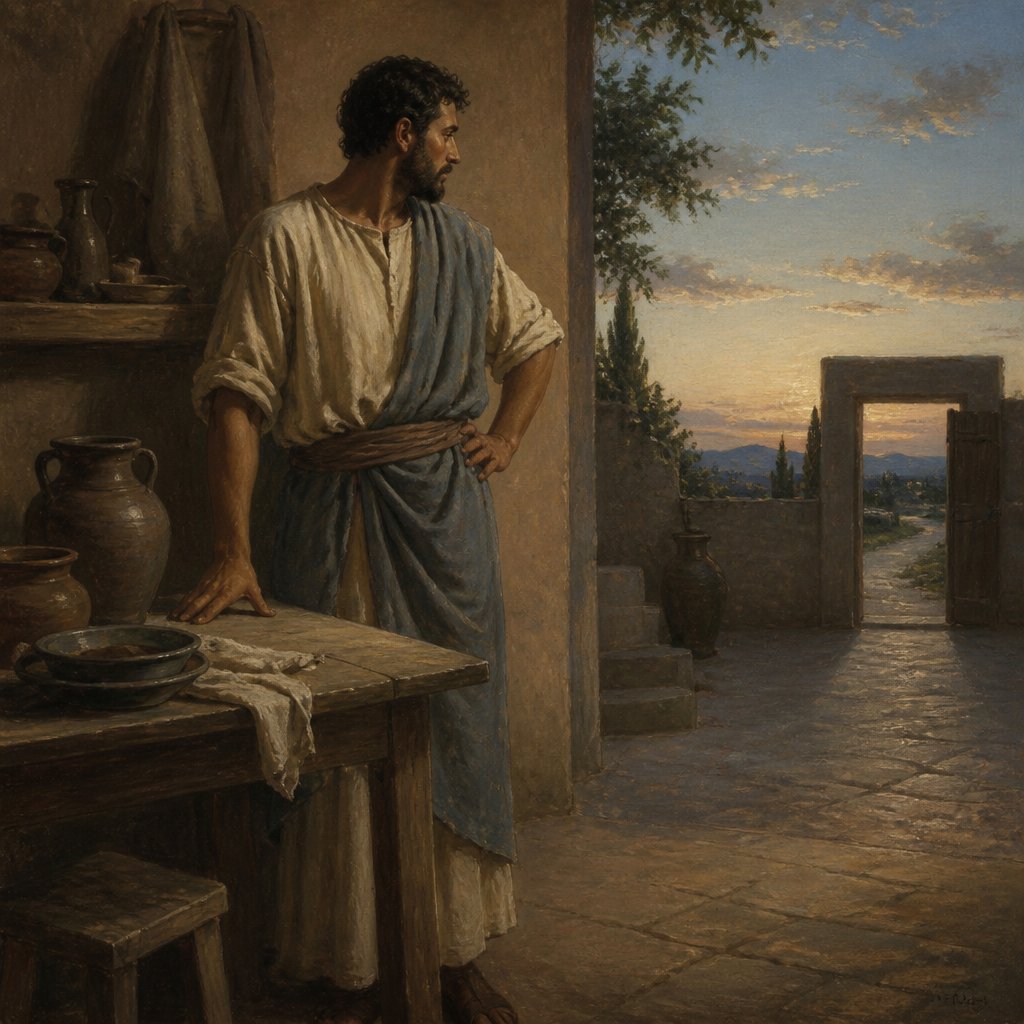
Matthew 24:48 reminds us of a deep spiritual truth: "But and if that evil servant shall say in his heart, My lord delayeth his coming." This cautionary verse, part of Jesus’ Olivet Discourse, addresses the potential pitfalls of complacency and disbelief in the context of anticipating His return. It speaks to the heart of a servant who, instead of eagerly awaiting his master's return, succumbs to the seduction of time’s passage and “says in his heart” that his master delays. This passage invites us to examine our own attitudes and actions in our walk of faith and to consider what happens when we allow doubt to permeate our hearts.
### Understanding the Context
In Matthew 24, Jesus warns His disciples about the signs of the end times, urging readiness and vigilance. He describes the faithful servant who is wise and diligent, fulfilling his responsibilities while awaiting the master’s return. In stark contrast, the “evil servant” embodies a dangerous attitude that can plague believers: the assumption that the Lord will not return as promised. This servant rationalizes his behavior based on his perception of delay, leading to a laxity in duty and moral decay.
### The Danger of Delay in our Hearts
When the evil servant expresses in his heart that "my lord delayeth his coming," it serves as a reminder of how our internal dialogue shapes our faithfulness. It is not merely the words spoken outwardly that define us, but the sentiments held within our hearts. This thought of delay portrays unbelief and reveals a heart that has grown cold, forgetting the urgency of Christ’s return.
A heart that entertains such thoughts is susceptible to spiritual apathy. The evil servant begins indulging in lax and reckless behavior, engaging in excess and mistreating his fellow servants. The delay he imagines leads to a moral decline that ultimately results in severe consequences. Jesus warns of punishments befitting such betrayal—an important lesson for all believers.
### Faithful Waiting as a Virtue
Waiting for God is often portrayed in scripture as a virtue. Psalm 27:14 encourages us to “Wait on the LORD: be of good courage, and he shall strengthen thine heart: wait, I say, on the LORD.” The difference between the faithful servant and the evil servant in Matthew 24 is not just in their actions when the master returns, but in their heart's posture during the waiting period.
A faithful servant recognizes that the Lord’s delay is not a denial of His promise. Instead of succumbing to impatience or lethargy, they stand firm in faith, eagerly anticipating His return, and actively serve others, knowing that at any moment the master may arrive.
### Cultivating a Heart of Expectancy
So how can we avoid the pitfalls of the evil servant? It begins with cultivating a heart of expectancy. This means returning to the truth of God’s word, engaging in prayer, fostering community with other believers, and living out our faith in tangible ways.
We must also practice the art of remembering—recalling the faithfulness of God in our past. As we reflect on His past provisions, we reinforce our hope for the future. Regularly reading passages like Matthew 24, alongside others that assure us of Christ's return, strengthens our conviction: He is coming back.
### Conclusion
In closing, let us take to heart the warning of Matthew 24:48. We each have a choice: will we allow the deceitfulness of doubt to creep into our hearts, or will we stand firm in faith and act like faithful servants? Let us be vigilant, live with purpose, and anticipate our Lord’s return with a heart full of expectation. As we wait, may our lives reflect His love and grace, diligently serving others, knowing that our Master will return, and we shall give account of our stewardship.
Get our apps


Artwork for Matthew 24:48

Matthew 24:48 - "But and if that evil servant shall say in his heart, My lord delayeth his coming;"
"But and if that evil servant shall say in his heart, My lord delayeth his coming;" - Matthew 24:48

Genesis 24-48

Luke 24:48 - "And ye are witnesses of these things."

"And ye are witnesses of these things." - Luke 24:48

Matthew 5:48 - "Be ye therefore perfect, even as your Father which is in heaven is perfect."

Jeremiah 48:24 - "And upon Kerioth, and upon Bozrah, and upon all the cities of the land of Moab, far or near."

Ezekiel 48:24 - "And by the border of Benjamin, from the east side unto the west side, Simeon shall have a portion."

Matthew 27:48 - "And straightway one of them ran, and took a spunge, and filled it with vinegar, and put it on a reed, and gave him to drink."

Matthew 13:48 - "Which, when it was full, they drew to shore, and sat down, and gathered the good into vessels, but cast the bad away."

Matthew 12:48 - "But he answered and said unto him that told him, Who is my mother? and who are my brethren?"

Matthew 24:35

Matthew 24:35

Matthew 24:35

Matthew 24:35

Matthew 24:35

Matthew 24:35

Matthew 24:35

Matthew 24:35

Matthew 24:35

Matthew 24:35

Matthew 26:48 - "Now he that betrayed him gave them a sign, saying, Whomsoever I shall kiss, that same is he: hold him fast."

Matthew 24:27

Matthew 24:15

Matthew 6:24

Matthew 24:8

Matthew 6:24

Matthew 6:24

Matthew 6:24

"Be ye therefore perfect, even as your Father which is in heaven is perfect." - Matthew 5:48