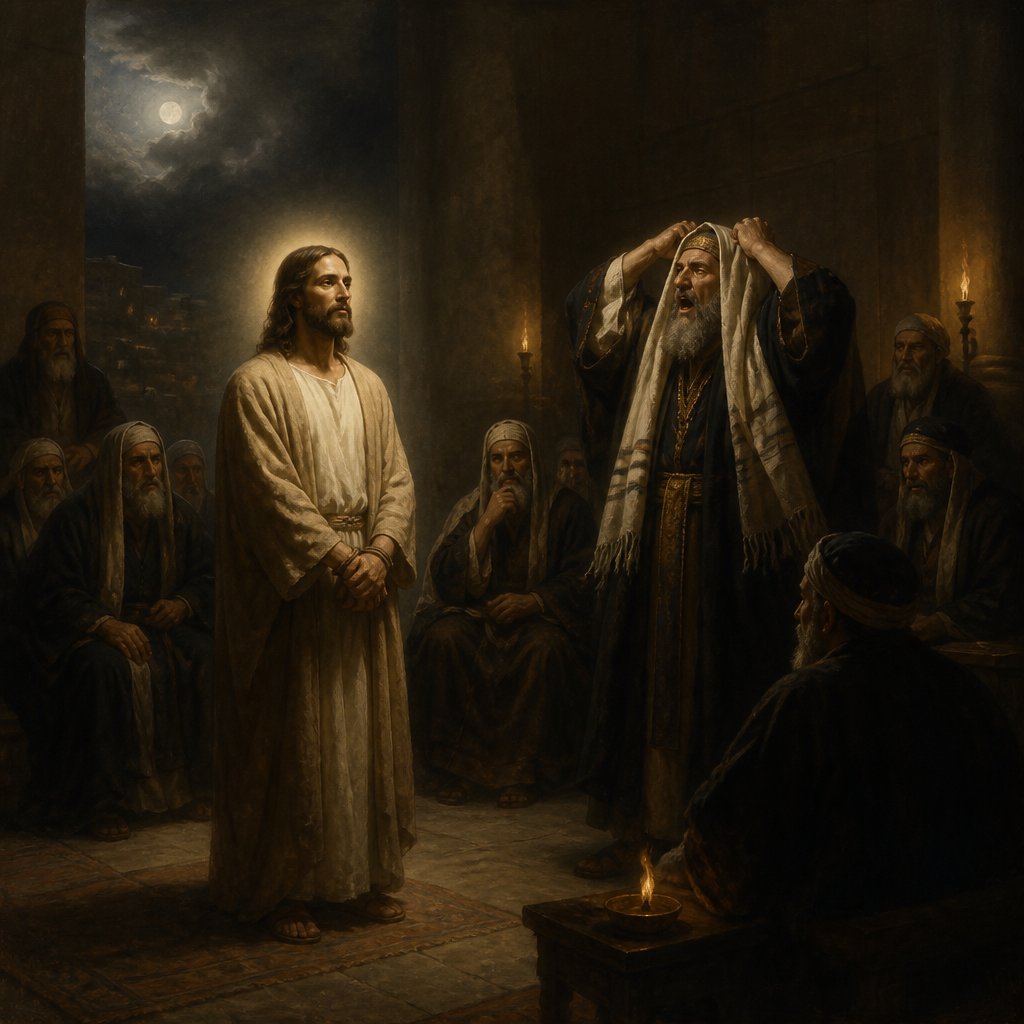
In the high-stakes drama of Matthew 26, we encounter a pivotal moment in the passion narrative – a moment where truth confronts accusation. The high priest stands as a figure representing the institutional authority of religion, demanding a response from Jesus in the face of slanderous testimonies. In this moment, Jesus embodies profound silence and ultimately reveals a deeper truth that spans beyond the trials of men.
The passage begins with the high priest approaching Jesus, accusing him of silence amidst a barrage of accusations: "Then the high priest arose, and said unto him, Answerest thou nothing? what is it which these witness against thee?" (Matthew 26:62). Here we see the tension of courtroom drama, where false witnesses come forth, yet the true witness of God, in the form of Jesus, remains eerily quiet. In this silence, we witness the fulfillment of Isaiah’s prophecy about the Messiah who would be led as a sheep to the slaughter, opening not His mouth (Isaiah 53:7). Jesus's refusal to defend himself against lies speaks volumes. It reflects His mission – to bear the weight of sin for the world, not to engage in a futile debate with those who would reject Him regardless of His words.
This passage also unearths a contrast between earthly authority and divine truth. The high priest, exasperated by Jesus’s silence, demands a direct answer, stating, "I adjure thee by the living God, that thou tell us whether thou be the Christ, the Son of God" (Matthew 26:63). This moment encapsulates the essence of faith and acknowledgment of Jesus’ identity. Jesus, without hesitation, affirms His identity – "Thou hast said: nevertheless I say unto you, Hereafter shall ye see the Son of man sitting on the right hand of power, and coming in the clouds of heaven" (Matthew 26:64). In this declaration, Jesus not only acknowledges His title but also prophesies His coming glory, solidifying His position as the Messiah far beyond the present confrontation.
However, the high priest’s reaction speaks to the spiritual blindness of the religious leaders – they were not prepared to accept the truth when it was spoken plainly. The reaction of tearing his clothes signifies outrage and a complete dismissal of the truth proclaimed by Jesus. "Then the high priest rent his clothes, saying, He hath spoken blasphemy" (Matthew 26:65). Blasphemy was a serious accusation, yet in this context, it reveals the irony of their actions; they themselves were rejecting God’s revealed truth. The high priest had become an instrument of darkness, unable to discern the Light of the World standing before him.
As we meditate on these verses, we are beckoned to consider our response to the trials we face. How often do we find ourselves in similar situations where the truth is being distorted, and we feel the weight of our circumstances? In moments like these, what example does Jesus provide to us? His silence was not resignation but confidence in His mission and trust in the Father's plan. We are encouraged to hold onto our faith, to trust God when faced with persecution for our beliefs and to embrace the truth even when it seems unpopular or misunderstood.
The narrative culminates in the verdict of the council: "They answered and said, He is guilty of death" (Matthew 26:66). What a solemn judgment rendered against the only sinless one. Yet, we know the greater story – that death could not hold Him, nor could the grave contain the power of His resurrection.
As we reflect on the silence of Jesus in the face of falsehood, let us aspire to embody that same strength in our trials. May we stand firm in the truth of who Jesus is, holding fast to the hope that even in suffering, He prepares us for glory. Let our lives be a testimony to the power and presence of the living God, who was silent for us, so that we might eternally sing His praises.
Get our apps


Artwork for Matthew 26:62-66

Matthew 26:62-66 - "Then the high priest stood up and said to Jesus, “Are you not going to answer? What is this testimony that these men are bringing against you?” But Jesus remained silent. The high priest said to him, “I charge you under oath by the living God: Tell us if you are the Messiah, the Son of God.” “You have said so,” Jesus replied. “But I say to all of you: From now on you will see the Son of Man sitting at the right hand of the Mighty One and coming on the clouds of heaven.” Then the high priest tore his clothes and said, “He has spoken blasphemy! Why do we need any more witnesses? Look, now you have heard the blasphemy. What do you think?” “He is worthy of death,” they answered."
"Then the high priest stood up and said to Jesus, “Are you not going to answer? What is this testimony that these men are bringing against you?” But Jesus remained silent. The high priest said to him, “I charge you under oath by the living God: Tell us if you are the Messiah, the Son of God.” “You have said so,” Jesus replied. “But I say to all of you: From now on you will see the Son of Man sitting at the right hand of the Mighty One and coming on the clouds of heaven.” Then the high priest tore his clothes and said, “He has spoken blasphemy! Why do we need any more witnesses? Look, now you have heard the blasphemy. What do you think?” “He is worthy of death,” they answered." - Matthew 26:62-66

Matthew 26:66 - "What think ye? They answered and said, He is guilty of death."
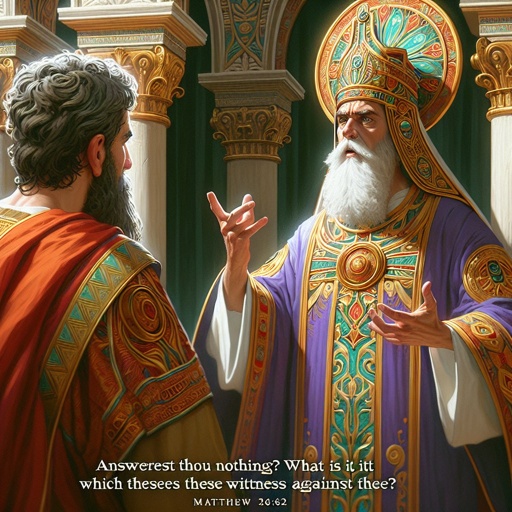
Matthew 26:62 - "And the high priest arose, and said unto him, Answerest thou nothing? what is it which these witness against thee?"
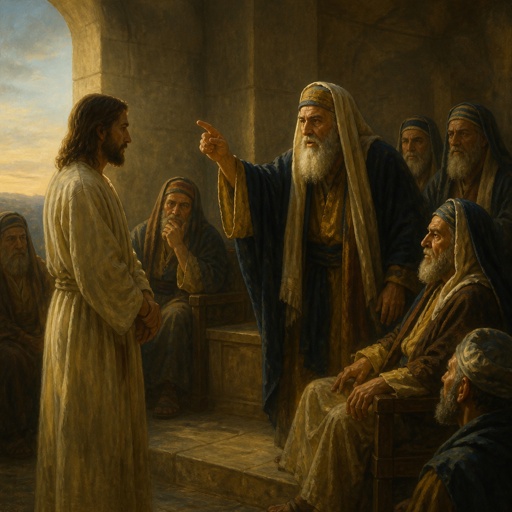
"What think ye? They answered and said, He is guilty of death." - Matthew 26:66
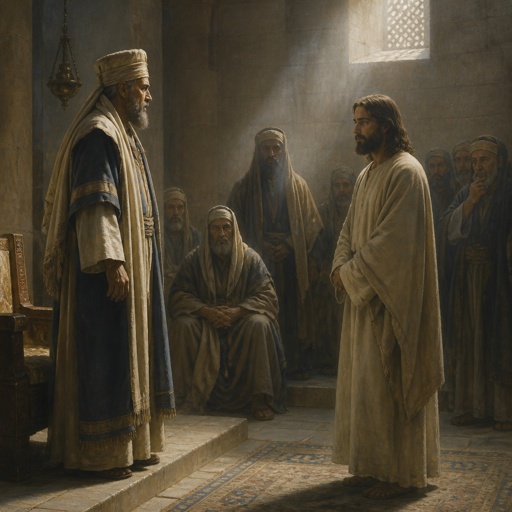
"And the high priest arose, and said unto him, Answerest thou nothing? what is it which these witness against thee?" - Matthew 26:62

Matthew 27:66 - "So they went, and made the sepulchre sure, sealing the stone, and setting a watch."

Matthew 27:62 - "¶ Now the next day, that followed the day of the preparation, the chief priests and Pharisees came together unto Pilate,"

Matthew 27:57-66 - "Matthew 27:57-66 57 When the even was come, there came a rich man of Arimathaea, named Joseph, who also himself was Jesus' disciple: 58 He went to Pilate, and begged the body of Jesus. Then Pilate commanded the body to be delivered. 59 And when Joseph had taken the body, he wrapped it in a clean linen cloth, 60 And laid it in his own new tomb, which he had hewn out in the rock: and he rolled a great stone to the door of the sepulchre, and departed. 61 And there was Mary Magdalene, and the other Mary, sitting over against the sepulchre. 62 Now the next day, that followed the day of the preparation, the chief priests and Pharisees came together unto Pilate, 63 Saying, Sir, we remember that that deceiver said, while he was yet alive, After three days I will rise again. 64 Command therefore that the sepulchre be made sure until the third day, lest his disciples come by night, and steal him away, and say unto the people, He is risen from the dead: so the last error shall be worse than the first. 65 Pilate said unto them, Ye have a watch: go your way, make it as sure as ye can. 66 So they went, and made the sepulchre sure, sealing the stone, and setting a watch."
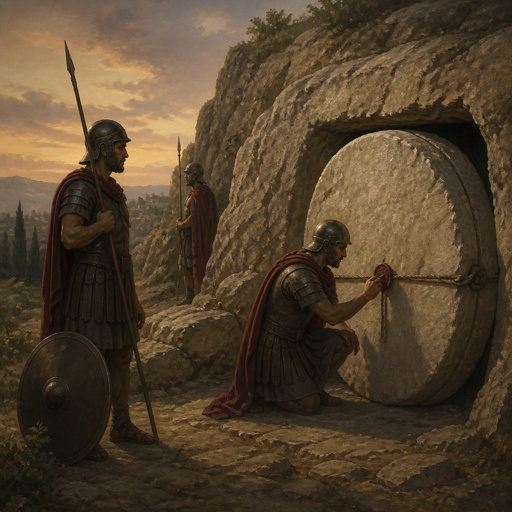
"So they went, and made the sepulchre sure, sealing the stone, and setting a watch." - Matthew 27:66

Numbers 26:62 - "And those that were numbered of them were twenty and three thousand, all males from a month old and upward: for they were not numbered among the children of Israel, because there was no inheritance given them among the children of Israel."
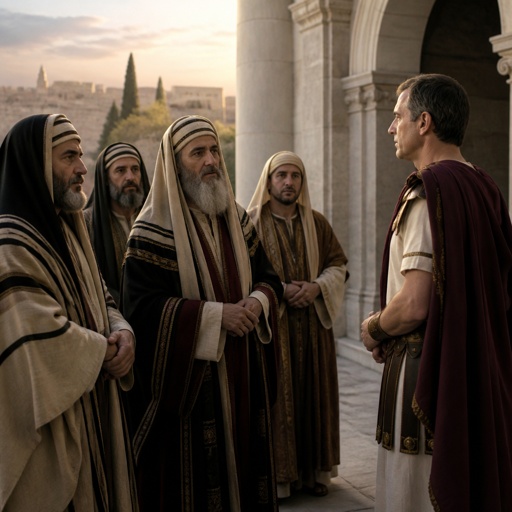
"¶ Now the next day, that followed the day of the preparation, the chief priests and Pharisees came together unto Pilate," - Matthew 27:62

Matthew 26:25

Matthew 26:15

Matthew 19:26

Matthew 26:15

Matthew 27:26

Matthew 27:26

Matthew 26:53

Matthew 26:65

Matthew 26:41

Matthew 26:53

Genesis 24-62

ISAIAH 62:1
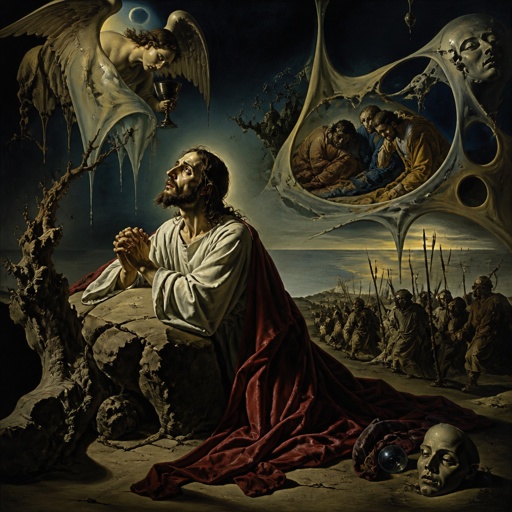
Matthew 26:36-46
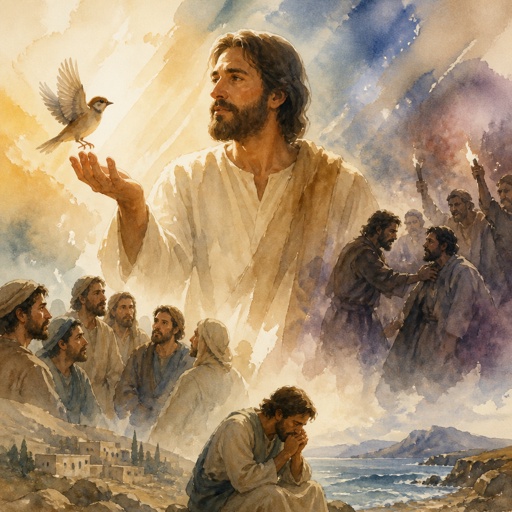
Matthew 10:26-33

Matthew 26:26 - "¶ And as they were eating, Jesus took bread, and blessed it, and brake it, and gave it to the disciples, and said, Take, eat; this is my body."

Matthew 22:26 - "Likewise the second also, and the third, unto the seventh."

Matthew 9:26 - "And the fame hereof went abroad into all that land."

Matthew 26:54 - "But how then shall the scriptures be fulfilled, that thus it must be?"