The Promise of His Power: Understanding Matthew 26:64
“Jesus saith unto him, Thou hast said: nevertheless I say unto you, Hereafter shall ye see the Son of man sitting on the right hand of power, and coming in the clouds of heaven.” — Matthew 26:64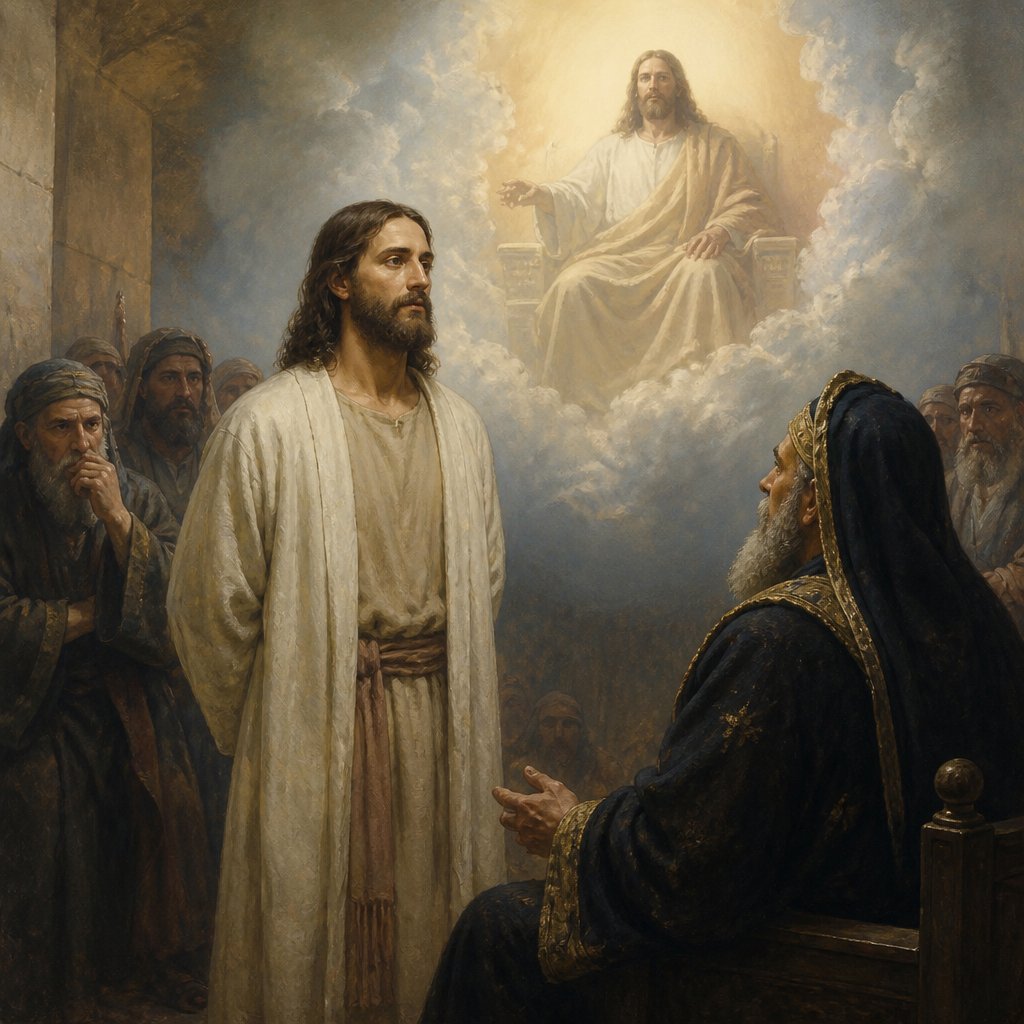
As we meditate on Matthew 26:64, we find ourselves standing at the intersection of desperation and hope, in the moment of Christ’s trial before the high priest. The KJV tells us, "Jesus saith unto him, Thou hast said: nevertheless I say unto you, Hereafter shall ye see the Son of man sitting on the right hand of power, and coming in the clouds of heaven." These words resonate with profound theological significance and personal implication, inviting us into a deeper understanding of Jesus' identity and His promise toward humanity.
This verse captures the essence of the clash between earthly authority and divine power. The backdrop of this dialogue is the foreboding atmosphere of impending crucifixion, where Jesus stands accused, unwittingly shaking the very foundations of Jewish law and Roman polity. It is here, in the weight of the moment, that Christ's declaration unfolds—a promise that echoes beyond immediate suffering and into eternal glory.
"Thou hast said..." is not merely an affirmation; it reflects Jesus' acknowledgment of the testimony against Him, while simultaneously asserting His identity as the Messiah. This assertion serves as a reminder that, although Christ was being tried and condemned by human hands, He possessed an authority that transcends all earthly judgment. In our times of judgment, whether it be self-inflicted or imposed by others, we are reminded that the ultimate authority belongs to Him. It forces us to reckon with our perceptions of power—so often defined by might, control, and dominance—though Christ redefines power in terms of love, sacrifice, and righteousness.
The phrase, "Hereafter shall ye see the Son of man sitting on the right hand of power," introduces us to a staggering hope. In Biblical terms, sitting at the right hand of God signifies position, authority, and honor. It points to a future where the struggle of the present fades in the light of Christ's ultimate authority. The imagery of the Son of Man seated in heavenly realms assures us that despite life's tumultuous storms, God remains sovereign over all things. The very phrase provokes reflection on our current day-to-day struggles and instills hope that God is not distant in our tribulations but rather sits enthroned in majesty, orchestrating divine outcomes.
"And coming in the clouds of heaven" provides an eschatological perspective to this promise. The prophetic imagery of Christ's return invites us to look forward with expectation, recognizing that while we may endure trials now, the end of the story holds a glorious completion. This promise transforms our understanding of suffering and despair—it is temporary, but His reign is eternal. As believers, we are called to engage with this promise actively; it is not simply something we await passively. We live in the light of His return, upholding His character of justice, mercy, and grace in every interaction and situation we find ourselves.
In a fast-paced, chaotic world, we often overlook the profound implications of Christ's assurance. It invites us to live as citizens of His kingdom firmly rooted in the truth of His power and presence. When Jesus spoke these words, He affirmed His role not just as a Jewish teacher but as the sovereign Lord, reigning now and forever. In a moment of apparent weakness, He proclaims victory, and therein lies our comfort. Our trials do not define us; our standing with the King does.
As you reflect on these words, consider your own life's challenges. Are there areas where you feel like you are standing trial? Remember that Christ's words remind us of His authority over every aspect of our lives, and that the path to true power lies in His presence. Let these thoughts lead to deeper faith, courage in facing the unknown, and a steadfast hope that recognizes Christ not only as the suffering servant but also as the exalted King. Amen.
Get our apps


Artwork for Matthew 26:64

Matthew 26:64 - "Jesus saith unto him, Thou hast said: nevertheless I say unto you, Hereafter shall ye see the Son of man sitting on the right hand of power, and coming in the clouds of heaven."
"Jesus saith unto him, Thou hast said: nevertheless I say unto you, Hereafter shall ye see the Son of man sitting on the right hand of power, and coming in the clouds of heaven." - Matthew 26:64

Numbers 26:64 - "But among these there was not a man of them whom Moses and Aaron the priest numbered, when they numbered the children of Israel in the wilderness of Sinai."
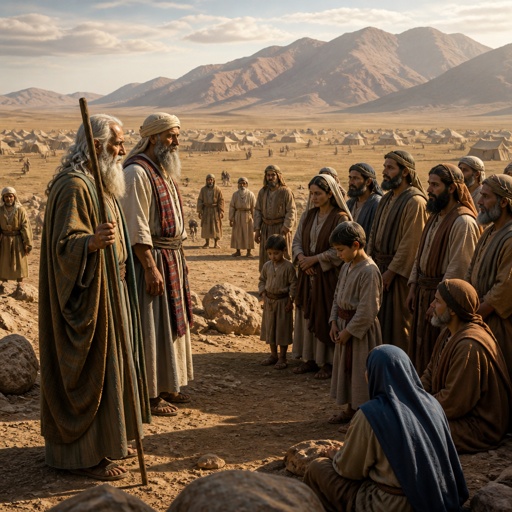
"But among these there was not a man of them whom Moses and Aaron the priest numbered, when they numbered the children of Israel in the wilderness of Sinai." - Numbers 26:64
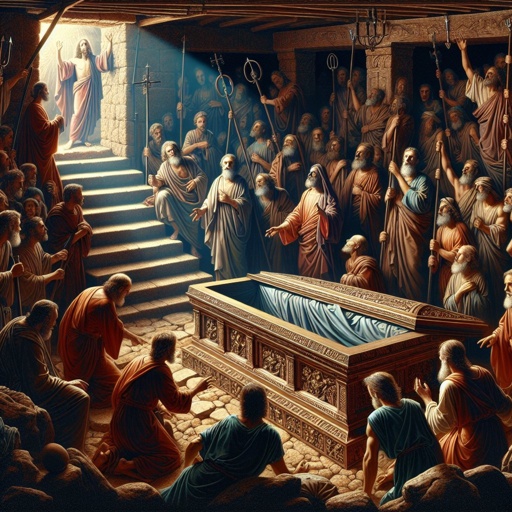
Matthew 27:64 - "Command therefore that the sepulchre be made sure until the third day, lest his disciples come by night, and steal him away, and say unto the people, He is risen from the dead: so the last error shall be worse than the first."

Matthew 26:25

Matthew 26:15

Matthew 19:26

Matthew 26:15

Matthew 27:26

Matthew 27:26

Matthew 26:53

Matthew 26:41

Matthew 26:65

Matthew 26:53
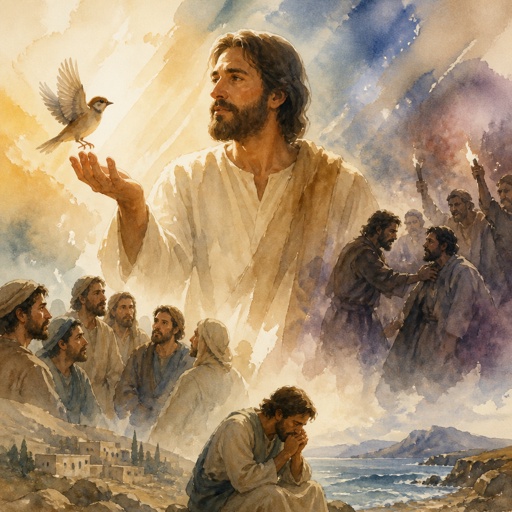
Matthew 10:26-33
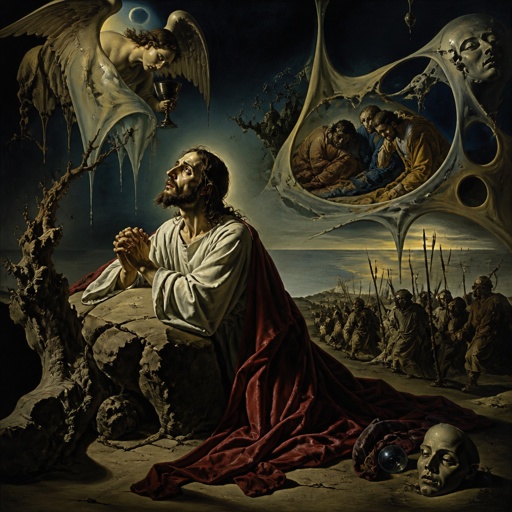
Matthew 26:36-46

Matthew 26:26 - "¶ And as they were eating, Jesus took bread, and blessed it, and brake it, and gave it to the disciples, and said, Take, eat; this is my body."

Matthew 22:26 - "Likewise the second also, and the third, unto the seventh."

Matthew 9:26 - "And the fame hereof went abroad into all that land."

Matthew 26:54 - "But how then shall the scriptures be fulfilled, that thus it must be?"

Matthew 26:6 - "¶ Now when Jesus was in Bethany, in the house of Simon the leper,"

Matthew 26:4 - "And consulted that they might take Jesus by subtilty, and kill him."

Matthew 26:5 - "But they said, Not on the feast day, lest there be an uproar among the people."

Matthew 26:16 - "And from that time he sought opportunity to betray him."

Matthew 26:72 - "And again he denied with an oath, I do not know the man."

Matthew 11:26 - "Even so, Father: for so it seemed good in thy sight."

Matthew 26:30 - "And when they had sung an hymn, they went out into the mount of Olives."

Matthew 26:20 - "Now when the even was come, he sat down with the twelve."

Matthew 26:66 - "What think ye? They answered and said, He is guilty of death."