The Dawn of Betrayal: A Reflection on Matthew 27:1-2
"When the morning was come, all the chief priests and elders of the people took counsel against Jesus to put him to death: And when they had bound him, they led him away, and delivered him to Pontius Pilate the governor." - Matthew 27:1-2
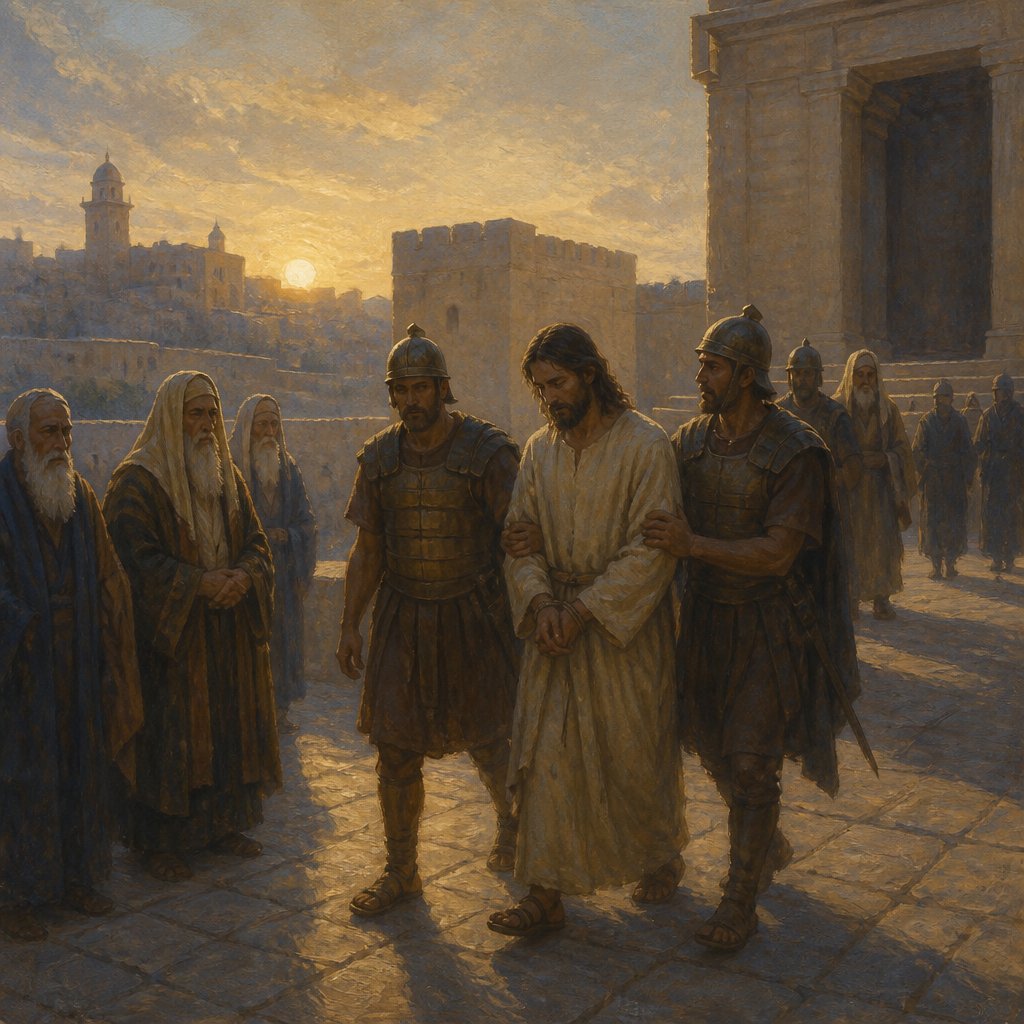
The scene set in Matthew 27:1-2 unveils a pivotal moment in the narrative of Jesus’ life—a moment steeped in betrayal, malice, and injustice. The verse reads, "When the morning was come, all the chief priests and elders of the people took counsel against Jesus to put him to death: And when they had bound him, they led him away, and delivered him to Pontius Pilate the governor." As we delve into this scripture, we encounter the somber reality of human nature and the deep-rooted animosity that often clings to truth and goodness.
The morning in this passage symbolizes not just the breaking of a new day but the dawning of grave decisions. The chief priests and elders, the very leaders of the Jewish people, stand united—not in the quest for justice, but rather in a conspiracy against the Son of God. This orchestrated effort to condemn Jesus highlights a striking irony: those who were meant to lead and shepherd their flock toward righteousness are instead leading them into darkness.
Their counsel against Jesus reveals how far from the truth their hearts have strayed. It reminds us that our spiritual leaders, while gifted and called by God, are still susceptible to pride, jealousy, and self-interest. The Gospel message often confronts these dynamics within the human heart; it shines a light on hypocrisy and the ease with which we can become antagonists to Christ, whether knowingly or unknowingly.
As we reflect upon this verse, we are compelled to examine our own hearts and the motivations behind our actions. What hinders us from following Christ fully? Are there areas in our lives where we counsel against Jesus through our choices? The crowd of religious leaders may seem distant in time, but the spirit of their actions resides within every one of us who struggles against the flesh—within the heart of every person caught in the struggles of ego and pride.
When they had bound Him, it marked the transition from ministry to martyrdom. The bond of ropes symbolizes the external restraints placed upon Jesus; however, the real binding was the deeply ingrained rejection of God’s presence among men. The elders and priests could have loosened those bonds through faith and repentance, yet their hearts were tethered to disbelief. How often do we bind ourselves—and others—with our own preconceived notions of God? Disbelief binds the heart, blinding us to the miraculous mercy within reach.
When they delivered Him to Pontius Pilate, we witness the ultimate transition of power—power misused for selfish ends. Pilate, the Roman governor, stands as a figure caught between the extreme demands of both the Jewish leaders and the truth of who Jesus is. How often do we find ourselves in positions where we are torn between what is right and the consequences of our choices? Pilate's struggle becomes a powerful reminder that the refusal to stand for truth often results in complicity with injustice.
As we continue our walk with Christ, let us not neglect the lessons found within this passage. Jesus—fully aware of the plans against Him—exemplifies grace and strength in vulnerability. His journey to the cross begins with this moment of betrayal. He chose obedience, even as those around him succumbed to their basest impulses. Let us remember the profound cost of our salvation was borne out of such betrayal by the very people meant to uphold the covenant.
In the light of Matthew 27:1-2, we are encouraged to live in awareness of our own hearts—to nurture faith, to surrender pride, and to embrace the truth of Jesus with unyielded devotion. There is hope in every dark hour when we allow the light of Christ to shine upon us, leading us from the bonds of sin into the glorious freedom of His grace. May we seek truth, uphold justice, and cherish the universality of Christ’s love as we navigate our own journeys each day.
Want to reflect more on Matthew 27:1-2?
Continue your spiritual journey with Bible Chat — an AI-powered tool for exploring God's Word through conversation. Ask questions, discover connections, and deepen your understanding.
Get Our Apps


Matthew 27:1-2 Artwork

Matthew 27:1-2 - "When the morning was come, all the chief priests and elders of the people took counsel against Jesus to put him to death: And when they had bound him, they led him away, and delivered him to Pontius Pilate the governor."
"When the morning was come, all the chief priests and elders of the people took counsel against Jesus to put him to death: And when they had bound him, they led him away, and delivered him to Pontius Pilate the governor." - Matthew 27:1-2

Matthew 27:26

Matthew 24:27

Matthew 7:24-27

Matthew 27:2 - "And when they had bound him, they led him away, and delivered him to Pontius Pilate the governor."

Matthew 27:1 - "When the morning was come, all the chief priests and elders of the people took counsel against Jesus to put him to death:"

1 John 2:27

1 John 2:27

1 John 2:27

1 John 2:27

NUMBERS 27:2

Matthew 1:2

Matthew 2:1-2

Matthew 27:46

Matthew 27:35

Matthew 2:9

Matthew 27:26

Matthew 27: 38

2 Samuel 1. 17-27

Matthew 2:1-12

Matthew 2:1-12

Matthew 2:1-12

Matthew 2:1-12

2 Samuel 1:27 - "How are the mighty fallen, and the weapons of war perished!"

Matthew 27:27 - "Then the soldiers of the governor took Jesus into the common hall, and gathered unto him the whole band of soldiers."

1 Chronicles 2:27 - "And the sons of Ram the firstborn of Jerahmeel were, Maaz, and Jamin, and Eker."

Matthew 27:16 - "And they had then a notable prisoner, called Barabbas."

Matthew 27:36 - "And sitting down they watched him there;"

Matthew 27:18 - "For he knew that for envy they had delivered him."