Fulfillment in the Law: Understanding Christ's Purpose
"¶ Think not that I am come to destroy the law, or the prophets: I am not come to destroy, but to fulfil." - Matthew 5:17

In Matthew 5:17, we hear Jesus proclaim, "Think not that I am come to destroy the law, or the prophets: I am not come to destroy, but to fulfil." This declaration is not merely an assertion; it is a profound statement that encapsulates the essence of Jesus' mission and the continuity of God’s divine plan. In this verse, we encounter a pivotal truth about Jesus' relationship to the Old Testament scriptures and the significance of His work on Earth.
To understand the weight of what Jesus is saying, we must first grasp the context of the Law and the Prophets within the Jewish tradition. The Law, given through Moses, consists of the commandments and the covenant that defined the relationship between God and His people. The Prophets brought forth divine messages aimed at guiding Israel towards faithfulness and warning them of the consequences of disobedience. Thus, for Jesus to assert that He came not to abolish these elements was revolutionary. It challenged the assumptions of His listeners, many of whom believed that He was introducing a radical departure from the faith they had upheld.
Jesus' assertion invites us to reflect on our own understanding of scripture and law. How often do we find ourselves viewing the commandments or teachings of God as outdated or overly burdensome? Sometimes in our pursuit of grace, we can minimize the importance of the law, relegating it to mere historical significance rather than understanding its role in the redemptive narrative of scripture. Yet, in this verse, Jesus affirms the law's importance by positioning Himself as its fulfillment.
The word "fulfill" is rich with meaning. In the original Greek, it implies to complete, to satisfy, or to bring to fullness. Jesus is not negating the law; rather, He is completing it. He embodies the righteous requirements of the law in His life, death, and resurrection. By being the perfect sacrifice, He fulfills the sacrificial system laid out in the Old Testament. The ceremonial laws, the moral imperatives, and the prophetic foreshadowing of the coming Messiah all find their ultimate expression in Christ.
Thus, when we look at the commandments through the lens of the Gospel, we see a heart behind the law—a desire for holiness, justice, and love. This is emphasized throughout His ministry, where He reinterprets the law, calling His followers to a deeper understanding that transcends mere rule-keeping. For instance, He speaks of the true meaning of murder and adultery, suggesting that anger and lust are equally grievous to the heart of God (Matthew 5:21-28).
Moreover, when Jesus speaks of fulfilling the prophets, it reminds us to acknowledge the prophetic nature of His mission. Each prophet pointed towards the coming Savior, the one who would bring redemption and reconciliation. Their messages of hope for a coming Messiah are realized in the person of Jesus. He does not abandon their words but rather brings to fruition the promises of God. In Jesus, we see the answer to centuries of longing for restoration and peace.
As we meditate on Matthew 5:17, we are encouraged to embrace both the law and the principles of grace. We recognize that our journey of faith is not about legalism, but about relationship—a relationship with the One who perfectly fulfilled every requirement and who invites us into a life of abundance.
When we accept Christ as our Lord and Savior, we become partakers in His fulfillment of the law. We are called not only to know the words of scripture but to live them out through love and obedience, empowered by the Holy Spirit. Let us approach the law with reverence, not as a means to earn righteousness, but as a guide that shows us how to live in accordance with God’s will, reflecting His character in a world in desperate need of love and truth.
In conclusion, let us remember that Jesus' fulfillment of the law is a testament to God's unwavering commitment to His people. As we navigate our walk of faith, may we do so with hearts that both honor the law and celebrate the grace that frees us to fulfill it through Christ.
Want to reflect more on Matthew 5:17?
Continue your spiritual journey with Bible Chat — an AI-powered tool for exploring God's Word through conversation. Ask questions, discover connections, and deepen your understanding.
Get Our Apps


Matthew 5:17 Artwork

Matthew 5:17 - "¶ Think not that I am come to destroy the law, or the prophets: I am not come to destroy, but to fulfil."

"¶ Think not that I am come to destroy the law, or the prophets: I am not come to destroy, but to fulfil." - Matthew 5:17
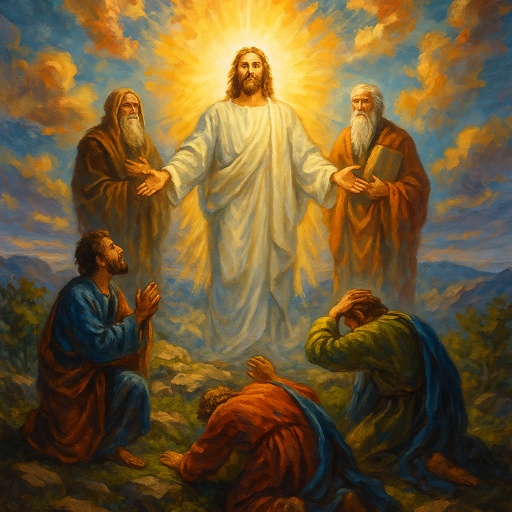
"While he yet spake, behold, a bright cloud overshadowed them: and behold a voice out of the cloud, which said, This is my beloved Son, in whom I am well pleased; hear ye him." - Matthew 17:5

Matthew 17:17-18

Matthew 17:17-18

Matthew 17:5 - "While he yet spake, behold, a bright cloud overshadowed them: and behold a voice out of the cloud, which said, This is my beloved Son, in whom I am well pleased; hear ye him."

Matthew 6:17

Matthew 17:20

Matthew 17:20

Matthew 5:5 - "Blessed are the meek: for they shall inherit the earth."

Matthew 5:44

Matthew 5:44

Matthew 5

Matthew 5

Matthew 19:16-17

Matthew 6:17-18

Matthew 17:14-21

Matthew 17:14-15

Matthew 3:13-17

Matthew 5:44

Matthew 5:44

Matthew 5

Matthew 5:44

Matthew 5:44

Matthew 5:14

Matthew 5:44

Matthew 5:38

Matthew 6:5

Matthew 5:14

Matthew 2:17 - "Then was fulfilled that which was spoken by Jeremy the prophet, saying,"