The Faith of the Centurion: A Lesson in Humility and Trust
“And when Jesus was entered into Capernaum, there came unto him a centurion, beseeching him,” — Matthew 8:5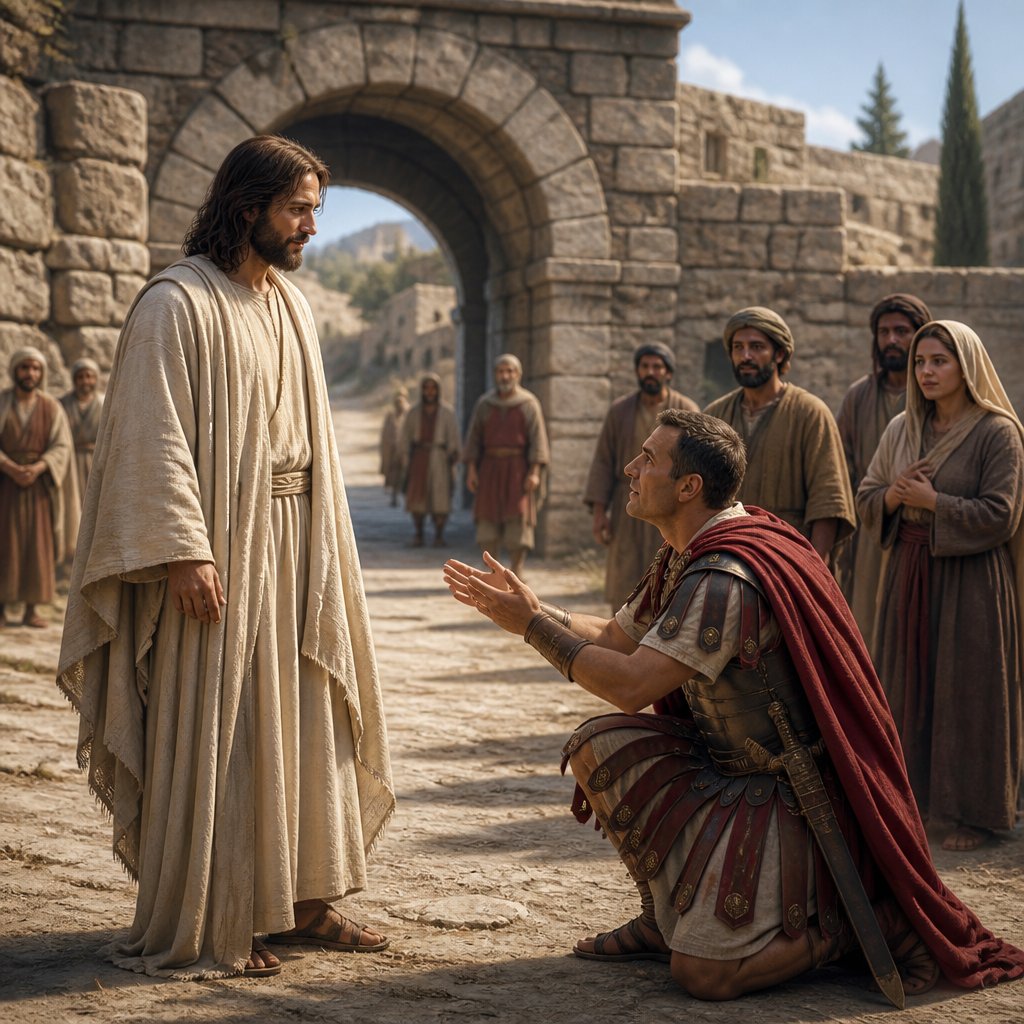
In the bustling town of Capernaum, a scene unfolds that encapsulates the essence of faith and humility. Matthew 8:5 states, "And when Jesus was entered into Capernaum, there came unto him a centurion, beseeching him." This brief narrative reveals profound truth about who Jesus is and what it means to come before Him in earnest need.
The centurion, a Roman officer responsible for a hundred men, stands out in this story as someone of authority and significance. His position in society typically affords him respect and honor, but when faced with the debilitating illness of his servant, all that status means little. This highlights a vital component of our relationship with God: humility. Despite his high rank, the centurion’s plea is born out of desperation. He recognizes that he is powerless in the face of suffering, and so he turns to Jesus, acknowledging His supreme authority.
When we consider the depths of this moment, we see an extraordinary combination of courage and humility. The centurion approaches Jesus despite cultural barriers and potential prejudice against a Roman occupying officer by the Jewish community. His willingness to seek help from a Jewish teacher speaks volumes about his desperation and about the innate understanding of authority and power he possesses.
Additionally, the centurion's approach is not boastful or demanding; rather, he is beseeching Jesus. To beseech is to plead earnestly, to come with a heart full of supplication—a posture that we must adopt in our own prayers. How often do we approach God with a list of demands instead of a heart of pleading? The centurion teaches us the art of approaching God with reverence and earnestness.
As the narrative unfolds, we learn that the centurion had faith that surpassed many, including those who followed Jesus closely. In Matthew 8:8, he states, "Lord, I am not worthy that thou shouldest come under my roof: but speak the word only, and my servant shall be healed." This statement is profound for several reasons. Firstly, it reveals the centurion’s recognition of his unworthiness—an important factor in any spiritual encounter. To acknowledge that we are not worthy illuminates our understanding of God’s grace and mercy. We cannot earn His favor; it is freely given.
Secondly, the centurion exhibits remarkable faith. He understands the nature of Jesus’ authority so deeply that he believes that a mere word from Jesus will suffice for healing. This is a striking contrast to the way many of us operate within our own lives. We often demand physical presence, tangible signs, and proof, whereas the centurion demonstrates that real faith relies on God’s word alone. When we approach God in prayer, do we truly believe that His word has the power to transform our situations?
The exchange between Jesus and the centurion goes on to challenge the belief systems of those around Him. Jesus comments, "Verily I say unto you, I have not found so great faith, no, not in Israel" (Matthew 8:10). This serves as a powerful reminder that faith is not confined to any nation, culture, or history; it is an open invitation extended to all who will believe, no matter their background.
As we reflect on this story, we are called to examine our own hearts. Are we willing to lay aside our pride and seek help from the One who has authority over life and death? Can we trust in His word and His power to heal not only our physical ailments but also our spiritual ones? The centurion’s faith serves as a model for us: it invites us to humble ourselves, acknowledge our need for God, and place our trust in His unlimited capability.
In conclusion, the faith of the centurion is a powerful reminder that the kingdom of God is accessible to everyone, regardless of social status or background. It calls for humility, trust in God’s authority, and the understanding that healing — be it physical or spiritual — is a matter of faith. Let us pray that we could emulate the earnest faith of the centurion and always approach Jesus with the humility He desires from us.
Get our apps


Artwork for Matthew 8:5

Matthew 8:5 - "¶ And when Jesus was entered into Capernaum, there came unto him a centurion, beseeching him,"
"¶ And when Jesus was entered into Capernaum, there came unto him a centurion, beseeching him," - Matthew 8:5

Matthew 5:8-12

Matthew 5:8 - "Blessed are the pure in heart: for they shall see God."

"Blessed are the pure in heart: for they shall see God." - Matthew 5:8

Matthew 8:13

Matthew 8:13

Matthew 8:13

Matthew 8:32

Matthew 8:32

Matthew 5:5 - "Blessed are the meek: for they shall inherit the earth."

Matthew 8:32

Matthew 5:44

Matthew 5:44

Matthew 5

Matthew 5

Matthew 5:44

Matthew 5:44

Matthew 5

Matthew 24:8

Matthew 13:8

matthew 8:28

Matthew 5:44

Matthew 5:44

Matthew 5:14

Matthew 5:44

Matthew 6:5

Matthew 5:14

Matthew 5:38

Matthew 5:30