Roots of Service: Embracing Our Spiritual Heritage
“Also of the Levites: Shemaiah the son of Hashub, the son of Azrikam, the son of Hashabiah, the son of Bunni;” — Nehemiah 11:15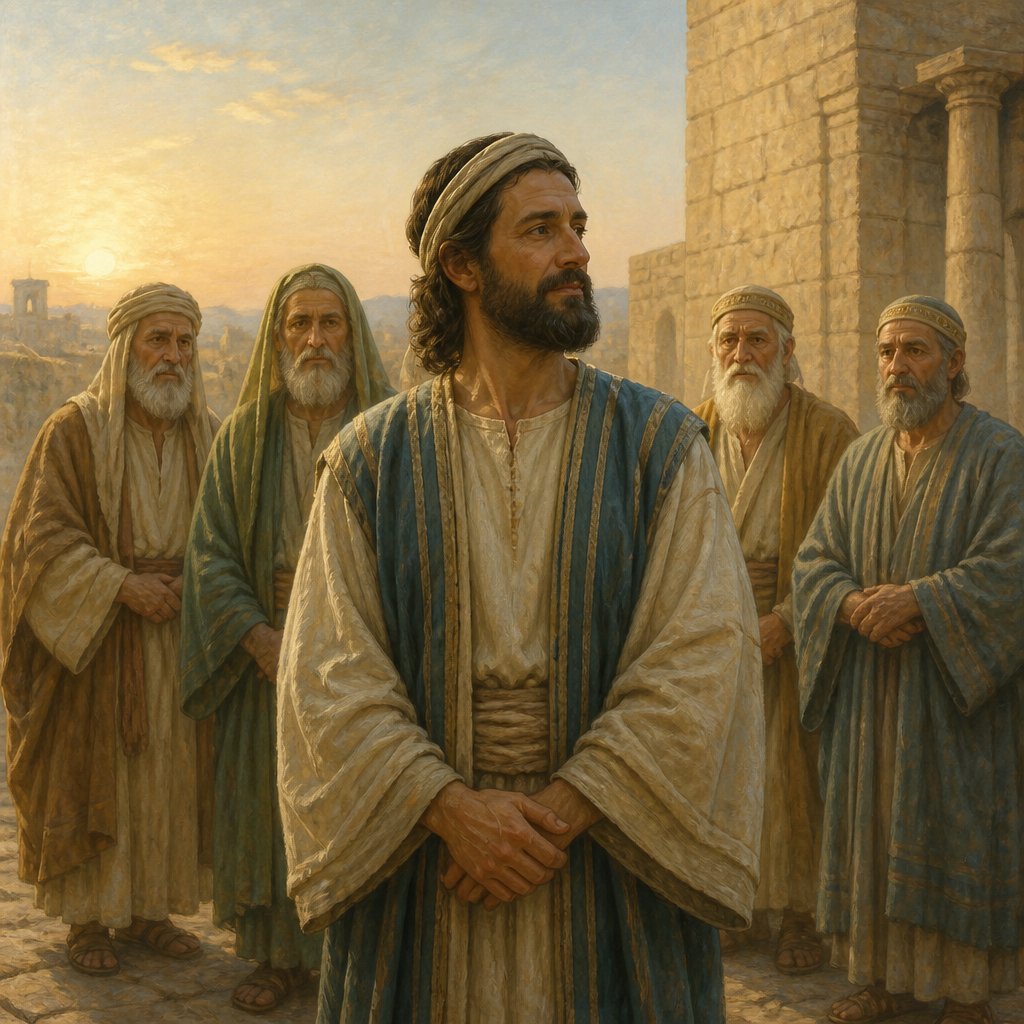
The verse Nehemiah 11:15 reads, "Also of the Levites: Shemaiah the son of Hashub, the son of Azrikam, the son of Hashabiah, the son of Bunni." At first glance, this passage may seem like a mere list of names, a genealogical record, or perhaps even a dry recounting of lineage. However, through careful reflection and study, we can unlock profound truths and lessons within these seemingly simple names.
The book of Nehemiah chronicles a pivotal moment in Jewish history—the return from Babylonian exile and the rebuilding of Jerusalem's walls and community. Nehemiah undertook the monumental tasks of restoration, both physical and spiritual, calling upon the people to take their rightful place in the renewed nation. This moment was not just about bricks and mortar but about reestablishing a covenant community centered on worship, justice, and service to God.
In this context, the naming of Shemaiah and his lineage reminds us of the importance of connection to our roots. It underscores how each member of the community plays a significant role within the wider narrative of faith and history. The Levites were set apart for religious duties, facilitating worship, and serving the community in vital ways. They were not only guardians of the law but also mediators of God’s presence among the people. In every name listed in this verse, there lies a story—a legacy of faithfulness, devotion, and sacrifice.
We live in a world that often prizes individualism and personal achievement, but Scripture continually draws us back to the importance of community and heritage. The names mentioned in Nehemiah 11:15 connect us to generations of servants who committed themselves to God's purposes. It prompts us to ask: who are the "Levites" in our lives? Whose shoulders are we standing on as we pursue our callings?
Shemaiah's line does not merely represent a family tree but illustrates the fabric of Israel's worship life. Each ancestor mentioned signifies the passing down of faithfulness and the importance of nurturing spiritual legacy. Likewise, in our lives, we must acknowledge those who have invested spiritually in us—parents, mentors, teachers, and faithful friends. The cumulative impact of their faith should compel us to be equally fervent in our service and commitment to God.
When we reflect on our own spiritual journeys, we can identify moments where we recognize the hand of God, often through the influence of others. This brings us to a practical application of Nehemiah 11:15: how are we currently contributing to the stories of those who come after us? What legacies are we nurturing within our families and communities? Each one of us has a unique part to play, a lineage of faith to uphold, and a community to serve.
Moreover, the specificity in the naming convention also alerts us to the idea that every contribution counts in the body of Christ. The Levites were given specific roles, and there was no one person too insignificant to be mentioned or to fulfill a duty vital to the community's well-being. In our churches today, we may often feel small or unnoticed amidst the many more prominent roles, yet it is essential to remember that every act of service, no matter how small, contributes to the kingdom's work. Just as each Levite had their appointed tasks, so do we—all belonging to one body yet having individual functions (Romans 12:4-5).
In conclusion, Nehemiah 11:15 encourages us to reflect on our heritage, appreciate the community we belong to, and consider how we can nurture that legacy for future generations. Let us honor those who have gone before us by committing ourselves wholeheartedly to service and building a next generation that stands on solid spiritual ground, remembering that we are all part of a larger, glorious story.
Get our apps


Artwork for Nehemiah 11:15

Nehemiah 11:15 - "Also of the Levites: Shemaiah the son of Hashub, the son of Azrikam, the son of Hashabiah, the son of Bunni;"
"Also of the Levites: Shemaiah the son of Hashub, the son of Azrikam, the son of Hashabiah, the son of Bunni;" - Nehemiah 11:15

Nehemiah 11:11-14

Nehemiah 11:13

Nehemiah 11:1-19

Nehemiah 10:15 - "Bunni, Azgad, Bebai,"

Nehemiah 11:34 - "Hadid, Zeboim, Neballat,"

Nehemiah 10:11 - "Micha, Rehob, Hashabiah,"

Nehemiah 12:15 - "Of Harim, Adna; of Meraioth, Helkai;"

Nehemiah 11:33 - "Hazor, Ramah, Gittaim,"

Nehemiah 11:32 - "And at Anathoth, Nob, Ananiah,"

Nehemiah 11:26 - "And at Jeshua, and at Moladah, and at Beth-phelet,"

Nehemiah 11:29 - "And at En-rimmon, and at Zareah, and at Jarmuth,"

Nehemiah 11:35 - "Lod, and Ono, the valley of craftsmen."

Nehemiah 11:28 - "And at Ziklag, and at Mekonah, and in the villages thereof,"

Nehemiah 7:15 - "The children of Binnui, six hundred forty and eight."

Nehemiah 11:36 - "And of the Levites were divisions in Judah, and in Benjamin."

Nehemiah 11:10 - "Of the priests: Jedaiah the son of Joiarib, Jachin."

Nehemiah 12:11 - "And Joiada begat Jonathan, and Jonathan begat Jaddua."
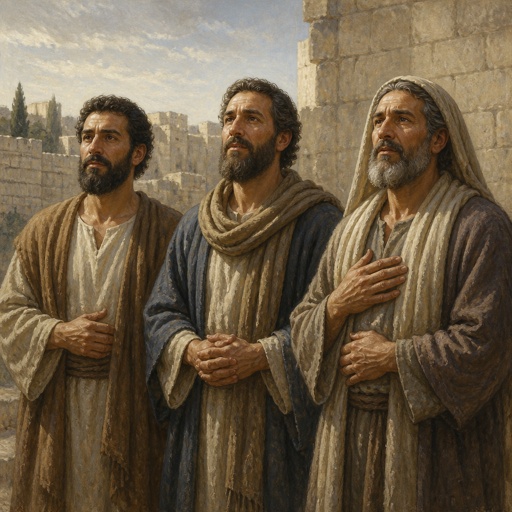
"Bunni, Azgad, Bebai," - Nehemiah 10:15

Nehemiah 11:27 - "And at Hazar-shual, and at Beer-sheba, and in the villages thereof,"

Nehemiah 2:11 - "So I came to Jerusalem, and was there three days."

Nehemiah 11:11 - "Seraiah the son of Hilkiah, the son of Meshullam, the son of Zadok, the son of Meraioth, the son of Ahitub, was the ruler of the house of God."

Nehemiah 6:15 – "So the wall was completed on the twenty-fifth of Elul, in fifty-two days."
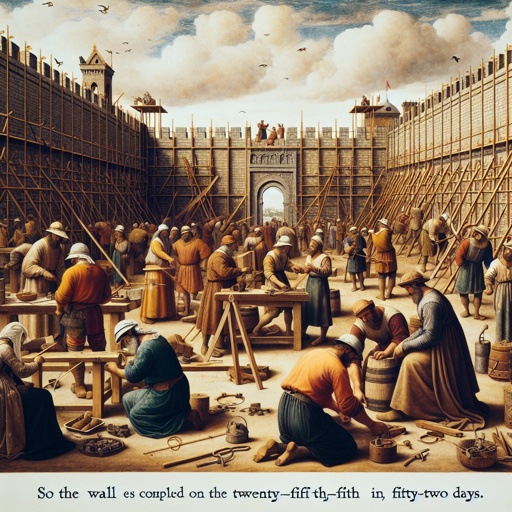
Nehemiah 6:15 – "So the wall was completed on the twenty-fifth of Elul, in fifty-two days."

"And at Anathoth, Nob, Ananiah," - Nehemiah 11:32

John 1:1-5

John 1:1-5

"Hadid, Zeboim, Neballat," - Nehemiah 11:34

"Hazor, Ramah, Gittaim," - Nehemiah 11:33