A Legacy of Worship and Service: Lessons from Nehemiah 11:22
“The overseer also of the Levites at Jerusalem was Uzzi the son of Bani, the son of Hashabiah, the son of Mattaniah, the son of Micha. Of the sons of Asaph, the singers were over the business of the house of God.” — Nehemiah 11:22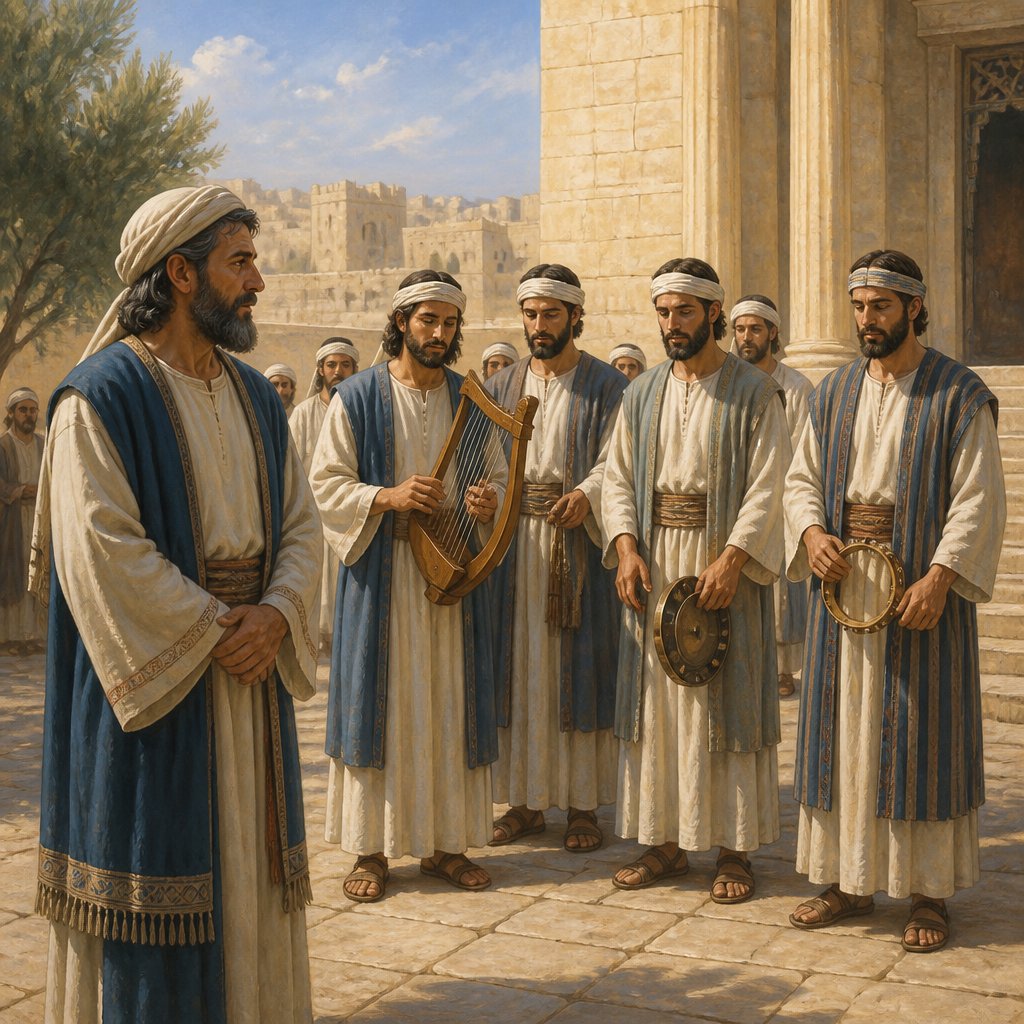
In Nehemiah 11:22, we encounter a seemingly straightforward verse which reads: "The overseer also of the Levites at Jerusalem was Uzzi the son of Bani, the son of Hashabiah, the son of Mattaniah, the son of Micha. Of the sons of Asaph, the singers were over the business of the house of God." At first glance, it seems like just another mention of a genealogy, but tucked within this verse is a rich tapestry of spiritual significance, purpose, and the weight of serving in the house of God.
To understand the gravity of Nehemiah 11:22, it is essential to grasp its historical context. The book of Nehemiah narrates a pivotal period in Jewish history as the exiles returned to Jerusalem and set about rebuilding not only the walls but also the spiritual heart of the city. As they returned, restoring the temple service was of utmost importance. It was not just about physical structures; it was about reinstating the worship of Yahweh, a central theme of their identity as a people. This verse is like a piece of a puzzle in the larger picture of spiritual renewal and dedication.
First, consider Uzzi, the overseer. His role is to ensure that the worship and service performed by the Levites was executed correctly and with diligence. This position highlights the importance of leadership within the church today. Spiritual leaders must be careful stewards of the gift of worship entrusted to them. Just as Uzzi oversaw the Levites, church leaders are called to guide, protect, and encourage those they lead in their service to God. There is tremendous responsibility in overseeing the affairs of God's house, and leaders must recognize their roles as shepherds of both the flock and the worship.
Moreover, Uzzi is identified through a lineage that connects him to four generations of faithful service: Bani, Hashabiah, Mattaniah, and Micha. This lineage serves as a powerful reminder that our commitments to God and His service are not isolated events but part of a continuum—a legacy passed down through generations. Each name in this genealogical line represents a life lived in dedication to God, serving the community, and upholding the standard of worship. The fruits of their labor nourished the community of Jerusalem, ensuring that worship was not only maintained but prospered during uncertain times.
Reflecting on the concept of legacy, believers today should ask themselves: "What spiritual inheritance am I building for the next generation?" It is imperative that each of us recognizes the role we play in modeling faithfulness to our children and communities. The example we set echoes through time.
The mention of the singers from the sons of Asaph emphasizes another aspect of worship—the need for creativity and artistry in our collective praise and worship. In ancient Israel, music was not merely entertainment; it was a crucial element of expressing reverence to God. Entertainers of the world may seek to distract us, but the artistry inspired by the Holy Spirit draws us closer to God. The environment created by the Levite singers was one of sonorous worship, which enveloped the worshippers in an experience connecting them directly with the heart of God.
As we continue to navigate our modern worship practices, we must ensure that every song sung, every prayer lifted, and every act of service performed in the house of God reflects a passion for bringing glory to His name. Each contribution, whether from the pulpit or the pew, combines to create a fragrant offering to the Lord.
In conclusion, Nehemiah 11:22 serves as a theological reminder that worship is more than a ritual; it is an ongoing testament of faith passed down through generations, consisting not just of leaders but of every individual willing to engage in the service of their God. As we look to the examples set before us, may we, like Uzzi and the Levites, commit ourselves wholly to the business of the house of God, knowing that our service today resonates in eternity.
Get our apps


Artwork for Nehemiah 11:22

Nehemiah 11:22 - "The overseer also of the Levites at Jerusalem was Uzzi the son of Bani, the son of Hashabiah, the son of Mattaniah, the son of Micha. Of the sons of Asaph, the singers were over the business of the house of God."
"The overseer also of the Levites at Jerusalem was Uzzi the son of Bani, the son of Hashabiah, the son of Mattaniah, the son of Micha. Of the sons of Asaph, the singers were over the business of the house of God." - Nehemiah 11:22

Nehemiah 11:11-14

Nehemiah 11:13

Nehemiah 10:22 - "Pelatiah, Hanan, Anaiah,"

Nehemiah 11:1-19

Nehemiah 7:22 - "The children of Hashum, three hundred twenty and eight."

Nehemiah 3:22 - "And after him repaired the priests, the men of the plain."

Nehemiah 11:34 - "Hadid, Zeboim, Neballat,"

Nehemiah 10:11 - "Micha, Rehob, Hashabiah,"

Nehemiah 11:33 - "Hazor, Ramah, Gittaim,"

Nehemiah 11:32 - "And at Anathoth, Nob, Ananiah,"

Nehemiah 11:26 - "And at Jeshua, and at Moladah, and at Beth-phelet,"

Nehemiah 11:29 - "And at En-rimmon, and at Zareah, and at Jarmuth,"

"Pelatiah, Hanan, Anaiah," - Nehemiah 10:22

Nehemiah 11:35 - "Lod, and Ono, the valley of craftsmen."

Nehemiah 11:28 - "And at Ziklag, and at Mekonah, and in the villages thereof,"

Nehemiah 11:36 - "And of the Levites were divisions in Judah, and in Benjamin."

Nehemiah 11:10 - "Of the priests: Jedaiah the son of Joiarib, Jachin."

Nehemiah 12:11 - "And Joiada begat Jonathan, and Jonathan begat Jaddua."

Nehemiah 11:27 - "And at Hazar-shual, and at Beer-sheba, and in the villages thereof,"

Nehemiah 2:11 - "So I came to Jerusalem, and was there three days."

Nehemiah 11:11 - "Seraiah the son of Hilkiah, the son of Meshullam, the son of Zadok, the son of Meraioth, the son of Ahitub, was the ruler of the house of God."

"And at Anathoth, Nob, Ananiah," - Nehemiah 11:32

"Hadid, Zeboim, Neballat," - Nehemiah 11:34

"Hazor, Ramah, Gittaim," - Nehemiah 11:33

"Micha, Rehob, Hashabiah," - Nehemiah 10:11

Nehemiah 11:21 - "But the Nethinims dwelt in Ophel: and Ziha and Gispa were over the Nethinims."

Nehemiah 11:8 - "And after him Gabbai, Sallai, nine hundred twenty and eight."

Nehemiah 11:2 - "And the people blessed all the men, that willingly offered themselves to dwell at Jerusalem."