Dwelling Together in God’s Promises
“The children also of Benjamin from Geba dwelt at Michmash, and Aija, and Beth-el, and in their villages,” — Nehemiah 11:31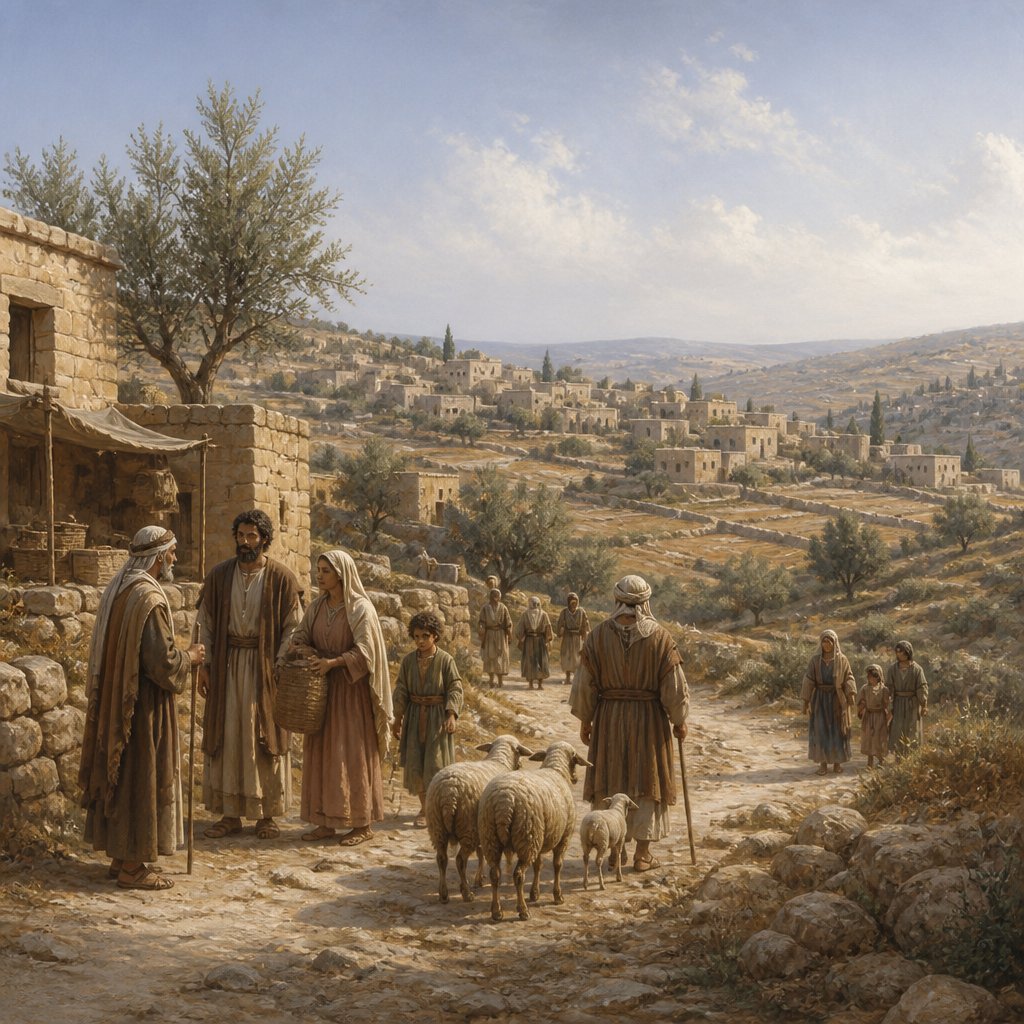
**Scripture Reference: Nehemiah 11:31**
*“The children also of Benjamin from Geba dwelt at Michmash, and Aija, and Beth-el, and in their villages.”*
In the midst of a recounting of the returning exiles, Nehemiah offers us a glimpse into the geography of God’s restoration. The mention of the children of Benjamin settling in specific locations is much more than a mere historical note—it reveals profound truths about community, belonging, and God's promise of a renewed identity.
The context of this verse emerges from a pivotal moment in Israel’s history. After decades of exile, the Israelites are returning to Jerusalem, the city of their God, to rebuild both its physical walls and the spiritual integrity of their community. Nehemiah, a leader of exemplary faith and determination, is tasked with the formidable challenge of re-establishing a people who have been scattered and disheartened. It is in this environment that we find our verse, highlighting the settlement of the tribe of Benjamin.
**Understanding the Tribes**
Benjamin, one of the smaller tribes, has a layered history marked by both glory and shame. Home to notable figures such as King Saul and later, Paul the Apostle, Benjamin’s legacy is intertwined with adversity but also with divine promise. The children of Benjamin dwelling at various locations—Geba, Michmash, Aija, Beth-el, and beyond—symbolizes hope. Each place mentioned carries significant weight in the narrative of God’s faithfulness.
- **Geba** was pivotal in the conquest of Canaan when it was captured by Joshua (Joshua 18:24). It represents the reclaiming of what is rightfully theirs, emphasizing God’s redemptive power.
- **Michmash** served as a strategic site during battles with the Philistines (1 Samuel 13:5). The dwellers here were not just settling; they were strategically positioning themselves for defense and growth.
- **Aija** and **Beth-el** are reminders of the places where God encountered humanity whole-heartily—especially Beth-el, which means 'House of God' (Genesis 28:19). These names evoke memories of worship, promises, and the covenant relationship God desires with His people.
By settling in these towns, the returning exiles not only reclaim their land but also their identity as children of God. Each locality they inhabit becomes a testament to the faithfulness of God, indicating that He is restoring what was lost.
**Community and Belonging**
The narrative of the children of Benjamin illustrates God's heart for community. In a day where individualism often reigns, we may feel disconnected or isolated. Yet, God calls us into various forms of community where we can gather, grow, and support one another. Just as the children of Benjamin dwell in villages together, so are we called to link arms with our brothers and sisters in Christ. It echoes Paul’s words in 1 Corinthians 12:12-14, where he emphasizes the necessity of every member of the body of Christ and the unity that should characterize our community.
In our own lives, where are the Michmashes, Gebas, and Beth-els? Where do we find ourselves dwelling? These are the places where God invites us to cultivate relationships that reflect His love. As we live in community, sharing our lives and resources, we reflect the image of Christ to the world.
**God’s Continued Work**
Nehemiah 11:31 reminds us that God continues to work in and through our lives. It is a declaration of His ongoing restoration process. As we celebrate the local communities we belong to, let us also remember that we are part of a greater narrative—the story of redemption that spans across generations.
Let us step into the places where God has called us to dwell, committing ourselves to cultivate not only physical spaces but also spiritual growth and connection. As we do so, we honor the legacy of those who have gone before us—much like Benjamin—and shine the light of Christ brightly in a world longing for healing and hope.
Get our apps


Artwork for Nehemiah 11:31
Nehemiah 11:31 - "The children also of Benjamin from Geba dwelt at Michmash, and Aija, and Beth-el, and in their villages,"
"The children also of Benjamin from Geba dwelt at Michmash, and Aija, and Beth-el, and in their villages," - Nehemiah 11:31

Nehemiah 7:31 - "The men of Michmas, an hundred and twenty and two."

Nehemiah 11:11-14

Nehemiah 11:13

Nehemiah 11:1-19

Nehemiah 13:31 - "And for the wood offering, at times appointed, and for the firstfruits. Remember me, O my God, for good."
"The men of Michmas, an hundred and twenty and two." - Nehemiah 7:31

Nehemiah 11:34 - "Hadid, Zeboim, Neballat,"

Nehemiah 10:11 - "Micha, Rehob, Hashabiah,"

Nehemiah 11:33 - "Hazor, Ramah, Gittaim,"

Nehemiah 11:32 - "And at Anathoth, Nob, Ananiah,"

Nehemiah 11:26 - "And at Jeshua, and at Moladah, and at Beth-phelet,"

Nehemiah 11:29 - "And at En-rimmon, and at Zareah, and at Jarmuth,"

Nehemiah 11:35 - "Lod, and Ono, the valley of craftsmen."

Nehemiah 11:28 - "And at Ziklag, and at Mekonah, and in the villages thereof,"

Nehemiah 11:36 - "And of the Levites were divisions in Judah, and in Benjamin."

Nehemiah 11:10 - "Of the priests: Jedaiah the son of Joiarib, Jachin."

Nehemiah 12:11 - "And Joiada begat Jonathan, and Jonathan begat Jaddua."

Nehemiah 11:27 - "And at Hazar-shual, and at Beer-sheba, and in the villages thereof,"

Nehemiah 2:11 - "So I came to Jerusalem, and was there three days."

Nehemiah 11:11 - "Seraiah the son of Hilkiah, the son of Meshullam, the son of Zadok, the son of Meraioth, the son of Ahitub, was the ruler of the house of God."
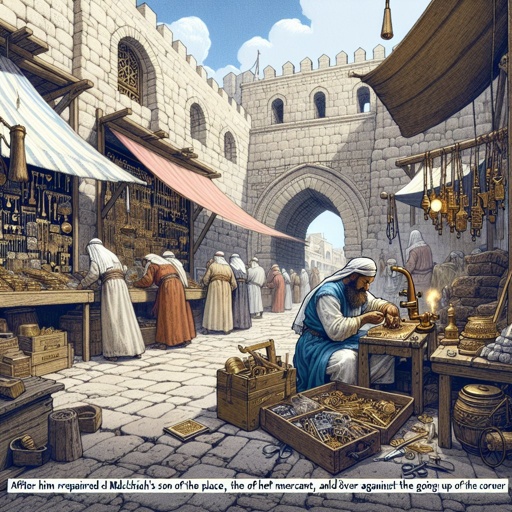
Nehemiah 3:31 - "After him repaired Malchiah the goldsmith's son unto the place of the Nethinims, and of the merchants, over against the gate Miphkad, and to the going up of the corner."

"And at Anathoth, Nob, Ananiah," - Nehemiah 11:32

Nehemiah 9:31 - "Nevertheless for thy great mercies' sake thou didst not utterly consume them, nor forsake them; for thou art a gracious and merciful God."

"Hadid, Zeboim, Neballat," - Nehemiah 11:34

"Hazor, Ramah, Gittaim," - Nehemiah 11:33

"Micha, Rehob, Hashabiah," - Nehemiah 10:11

Nehemiah 11:21 - "But the Nethinims dwelt in Ophel: and Ziha and Gispa were over the Nethinims."

Nehemiah 11:8 - "And after him Gabbai, Sallai, nine hundred twenty and eight."