Harmony in Worship: The Legacy of Praise
“And the chief of the Levites: Hashabiah, Sherebiah, and Jeshua the son of Kadmiel, with their brethren over against them, to praise and to give thanks, according to the commandment of David the man of God, ward over against ward.” — Nehemiah 12:24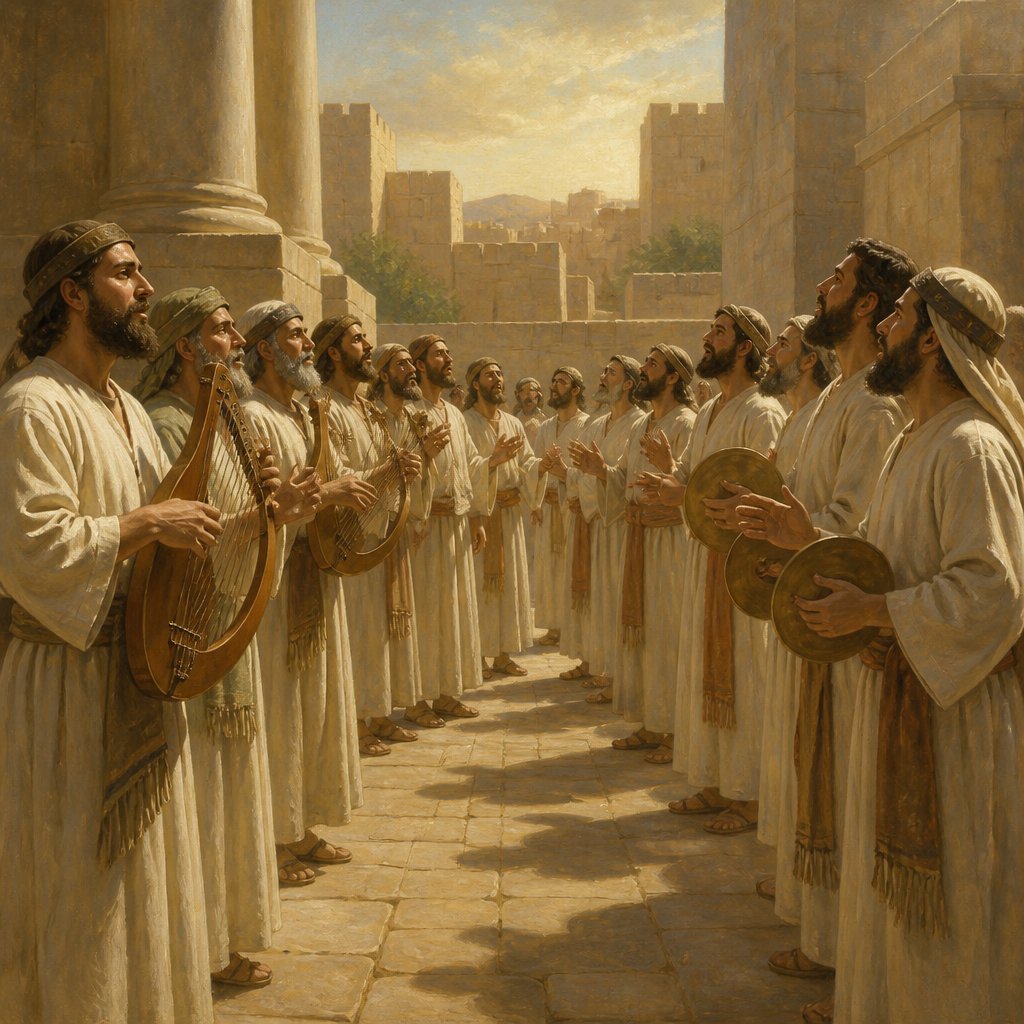
Nehemiah 12:24 presents us with a vivid scene from the days of Israel’s restoration as they returned to Jerusalem after the Babylonian exile. It reads, "And the chief of the Levites: Hashabiah, Sherebiah, and Jeshua the son of Kadmiel, with their brethren over against them, to praise and to give thanks, according to the commandment of David the man of God, ward over against ward." This rich text invites us to delve into the roles, responsibilities, and the sacred importance of worship within the community.
As we study this verse, we encounter three chief Levites: Hashabiah, Sherebiah, and Jeshua. Each name carries weight, reminiscent of their dedication and specific function in serving God and leading the people in worship. The Levites were set apart for temple service, and their main duty was to lead the people in praise and thanksgiving—activities that reflect a heart of gratitude towards God for His unwavering faithfulness.
To understand their roles, we must consider the context of worship in ancient Israel. Worship was not merely a routine; it was a prescription laid down by God Himself. The commandment of David, mentioned in this verse, underscores that worship should be systematized, organized, and done with intention. David, known as a man after God’s own heart (1 Samuel 13:14), understood the significance of worship as a central aspect of both personal and communal life. His desire was to create an environment where praise could flow freely and where God would be honored among the people.
In our modern context, this brings us to reflect on how we approach worship today. Are we intentional in our worship and thankfulness? Do we recognize that it is a commandment, a lifestyle that involves not just singing songs on Sundays, but living a life of thanks? Hashabiah, Sherebiah, and Jeshua remind us of how vital our roles are in the grand worship of God, encouraging one another as we face life’s uncertainties and challenges.
These Levites had brethren 'over against them,' indicating that worship is a shared experience. They stood facing each other in a show of unity and collaboration. It is a profound image that illustrates the importance of community in worship. When we gather as a body of believers, we are not mere spectators; we are participants in a divine choreography of praise. Together, we uplift each other, forming a chorus of voices that collectively honor God.
Moreover, we notice that their task was specifically stated: they were there "to praise and to give thanks." These twin pillars of worship—praise and thanksgiving—should echo in our own hearts. Praise is the natural response of our hearts to God’s greatness, while thanksgiving acknowledges His goodness and provision. When we blend these two, we cultivate an authentic spirit of worship that reflects our relationship with our Creator.
Looking deeper into the commandment of David, we cannot ignore that it was driven by a desire for heartfelt worship. Sometimes, in our prayer and praise, it can be easy to fall into mechanical recitation devoid of passion. The Levites challenge us to bring our whole selves before God. What does it look like for you to genuinely praise Him? How can you express your thankfulness in a way that honors His work in your life?
As such, Nehemiah 12:24 stands as a timeless reminder that worship is both an individual and communal journey. In the hustle and bustle of daily life, let us find our 'ward'—our dedicated space and time for worship, ensuring that we create a culture of praise warm with gratitude. Let the names Hashabiah, Sherebiah, and Jeshua inspire us to claim our place in this sacred act of devotion. With each note of praise and every grateful heart that we gather together, we echo the praises of those faithful Levites who long ago sought to honor God through their unyielding commitment to worship.
Get our apps


Artwork for Nehemiah 12:24
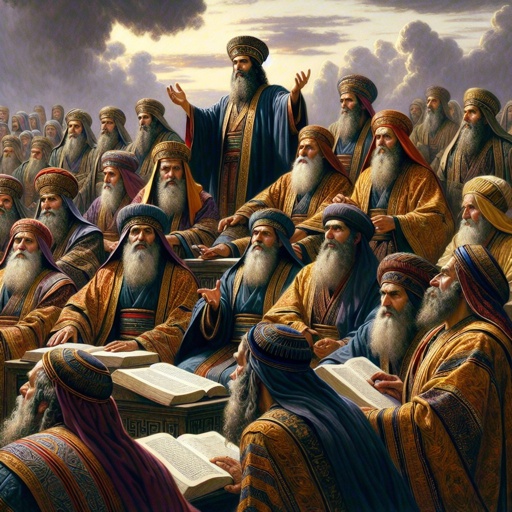
Nehemiah 12:24 - "And the chief of the Levites: Hashabiah, Sherebiah, and Jeshua the son of Kadmiel, with their brethren over against them, to praise and to give thanks, according to the commandment of David the man of God, ward over against ward."
"And the chief of the Levites: Hashabiah, Sherebiah, and Jeshua the son of Kadmiel, with their brethren over against them, to praise and to give thanks, according to the commandment of David the man of God, ward over against ward." - Nehemiah 12:24

James 1:2-4

James 1: 2-4

Joel 1:2-4, 13-20

Nehemiah 10:24 - "Hallohesh, Pileha, Shobek,"

Nehemiah 7:24 - "The children of Hariph, an hundred and twelve."

Nehemiah 12:26 - "These were in the days of Joiakim the son of Jeshua, the son of Jozadak, and in the days of Nehemiah the governor, and of Ezra the priest, the scribe."

"Hallohesh, Pileha, Shobek," - Nehemiah 10:24

Nehemiah 12:33 - "And Azariah, Ezra, and Meshullam,"

Nehemiah 12:5 - "Miamin, Maadiah, Bilgah,"

Nehemiah 12:2 - "Amariah, Malluch, Hattush,"

Nehemiah 12:4 - "Iddo, Ginnetho, Abijah,"

Nehemiah 12:3 - "Shechaniah, Rehum, Meremoth,"

Nehemiah 10:12 - "Zaccur, Sherebiah, Shebaniah,"

Nehemiah 12:6 - "Shemaiah, and Joiarib, Jedaiah,"

Nehemiah 12:12 - "And in the days of Joiakim were priests, the chief of the fathers: of Seraiah, Meraiah; of Jeremiah, Hananiah;"

Nehemiah 12:16 - "Of Iddo, Zechariah; of Ginnethon, Meshullam;"

Nehemiah 12:13 - "Of Ezra, Meshullam; of Amariah, Jehohanan;"

Nehemiah 12:20 - "Of Sallai, Kallai; of Amok, Eber;"

Nehemiah 12:19 - "And of Joiarib, Mattenai; of Jedaiah, Uzzi;"

Nehemiah 12:34 - "Judah, and Benjamin, and Shemaiah, and Jeremiah,"

Nehemiah 12:15 - "Of Harim, Adna; of Meraioth, Helkai;"

Nehemiah 12:18 - "Of Bilgah, Shammua; of Shemaiah, Jehonathan;"

Nehemiah 12:14 - "Of Melicu, Jonathan; of Shebaniah, Joseph;"

Nehemiah 12:21 - "Of Hilkiah, Hashabiah; of Jedaiah, Nethaneel."

"The children of Hariph, an hundred and twelve." - Nehemiah 7:24

Nehemiah 12:17 - "Of Abijah, Zichri; of Miniamin, of Moadiah, Piltai;"

Nehemiah 12:11 - "And Joiada begat Jonathan, and Jonathan begat Jaddua."

Nehemiah 7:12 - "The children of Elam, a thousand two hundred fifty and four."