Restoring the Walls: A Community Rebuilt in Worship and Obedience
“Shechaniah, Rehum, Meremoth,” — Nehemiah 12:3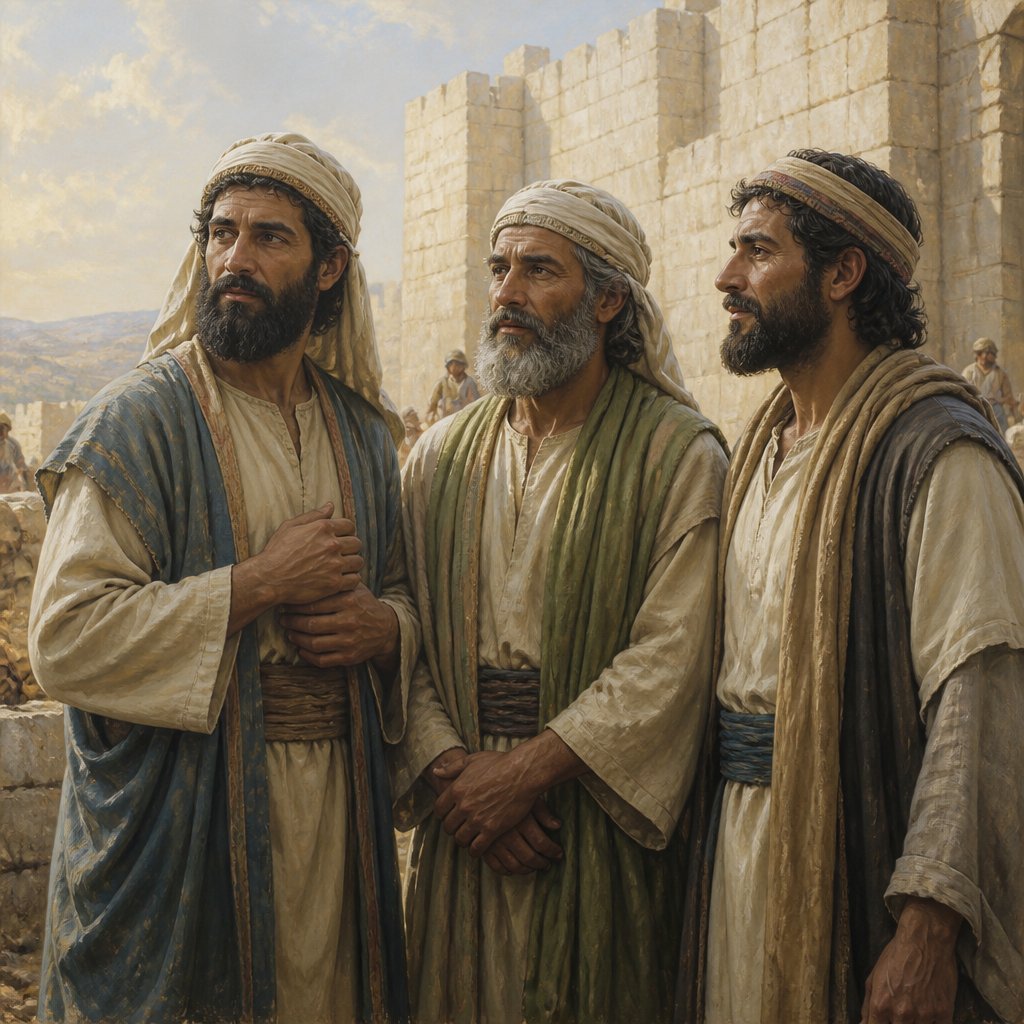
In the book of Nehemiah, we find a powerful narrative about community, dedication, and spiritual renewal. One particular verse, Nehemiah 12:3, states, "Shechaniah, Rehum, Meremoth," a simple yet profound representation of leadership and commitment during a time of restoration. This verse, although appearing as a list of names, symbolizes the critical roles these figures played in the great task of rebuilding the walls of Jerusalem and rekindling the faith of the people after years of exile and dispersion.
The context of this scripture is essential. After the Israelites returned to Jerusalem, they faced the immense task of reconstruction—not only of their physical city walls but also of their spiritual lives and community identity. Each name in this verse reflects a part of that task, each representing families that contributed to the greater good. Shechaniah, Rehum, and Meremoth—these were not just names, but were borne by individuals who chose to act, to lead, and to invest in their community. They understood that they were part of something much larger than themselves.
As we meditate on this verse, we are drawn to the question: How do we contribute to our communities today? Are we behaving like Shechaniah, Rehum, and Meremoth, taking on responsibilities that help fortify our spiritual walls? Our contemporary walls may not be made of bricks and mortar, but they stand as metaphors for the values, relationships, and faith we hold dear.
Consider the role of Shechaniah, whose name means "the Lord is my portion." In our own lives, when challenges arise, we must be reminded that God is our portion. He is enough. Whatever we face—whether rebuilding a relationship, restoring faith, or simply weathering life's storms—God is our steadfast foundation. Like Shechaniah, we must lead by example; we should be the ones who declare that our reliance on God is paramount. What is it in your life that needs rebuilding? Once you identify it, allow God to become your foundation.
Rehum, translated to mean "mercy," highlight the importance of grace within our communities. Without mercy, any effort toward restoration is met with frustration and anger. In our busy lives, we often forget the grace extended to us, and how we need to replicate that same mercy towards others. During difficult encounters, let’s remember how mercy has transformed our lives, just as it transformed the community of Nehemiah’s day. When we exercise grace, it fosters an environment where rebuilding becomes possible.
Lastly, Meremoth, whose name signifies "heights," reminds us of the goal in our restoration efforts. The goal is not merely to rebuild our walls but to aspire to greater heights—to seek spiritual and personal growth in the process. Each endeavor, each act of service, reinforces our community and challenges us to rise higher. This uplands journey calls on us to invite others to join in this path of elevation, realizing that together we navigate these heights.
When we draw together in faith, when we solidify our foundations in God, practice mercy in our relationships, and strive for higher ideals, we create a legacy worth noting. Like those mentioned in Nehemiah 12:3, we too can foster a culture that recognizes and values every individual’s contribution to the whole. Together we can ascend the walls of this world—a world that desperately seeks hope and restoration.
As we conclude this reflection, ask yourself: Which role do I play in my community? How can I embody the characteristics shown by Shechaniah, Rehum, and Meremoth? In seeking these answers, remember the transformative power of God’s grace in your life and the lives around you. Embrace your position, step forward with courage, and play your part in the grand purpose of restoration that our Creator has ordained.
Get our apps


Artwork for Nehemiah 12:3

Nehemiah 12:3 - "Shechaniah, Rehum, Meremoth,"

"Shechaniah, Rehum, Meremoth," - Nehemiah 12:3

Nehemiah 3:12 - "And next unto him repaired Shallum the son of Halohesh, the ruler of the half part of Jerusalem, he and his daughters."

Nehemiah 12:26 - "These were in the days of Joiakim the son of Jeshua, the son of Jozadak, and in the days of Nehemiah the governor, and of Ezra the priest, the scribe."

Nehemiah 12:5 - "Miamin, Maadiah, Bilgah,"

Nehemiah 12:33 - "And Azariah, Ezra, and Meshullam,"

Nehemiah 12:4 - "Iddo, Ginnetho, Abijah,"

Nehemiah 12:2 - "Amariah, Malluch, Hattush,"

Nehemiah 10:12 - "Zaccur, Sherebiah, Shebaniah,"

Nehemiah 12:6 - "Shemaiah, and Joiarib, Jedaiah,"

Nehemiah 12:12 - "And in the days of Joiakim were priests, the chief of the fathers: of Seraiah, Meraiah; of Jeremiah, Hananiah;"

Nehemiah 12:13 - "Of Ezra, Meshullam; of Amariah, Jehohanan;"

Nehemiah 12:16 - "Of Iddo, Zechariah; of Ginnethon, Meshullam;"

Nehemiah 12:20 - "Of Sallai, Kallai; of Amok, Eber;"

Nehemiah 12:19 - "And of Joiarib, Mattenai; of Jedaiah, Uzzi;"

Nehemiah 12:34 - "Judah, and Benjamin, and Shemaiah, and Jeremiah,"

Nehemiah 12:15 - "Of Harim, Adna; of Meraioth, Helkai;"

Nehemiah 12:18 - "Of Bilgah, Shammua; of Shemaiah, Jehonathan;"

Nehemiah 12:21 - "Of Hilkiah, Hashabiah; of Jedaiah, Nethaneel."

Nehemiah 12:14 - "Of Melicu, Jonathan; of Shebaniah, Joseph;"

Nehemiah 12:17 - "Of Abijah, Zichri; of Miniamin, of Moadiah, Piltai;"

Nehemiah 12:11 - "And Joiada begat Jonathan, and Jonathan begat Jaddua."

Nehemiah 10:3 - "Pashur, Amariah, Malchijah,"
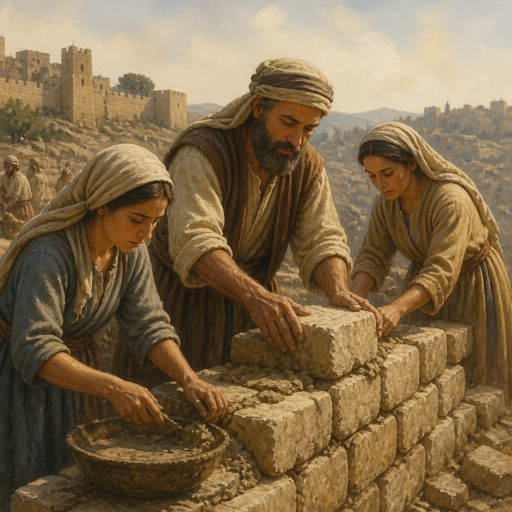
"And next unto him repaired Shallum the son of Halohesh, the ruler of the half part of Jerusalem, he and his daughters." - Nehemiah 3:12

Nehemiah 7:12 - "The children of Elam, a thousand two hundred fifty and four."

Nehemiah 12:32 - "And after them went Hoshaiah, and half of the princes of Judah,"

"Miamin, Maadiah, Bilgah," - Nehemiah 12:5

"Shemaiah, and Joiarib, Jedaiah," - Nehemiah 12:6

"Iddo, Ginnetho, Abijah," - Nehemiah 12:4

"Zaccur, Sherebiah, Shebaniah," - Nehemiah 10:12