The Power of Thanksgiving in Unity
“So stood the two companies of them that gave thanks in the house of God, and I, and the half of the rulers with me:” — Nehemiah 12:40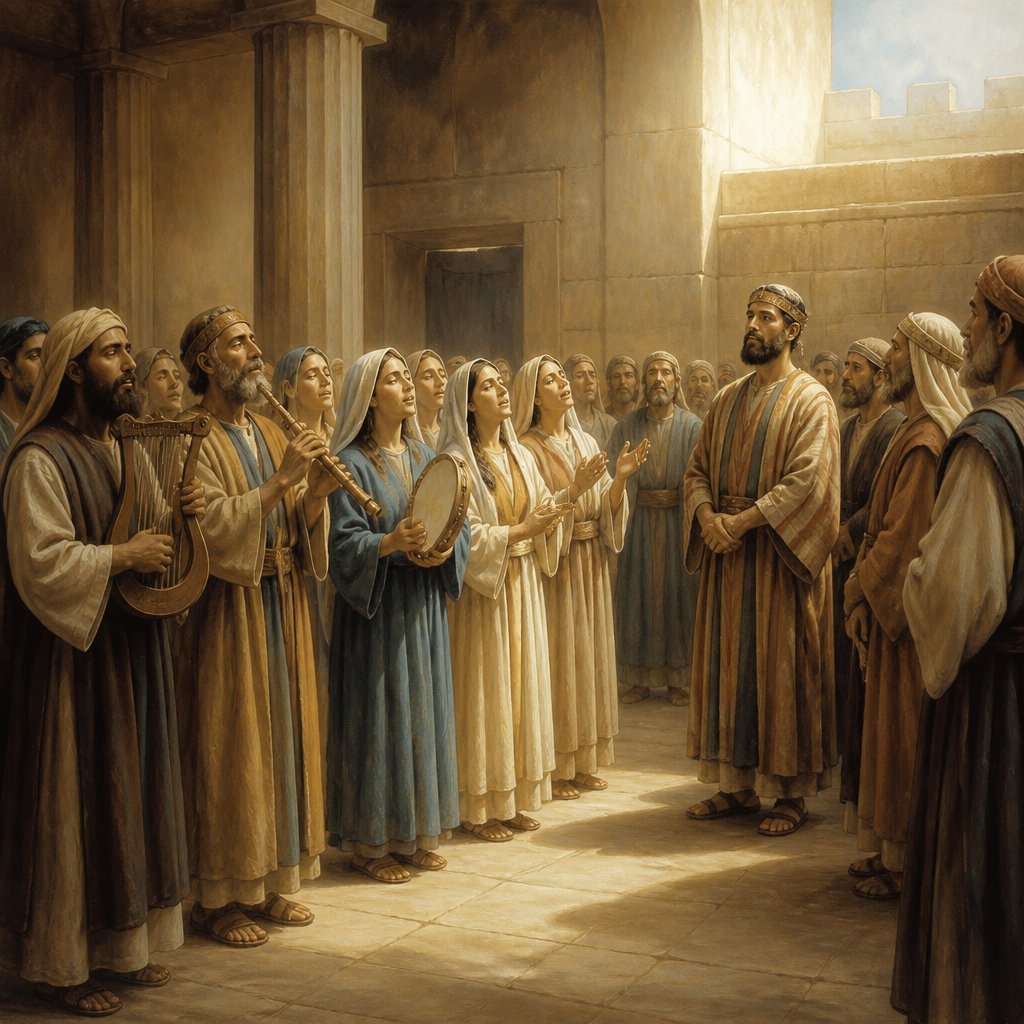
The Book of Nehemiah stands as a testament to the power of leadership, restoration, and most importantly, community. In Nehemiah 12:40, it states, “So stood the two companies of them that gave thanks in the house of God, and I, and the half of the rulers with me.” This scene is a profound culmination of Nehemiah's journey back to Jerusalem, where he led the people in rebuilding the walls and restoring the city after years of desolation.
At first glance, the verse is straightforward – it describes a moment of collective gratitude in the sacred space of the Temple. However, a closer examination reveals its rich significance, particularly in the context of unity and worship. The act of standing together in praise signifies not merely individual thankfulness but a communal acknowledgment of God’s faithfulness and might. Each company, or group, represents a part of the larger community – the diverse people of Jerusalem uniting under one cause, a cause greater than themselves.
This imagery of unity is compelling, particularly in today’s fragmented world. How often do we see divisions within our communities, even within our churches? Nehemiah’s example invites us to reflect on the importance of standing together in gratitude, despite our differences. As the two companies expressed their thankfulness, they showcased the power of collective worship. In our own lives, how often do we gather with others to give thanks? How transformative could it be for our families, churches, and communities if we actively chose to come together, not just in times of crisis, but in times of gratitude?
The act of giving thanks is foundational to our faith. The Psalmist encourages us, saying, "Enter into his gates with thanksgiving, and into his courts with praise: be thankful unto him, and bless his name" (Psalm 100:4). Our gratitude acknowledges God’s presence among us and ushers in His blessings. In Nehemiah's time, standing together in the Temple is an affirmation of their identity as God’s chosen people and a recognition of His provision. They were no longer defined by their past struggles but rather by the future God had promised them.
Moreover, it is important to note that Nehemiah was there with the rulers of the people. Leadership during communal worship is vital, as it sets the tone for congregational participation. The presence of leaders encourages the congregation to follow suit, promoting a culture of thankfulness. When those in authority model gratitude, it inspires others to join in. It reminds us that gratitude is not solitary; it is a community activity that enriches our relationships with one another and with God.
As we meditate on this verse, let us consider our posture in worship and thanksgiving. Are we standing alongside others, offering our thanks to God for His interventions in our lives? When was the last time we gathered with others specifically to recount and celebrate God’s faithfulness? Perhaps we can create opportunities for collective thanksgiving – within our families, congregations, and communities.
In conclusion, Nehemiah 12:40 invites us to join the two companies giving thanks in the house of God. It is a call to unity, to recognize our collective identity in Christ, and to acknowledge God’s ongoing work in our lives. Whether we are in a church building, gathered in homes or parks, let us actively choose to express our gratitude together. Let us stand, side by side, giving thanks for the marvelous things God has done, is doing, and will do in our midst. For in our unity, we not only honor Him, but we find strength and purpose amidst our community.
Get our apps


Artwork for Nehemiah 12:40

Nehemiah 12:40 - "So stood the two companies of them that gave thanks in the house of God, and I, and the half of the rulers with me:"
"So stood the two companies of them that gave thanks in the house of God, and I, and the half of the rulers with me:" - Nehemiah 12:40

Nehemiah 7:40 - "The children of Immer, a thousand fifty and two."

"The children of Immer, a thousand fifty and two." - Nehemiah 7:40

Nehemiah 12:26 - "These were in the days of Joiakim the son of Jeshua, the son of Jozadak, and in the days of Nehemiah the governor, and of Ezra the priest, the scribe."

Nehemiah 12:33 - "And Azariah, Ezra, and Meshullam,"

Nehemiah 12:5 - "Miamin, Maadiah, Bilgah,"

Nehemiah 12:2 - "Amariah, Malluch, Hattush,"

Nehemiah 12:4 - "Iddo, Ginnetho, Abijah,"

Nehemiah 12:3 - "Shechaniah, Rehum, Meremoth,"

Nehemiah 10:12 - "Zaccur, Sherebiah, Shebaniah,"

Nehemiah 12:6 - "Shemaiah, and Joiarib, Jedaiah,"

Nehemiah 12:12 - "And in the days of Joiakim were priests, the chief of the fathers: of Seraiah, Meraiah; of Jeremiah, Hananiah;"

Nehemiah 12:16 - "Of Iddo, Zechariah; of Ginnethon, Meshullam;"

Nehemiah 12:13 - "Of Ezra, Meshullam; of Amariah, Jehohanan;"

Nehemiah 12:20 - "Of Sallai, Kallai; of Amok, Eber;"

Nehemiah 12:19 - "And of Joiarib, Mattenai; of Jedaiah, Uzzi;"

Nehemiah 12:34 - "Judah, and Benjamin, and Shemaiah, and Jeremiah,"

Nehemiah 12:15 - "Of Harim, Adna; of Meraioth, Helkai;"

Nehemiah 12:18 - "Of Bilgah, Shammua; of Shemaiah, Jehonathan;"

Nehemiah 12:14 - "Of Melicu, Jonathan; of Shebaniah, Joseph;"

Nehemiah 12:21 - "Of Hilkiah, Hashabiah; of Jedaiah, Nethaneel."

Nehemiah 12:17 - "Of Abijah, Zichri; of Miniamin, of Moadiah, Piltai;"

Nehemiah 12:11 - "And Joiada begat Jonathan, and Jonathan begat Jaddua."

Nehemiah 7:12 - "The children of Elam, a thousand two hundred fifty and four."

Nehemiah 12:32 - "And after them went Hoshaiah, and half of the princes of Judah,"

"Miamin, Maadiah, Bilgah," - Nehemiah 12:5

"Shemaiah, and Joiarib, Jedaiah," - Nehemiah 12:6

"Zaccur, Sherebiah, Shebaniah," - Nehemiah 10:12

"Iddo, Ginnetho, Abijah," - Nehemiah 12:4