Restoration and Leadership: Lessons from Nehemiah 12:7
“Sallu, Amok, Hilkiah, Jedaiah. These were the chief of the priests and of their brethren in the days of Jeshua.” — Nehemiah 12:7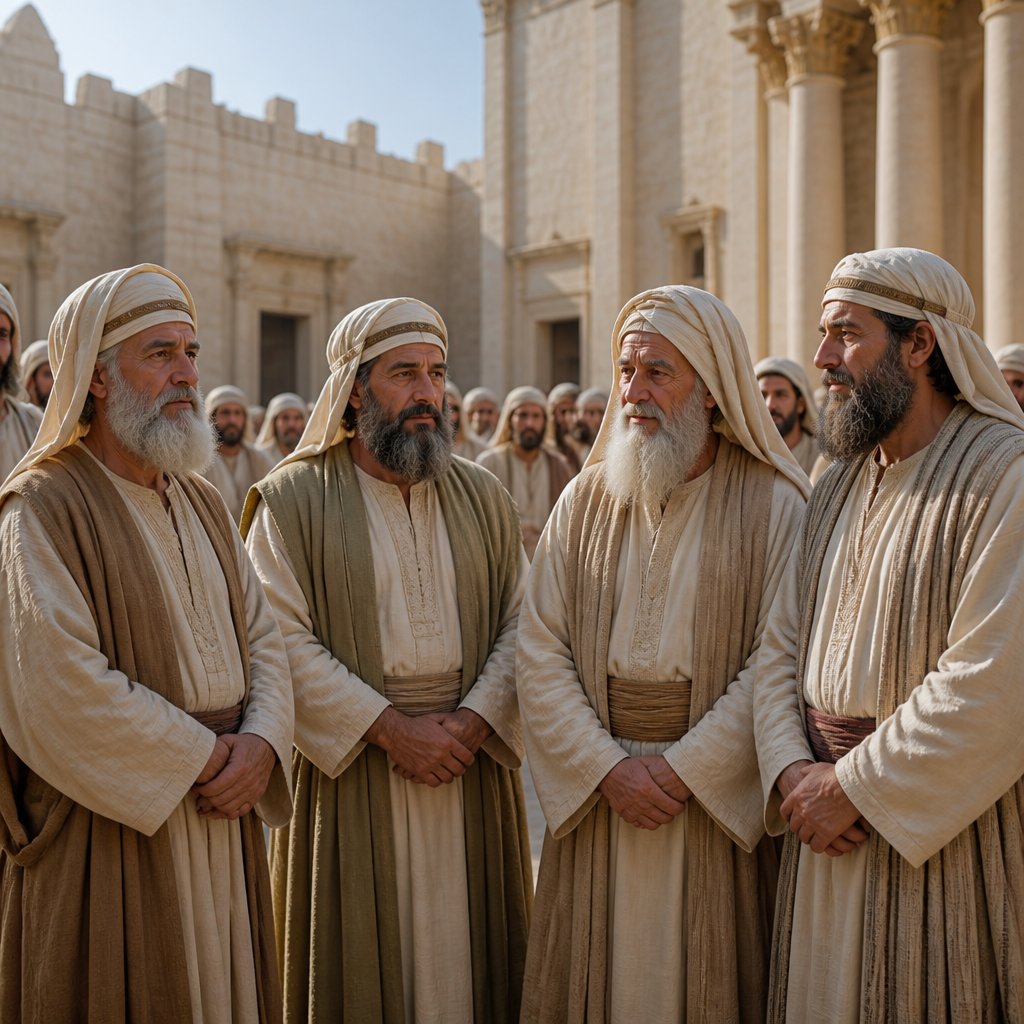
In the rich tapestry of the Old Testament, the Book of Nehemiah stands as a powerful testament to leadership, community restoration, and spiritual revival. Within this narrative, Nehemiah 12:7 serves as a pivotal reminder of the importance of godly leadership and the role of faithful individuals in rebuilding what has been broken. The verse reads, “Sallu, Amok, Hilkiah, Jedaiah. These were the chief of the priests and of their brethren in the days of Jeshua.”
At first glance, this verse might appear to be merely a list of names—people whose bios seem eclipsed by the grand narrative of Israel’s return from exile. However, these names represent much more: they are emblematic of a community dedicated to restoring not only their ancestral homes but also their covenant relationship with God. Each of these men held a significant position among the priests, indicating that they were pivotal to the spiritual life of their people.
In the aftermath of exile, Israel faced the daunting task of rebuilding, both physically and spiritually. The walls of Jerusalem had been reconstructed under the inspired leadership of Nehemiah, but now the city needed its spiritual heart revived. The mention of the chief priests—Sallu, Amok, Hilkiah, and Jedaiah—underscores that in times of restoration, the spiritual leaders are critical. They were responsible for guiding the community in worship, ensuring adherence to God’s laws, and facilitating the return of a vibrant faith.
Sallu, Amok, Hilkiah, and Jedaiah each represent different aspects of what a leader must embody in a time of national restoration. First, we must look to Sallu, whose name means ‘he has drawn out’ or ‘he has delivered.’ As a chief priest, Sallu symbolizes the call to uplift and protect the community from spiritual decay. In our lives, we are often called to be Sallu-like figures, encouraging one another to rise above discouragement and to draw nearer to God. In our families, workplaces, and churches, we find opportunities to deliver encouragement and assistance, acting as conduits of His love and grace.
Next, Amok, whose name signifies ‘the depth’ or ‘the pit,’ serves as a reminder that true leadership sometimes involves confronting deep-rooted issues within ourselves and our communities. We cannot rebuild without first addressing the pits of despair and negativity that may lie within us. Are there areas in your life where you find yourself stuck in a cycle of sin or hopelessness? Like Amok, God calls us to delve into those depths with courage, seeking His help to emerge restored and renewed.
Hilkiah, whose name means ‘my portion is Yahweh,’ emphasizes the importance of reliance on God during times of restoration. He reminds us that our primary focus must be on God as our portion, especially amidst the often chaotic demands of rebuilding. When we make Him our priority, we gain wisdom for leading our families, churches, and communities in accordance with His plans.
Lastly, Jedaiah, which means ‘the Lord has known,’ speaks volumes about the intimacy of our relationship with God. As we engage in the work of restoration, we can take heart in knowing that God has a personal stake in our journey. He is intimately aware of our struggles and triumphs and desires to walk alongside us.
As we reflect on Nehemiah 12: 7, we must ask ourselves who we can be in our own communities today. Are we like Sallu, lifting others up in their times of need? Are we ready to address the depths of despair like Amok? Do we prioritize our dependence on God as our portion like Hilkiah? Lastly, do we trust in God’s intimate knowledge of our struggles as Jedaiah did?
In conclusion, these names in Nehemiah 12:7 are not just historical markers; they are reminders of the calling each of us holds as leaders in our communities. Let us commit to being active participants in God’s restoration work, investing in our relationships with Him, and demonstrating His love to those around us.
Get our apps


Artwork for Nehemiah 12:7

Nehemiah 12:7 - "Sallu, Amok, Hilkiah, Jedaiah. These were the chief of the priests and of their brethren in the days of Jeshua."
"Sallu, Amok, Hilkiah, Jedaiah. These were the chief of the priests and of their brethren in the days of Jeshua." - Nehemiah 12:7

Nehemiah 7:12 - "The children of Elam, a thousand two hundred fifty and four."
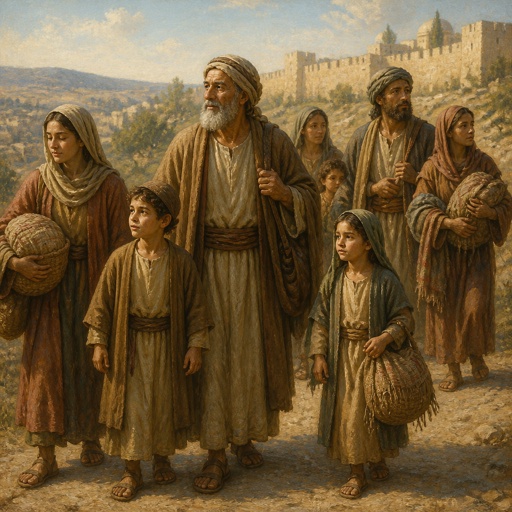
"The children of Elam, a thousand two hundred fifty and four." - Nehemiah 7:12

Nehemiah 7:7 - "Who came with Zerubbabel, Jeshua, Nehemiah, Azariah, Raamiah, Nahamani, Mordecai, Bilshan, Mispereth, Bigvai, Nehum, Baanah. The number, I say, of the men of the people of Israel was this;"

Nehemiah 12:26 - "These were in the days of Joiakim the son of Jeshua, the son of Jozadak, and in the days of Nehemiah the governor, and of Ezra the priest, the scribe."

Nehemiah 12:5 - "Miamin, Maadiah, Bilgah,"

Nehemiah 12:33 - "And Azariah, Ezra, and Meshullam,"

Nehemiah 12:4 - "Iddo, Ginnetho, Abijah,"

Nehemiah 12:2 - "Amariah, Malluch, Hattush,"

Nehemiah 12:3 - "Shechaniah, Rehum, Meremoth,"

Nehemiah 10:12 - "Zaccur, Sherebiah, Shebaniah,"

Nehemiah 12:6 - "Shemaiah, and Joiarib, Jedaiah,"

Nehemiah 12:12 - "And in the days of Joiakim were priests, the chief of the fathers: of Seraiah, Meraiah; of Jeremiah, Hananiah;"

Nehemiah 12:13 - "Of Ezra, Meshullam; of Amariah, Jehohanan;"

Nehemiah 12:16 - "Of Iddo, Zechariah; of Ginnethon, Meshullam;"

Nehemiah 12:20 - "Of Sallai, Kallai; of Amok, Eber;"

Nehemiah 10:7 - "Meshullam, Abijah, Mijamin,"

Nehemiah 12:19 - "And of Joiarib, Mattenai; of Jedaiah, Uzzi;"

Nehemiah 12:34 - "Judah, and Benjamin, and Shemaiah, and Jeremiah,"

Nehemiah 12:15 - "Of Harim, Adna; of Meraioth, Helkai;"

Nehemiah 12:18 - "Of Bilgah, Shammua; of Shemaiah, Jehonathan;"

Nehemiah 12:21 - "Of Hilkiah, Hashabiah; of Jedaiah, Nethaneel."

Nehemiah 12:14 - "Of Melicu, Jonathan; of Shebaniah, Joseph;"

Nehemiah 12:17 - "Of Abijah, Zichri; of Miniamin, of Moadiah, Piltai;"

Nehemiah 7:42 - "The children of Harim, a thousand and seventeen."

Nehemiah 7:24 - "The children of Hariph, an hundred and twelve."

Nehemiah 7:56 - "The children of Neziah, the children of Hatipha."

Nehemiah 7:25 - "The children of Gibeon, ninety and five."

Nehemiah 12:11 - "And Joiada begat Jonathan, and Jonathan begat Jaddua."