Returning to the Heart of Giving: A Reflection on Nehemiah 13:12
“Then brought all Judah the tithe of the corn and the new wine and the oil unto the treasuries.” — Nehemiah 13:12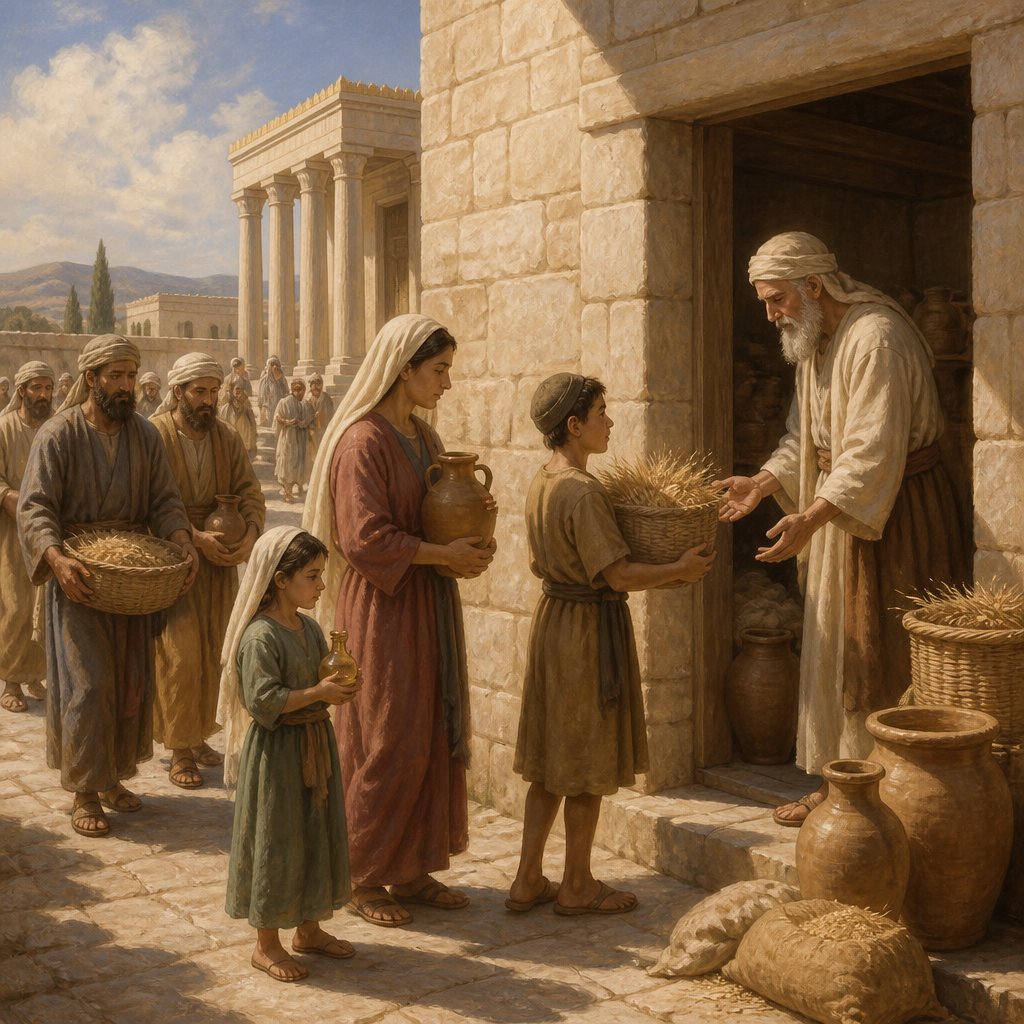
As we dive into Nehemiah 13:12, we are confronted with a powerful statement regarding the practice of tithing: "Then brought all Judah the tithe of the corn and the new wine and the oil unto the treasuries." This verse encapsulates not only a historical moment in the life of God's people but also a profound spiritual principle that resonates deeply with us today.
The context of this passage reveals much about the spiritual state of the Israelites in Nehemiah’s time. After returning from exile, the people had recommitted themselves to God. They rebuilt the walls of Jerusalem, restored their community identity, and reinvigorated their collective spiritual practices. Yet, as we see in chapter 13, there existed a danger of slipping back into former patterns of neglect and apathy, especially in regards to their offerings to God.
Nehemiah’s leadership was vital in prompting the people to remember their covenant responsibilities, that their service to God involved tangible, sacrificial giving. The offerings mentioned—corn, new wine, and oil—represent not only material wealth but also the fruits of labor and the blessings of God upon their agricultural efforts. In bringing these to the treasuries, the people were acknowledging God's provision and the truth of His promise to sustain them.
Today, we can draw parallels to our own lives. The act of tithing and giving is not merely about financial transactions; it’s about recognizing where our blessings come from. In a culture that often prioritizes self-sufficiency and individualism, God calls us back to a community-centric mindset. When Judah brought their offerings, it was not just for the support of the temple or the priests; it was an expression of worship and gratitude, a declaration of trust in God's continued provision.
Consider your own journey of giving. Are you holding onto your resources tightly, believing that you are the ultimate provider for yourself and your family? Or are you willing to offer a portion, recognizing that every resource ultimately comes from God's generous hand? The act of giving is a heart response to our understanding of who God is and what He has done for us. As we give, we declare our faith that He will continue to provide for all our needs.
Moreover, Nehemiah’s call to the people shows the importance of collective responsibility in community worship. The financial support for the temple and its activities was a community effort; it required everyone’s participation to ensure that the needs of the spiritual family were met. This corporate aspect of tithing encourages us to engage not just as individuals but as members of a body—the Church. There is a richness in community giving, a shared investment that fosters deeper relationships and accountability among believers.
Let's also reflect on the attitude with which we approach our giving. The Israelites brought "the tithe" to the treasuries, indicating that their offerings were intentional and planned. This approach challenges us to ask whether we are giving out of obligation or with a joyful heart. In 2 Corinthians 9:7 (KJV), we read, "Every man according as he purposeth in his heart, so let him give; not grudgingly, or of necessity: for God loveth a cheerful giver." The practice of giving should stem from gratitude and joy rather than mere duty.
Finally, we are reminded in this passage of the importance of the treasuries. The service of God requires resources to thrive and reach others. Our tithing supports the work of ministry, outreach, and the necessities of church life. What we offer isn't just about supporting institutional needs; it’s about advancing God’s mission in the world.
As you ponder Nehemiah 13:12, may it inspire you to reflect on your own practices of giving. How can you realign your resources to reflect God’s generosity? In doing so, may you experience the fullness of community, connection, and trust in the Lord’s provision.
Get our apps


Artwork for Nehemiah 13:12

Nehemiah 13:12 - "Then brought all Judah the tithe of the corn and the new wine and the oil unto the treasuries."
"Then brought all Judah the tithe of the corn and the new wine and the oil unto the treasuries." - Nehemiah 13:12

Nehemiah 12:13 - "Of Ezra, Meshullam; of Amariah, Jehohanan;"

"Of Ezra, Meshullam; of Amariah, Jehohanan;" - Nehemiah 12:13

Nehemiah 11:13

Nehemiah 12:26 - "These were in the days of Joiakim the son of Jeshua, the son of Jozadak, and in the days of Nehemiah the governor, and of Ezra the priest, the scribe."

Nehemiah 10:13 - "Hodijah, Bani, Beninu."

Nehemiah 12:33 - "And Azariah, Ezra, and Meshullam,"

Nehemiah 12:5 - "Miamin, Maadiah, Bilgah,"

Nehemiah 12:2 - "Amariah, Malluch, Hattush,"

Nehemiah 12:4 - "Iddo, Ginnetho, Abijah,"

Nehemiah 12:3 - "Shechaniah, Rehum, Meremoth,"

Nehemiah 10:12 - "Zaccur, Sherebiah, Shebaniah,"

Nehemiah 12:6 - "Shemaiah, and Joiarib, Jedaiah,"

Nehemiah 12:12 - "And in the days of Joiakim were priests, the chief of the fathers: of Seraiah, Meraiah; of Jeremiah, Hananiah;"

Nehemiah 12:16 - "Of Iddo, Zechariah; of Ginnethon, Meshullam;"

Nehemiah 12:20 - "Of Sallai, Kallai; of Amok, Eber;"

Nehemiah 12:19 - "And of Joiarib, Mattenai; of Jedaiah, Uzzi;"

Nehemiah 12:34 - "Judah, and Benjamin, and Shemaiah, and Jeremiah,"

Nehemiah 12:15 - "Of Harim, Adna; of Meraioth, Helkai;"

Nehemiah 12:18 - "Of Bilgah, Shammua; of Shemaiah, Jehonathan;"

Nehemiah 12:14 - "Of Melicu, Jonathan; of Shebaniah, Joseph;"

Nehemiah 12:21 - "Of Hilkiah, Hashabiah; of Jedaiah, Nethaneel."

Nehemiah 12:17 - "Of Abijah, Zichri; of Miniamin, of Moadiah, Piltai;"

Nehemiah 7:13 - "The children of Zattu, eight hundred forty and five."

Nehemiah 12:11 - "And Joiada begat Jonathan, and Jonathan begat Jaddua."

"Hodijah, Bani, Beninu." - Nehemiah 10:13

Nehemiah 7:12 - "The children of Elam, a thousand two hundred fifty and four."

Nehemiah 12:32 - "And after them went Hoshaiah, and half of the princes of Judah,"

"Miamin, Maadiah, Bilgah," - Nehemiah 12:5