Restoring the Sacred: The Consequences of Profaning the Sabbath
"Did not your fathers thus, and did not our God bring all this evil upon us, and upon this city? yet ye bring more wrath upon Israel by profaning the sabbath." - Nehemiah 13:18
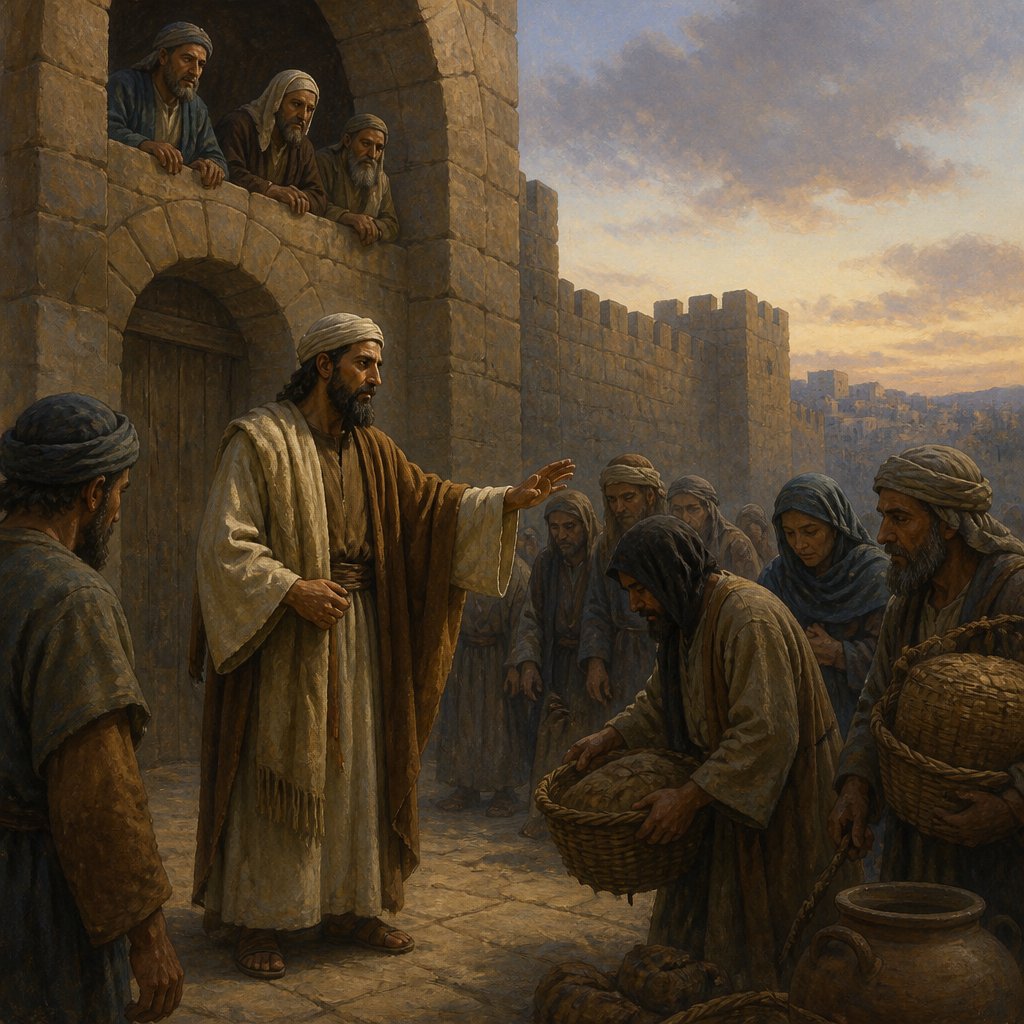
In the book of Nehemiah, we witness the heart-wrenching recovery of a people who, after years of exile, returned to their beloved Jerusalem. They rebuilt the walls, restored the temple, and reestablished the covenant with their God. However, as with the story of every revival, the hard-earned blessings can sometimes be threatened by old habits and forgetfulness of God’s commands. This context leads us to Nehemiah 13:18, where a grave reminder is voiced: "Did not your fathers thus, and did not our God bring all this evil upon us, and upon this city? yet ye bring more wrath upon Israel by profaning the sabbath."
This verse encapsulates a profound truth about the relationship between the people of Israel and their covenant with God. It is a verse that warns and exhorts, rooted deeply in historical reflection and spiritual truth.
As Nehemiah confronts the people concerning their profaning of the Sabbath, he is not merely highlighting the breaking of a commandment; rather, he underscores the implications of such actions. The Sabbath, a day set apart for rest and worship, stands not only as a commandment but as a sign of the covenant between God and His people. In Exodus 31:13, God commands, "Verily my sabbaths ye shall keep: for it is a sign between me and you throughout your generations." In breaking the Sabbath, Israel reopens the door to the judgment and evil that brought them into exile in the first place. Nehemiah’s lament encourages reflection on the significance of holy time and its restoration within the community.
To understand the weight of Nehemiah's words fully, we must look back at the history of Israel—at the disobedience of their forefathers, which led to the destruction of Jerusalem and the Babylonian exile. The evils they faced were understood to be consequences of straying from God’s commandments. When Nehemiah calls for the people to remember, he is inviting them to recall the grace they received through their return and the covenant restoration that God provided. Forgetting this history risks repeating it.
The modern believer can find wisdom in Nehemiah's warning. The Sabbath not only provides us with a rhythm of work and rest but also serves as a reminder of God’s provision and sovereignty. In our fast-paced world, we often overlook this sacred time, allowing busyness to drown out moments of communion with our Creator. Profaning the Sabbath today can manifest in numerous ways—through neglect, distraction, or outright disregard. The subtlety can be frightening as we may think we are not doing anything 'wrong' by filling our Sabbath with hectic activities, but in reality, we may be distancing ourselves from the lifeline that God intended for us.
What are the implications of our choices in keeping the Sabbath? Profaning this holy day brings more than personal consequences; it affects the community of faith. It communicates to our families, our children, and our neighbors that time with God is nonessential. As we sift through our lives, we are challenged to consider how we value and observe the Sabbath. We are reminded that God calls us into a space of intentional rest, reflection, and worship to restore us and refocus our hearts on Him.
As we consider Nehemiah 13:18, let us remember that the Sabbath is a gift from God, a day of mercy in which we acknowledge our limits and allow God to take His rightful place as Lord of our lives. In doing so, we align ourselves with His purposes and protect ourselves from the wrath and chaos that arises from disobedience. May we approach each Sabbath with renewed commitment and reverence, so we do not bring wrath upon ourselves or our community but instead draw nearer to God in holy remembrance and rest.
In conclusion, let us heed Nehemiah’s call—let us remember our history, restore the sacred, and rejoice in the rhythm of grace that the Sabbath offers. By doing so, we preserve not only our spiritual health but also our collective witness to the world of God’s faithfulness and provision.
Want to reflect more on Nehemiah 13:18?
Continue your spiritual journey with Bible Chat — an AI-powered tool for exploring God's Word through conversation. Ask questions, discover connections, and deepen your understanding.
Get Our Apps


Nehemiah 13:18 Artwork

Nehemiah 13:18 - "Did not your fathers thus, and did not our God bring all this evil upon us, and upon this city? yet ye bring more wrath upon Israel by profaning the sabbath."
"Did not your fathers thus, and did not our God bring all this evil upon us, and upon this city? yet ye bring more wrath upon Israel by profaning the sabbath." - Nehemiah 13:18

Nehemiah 11:13

Nehemiah 10:18 - "Hodijah, Hashum, Bezai,"

Nehemiah 12:18 - "Of Bilgah, Shammua; of Shemaiah, Jehonathan;"

Nehemiah 10:13 - "Hodijah, Bani, Beninu."

Nehemiah 12:13 - "Of Ezra, Meshullam; of Amariah, Jehohanan;"

Nehemiah 7:18 - "The children of Adonikam, six hundred threescore and seven."

"Hodijah, Hashum, Bezai," - Nehemiah 10:18

Nehemiah 7:13 - "The children of Zattu, eight hundred forty and five."

"Hodijah, Bani, Beninu." - Nehemiah 10:13

"Of Bilgah, Shammua; of Shemaiah, Jehonathan;" - Nehemiah 12:18

Nehemiah 3:18 - "After him repaired their brethren, Bavai the son of Henadad, the ruler of the half part of Keilah."

"Of Ezra, Meshullam; of Amariah, Jehohanan;" - Nehemiah 12:13

Nehemiah 13:12 - "Then brought all Judah the tithe of the corn and the new wine and the oil unto the treasuries."

Nehemiah 13:31 - "And for the wood offering, at times appointed, and for the firstfruits. Remember me, O my God, for good."

Nehemiah 13:20 - "So the merchants and sellers of all kind of ware lodged without Jerusalem once or twice."

"The children of Adonikam, six hundred threescore and seven." - Nehemiah 7:18

Nehemiah 11:18 - "All the Levites in the holy city were two hundred fourscore and four." respectful, symbolic bible verse art

Nehemiah 13:4 - "¶ And before this, Eliashib the priest, having the oversight of the chamber of the house of our God, was allied unto Tobiah:"

Nehemiah 13:23 - "¶ In those days also saw I Jews that had married wives of Ashdod, of Ammon, and of Moab:"

Nehemiah 13:29 - "Remember them, O my God, because they have defiled the priesthood, and the covenant of the priesthood, and of the Levites."

Nehemiah 4:18 - "For the builders, every one had his sword girded by his side, and so builded. And he that sounded the trumpet was by me."

Nehemiah 13:24 - "And their children spake half in the speech of Ashdod, and could not speak in the Jews' language, but according to the language of each people."

Nehemiah 13:8 - "And it grieved me sore: therefore I cast forth all the household stuff of Tobiah out of the chamber."

Nehemiah 13:3 - "Now it came to pass, when they had heard the law, that they separated from Israel all the mixed multitude."

"The children of Zattu, eight hundred forty and five." - Nehemiah 7:13

Nehemiah 13:9 - "Then I commanded, and they cleansed the chambers: and thither brought I again the vessels of the house of God, with the meat offering and the frankincense."

Nehemiah 13:7 - "And I came to Jerusalem, and understood of the evil that Eliashib did for Tobiah, in preparing him a chamber in the courts of the house of God."

Nehemiah 13:13 - "And I made treasurers over the treasuries, Shelemiah the priest, and Zadok the scribe, and of the Levites, Pedaiah: and next to them was Hanan the son of Zaccur, the son of Mattaniah: for they were counted faithful, and their office was to distribute unto their brethren."