Sanctifying the Sabbath: A Call to Holiness
“And I commanded the Levites that they should cleanse themselves, and that they should come and keep the gates, to sanctify the sabbath day. Remember me, O my God, concerning this also, and spare me according to the greatness of thy mercy.” — Nehemiah 13:22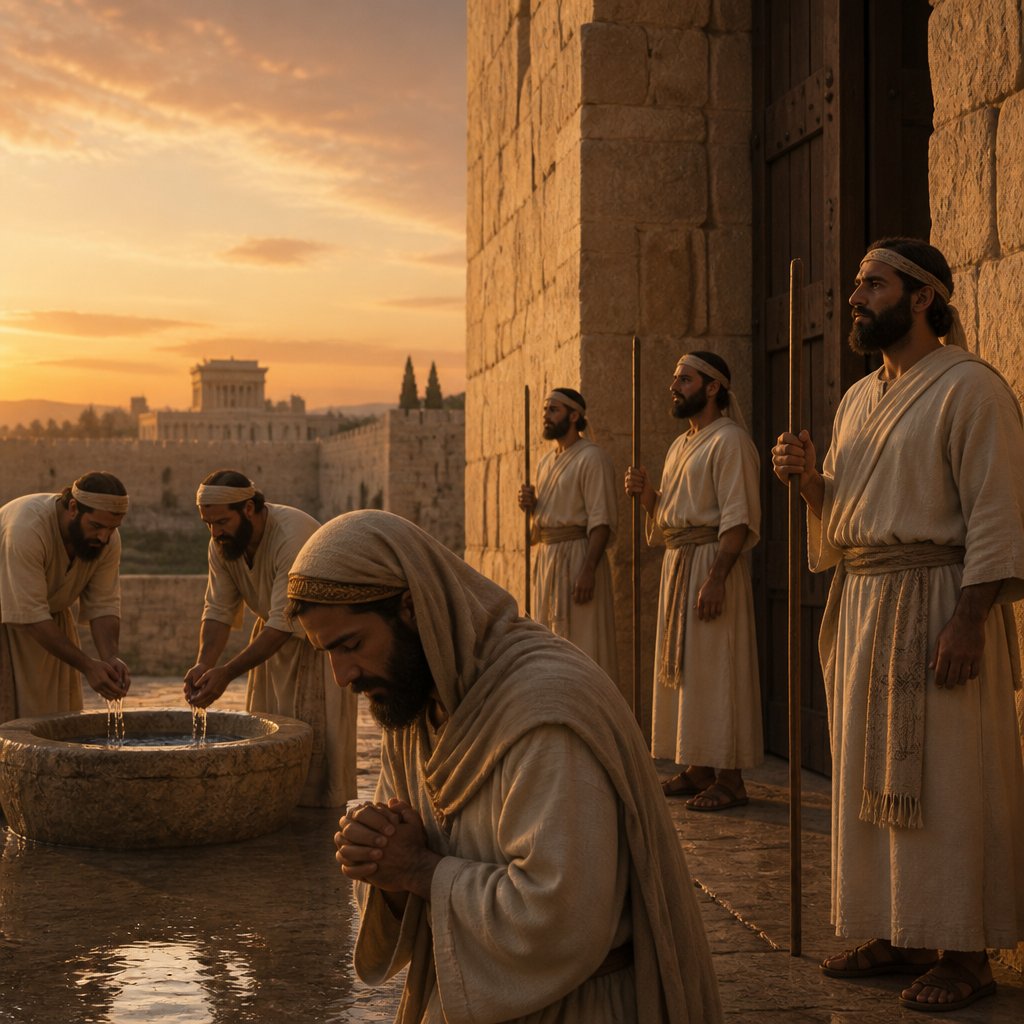
As we delve into Nehemiah 13:22, we are confronted with the powerful words of Nehemiah as he calls on the Levites to cleanse themselves and uphold the sanctity of the Sabbath. The verse reads: "And I commanded the Levites that they should cleanse themselves, and that they should come and keep the gates, to sanctify the sabbath day. Remember me, O my God, concerning this also, and spare me according to the greatness of thy mercy."
In this scripture, we witness Nehemiah’s profound responsibility as a leader, as well as the necessity of holiness in the lives of God’s servants. The context here is pivotal; Nehemiah returned to Jerusalem after hearing about the state of the walls and the people. He had led a great restoration effort, not just physically with the walls, but spiritually among the people. Yet, even after this tumultuous effort, the Sabbath was not being honored in the way God intended. The Levites, who were set apart for service in the temple, had a sacred duty to ensure that the Sabbath remained a day of rest and worship.
Nehemiah’s command to the Levites to "cleanse themselves" is a significant reminder of the need for purity and dedication to the work of God. The term "cleanse" here has both literal and spiritual undertones. The Levites were tasked with a sacred duty that required prior purification. In the same manner, we are called to cleanse ourselves from the distractions and impurities of this world before we can serve God effectively. As believers, we too must reflect on our own lives and ask ourselves what we need to cleanse from our hearts and minds to be fit for His service.
The next part of Nehemiah’s command is that the Levites should come and keep the gates. This symbolizes their role in guarding the sanctity and purity of the temple and the people. The gates were the entry points, not only to the physical city but also to spiritual realities. By ensuring that the gates are kept and protected, the Levites were actively maintaining the holiness of God’s dwelling place. In our modern context, we are the gates. Our hearts and minds are entry points for the thoughts, attitudes, and actions we allow to govern our lives. We must diligently guard what we let in—whether it’s through the media we consume, the company we keep, or the words we speak.
Moreover, the phrase "to sanctify the sabbath day" underlines the importance of setting apart specific times for God. The Sabbath is a day meant for rest, reflection, and rejuvenation in the Lord. It serves as a reminder that our identity and sustenance come from Him alone. In our busy lives, we often forget to pause and remember who we serve. It is essential to observe a day, or moments throughout our week, where we direct our attention solely to God—worshiping, resting, and being refreshed in His presence.
Nehemiah concludes this verse with a personal plea to God: "Remember me, O my God, concerning this also, and spare me according to the greatness of thy mercy." This statement encapsulates the humility of Nehemiah as he acknowledges his dependence on God’s mercy. It also highlights the reality of grace that we face in our journey as Christians. No matter how hard we labor for the Lord, we are continually in need of His mercy. Nehemiah’s reminder to God indicates a deep relationship with his Creator, one filled with trust and reliance on God’s faithfulness.
As we reflect on Nehemiah 13:22, let us be inspired to cleanse our own hearts, safeguard our personal gates, and honor the Sabbath in our lives. In doing so, we not only prepare our hearts for God's work but also create an environment conducive to holiness and peace. Let us also echo Nehemiah’s plea, inviting God's mercy into our lives as we endeavor to follow His commands. In our efforts, may we never forget that it is His grace that empowers us to live rightly before Him.
Get our apps


Artwork for Nehemiah 13:22

Nehemiah 13:22 - "And I commanded the Levites that they should cleanse themselves, and that they should come and keep the gates, to sanctify the sabbath day. Remember me, O my God, concerning this also, and spare me according to the greatness of thy mercy."
"And I commanded the Levites that they should cleanse themselves, and that they should come and keep the gates, to sanctify the sabbath day. Remember me, O my God, concerning this also, and spare me according to the greatness of thy mercy." - Nehemiah 13:22

Nehemiah 10:22 - "Pelatiah, Hanan, Anaiah,"

Nehemiah 11:13

Nehemiah 7:22 - "The children of Hashum, three hundred twenty and eight."

Nehemiah 3:22 - "And after him repaired the priests, the men of the plain."

Nehemiah 10:13 - "Hodijah, Bani, Beninu."

Nehemiah 12:13 - "Of Ezra, Meshullam; of Amariah, Jehohanan;"

"Pelatiah, Hanan, Anaiah," - Nehemiah 10:22

Nehemiah 7:13 - "The children of Zattu, eight hundred forty and five."

"Hodijah, Bani, Beninu." - Nehemiah 10:13

"Of Ezra, Meshullam; of Amariah, Jehohanan;" - Nehemiah 12:13

Nehemiah 13:12 - "Then brought all Judah the tithe of the corn and the new wine and the oil unto the treasuries."

"And after him repaired the priests, the men of the plain." - Nehemiah 3:22

"The children of Hashum, three hundred twenty and eight." - Nehemiah 7:22

Nehemiah 13:31 - "And for the wood offering, at times appointed, and for the firstfruits. Remember me, O my God, for good."

Nehemiah 13:20 - "So the merchants and sellers of all kind of ware lodged without Jerusalem once or twice."

Nehemiah 12:22 - "¶ The Levites in the days of Eliashib, Joiada, and Johanan, and Jaddua, were recorded chief of the fathers: also the priests, to the reign of Darius the Persian."

Nehemiah 13:4 - "¶ And before this, Eliashib the priest, having the oversight of the chamber of the house of our God, was allied unto Tobiah:"

Nehemiah 13:23 - "¶ In those days also saw I Jews that had married wives of Ashdod, of Ammon, and of Moab:"

Nehemiah 13:29 - "Remember them, O my God, because they have defiled the priesthood, and the covenant of the priesthood, and of the Levites."

Nehemiah 13:24 - "And their children spake half in the speech of Ashdod, and could not speak in the Jews' language, but according to the language of each people."

Nehemiah 13:8 - "And it grieved me sore: therefore I cast forth all the household stuff of Tobiah out of the chamber."

Nehemiah 13:3 - "Now it came to pass, when they had heard the law, that they separated from Israel all the mixed multitude."

"The children of Zattu, eight hundred forty and five." - Nehemiah 7:13

Nehemiah 13:9 - "Then I commanded, and they cleansed the chambers: and thither brought I again the vessels of the house of God, with the meat offering and the frankincense."

Nehemiah 13:7 - "And I came to Jerusalem, and understood of the evil that Eliashib did for Tobiah, in preparing him a chamber in the courts of the house of God."

Nehemiah 13:13 - "And I made treasurers over the treasuries, Shelemiah the priest, and Zadok the scribe, and of the Levites, Pedaiah: and next to them was Hanan the son of Zaccur, the son of Mattaniah: for they were counted faithful, and their office was to distribute unto their brethren."

Nehemiah 13:30 - "Thus cleansed I them from all strangers, and appointed the wards of the priests and the Levites, every one in his business;"

Nehemiah 13:17 - "Then I contended with the nobles of Judah, and said unto them, What evil thing is this that ye do, and profane the sabbath day?"