Restoring the Sacred: A Call to Purity and Purpose
“Thus cleansed I them from all strangers, and appointed the wards of the priests and the Levites, every one in his business;” — Nehemiah 13:30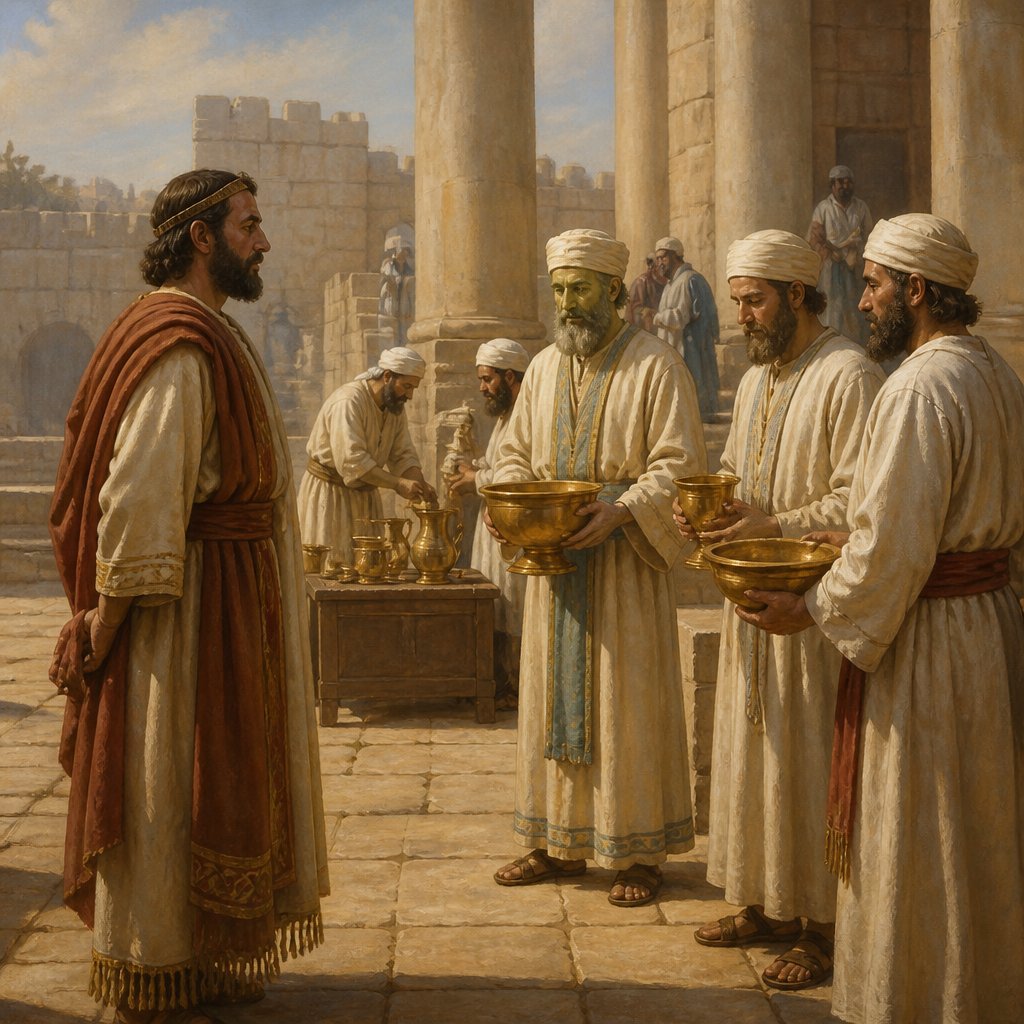
As we delve into Nehemiah 13:30, we encounter a powerful moment in the history of Israel's reconstruction and reformation: "Thus cleansed I them from all strangers, and appointed the wards of the priests and the Levites, every one in his business." This verse resonates with a strong call for purification and dedication. At its heart, it speaks volumes about God’s desire for His people to maintain spiritual integrity and to fulfill their God-given roles.
To understand this verse more fully, we must consider the context. Nehemiah returned to Jerusalem after being away, and upon his arrival, he discovered that the community had fallen into disarray. The holy practices established by God were being neglected. Foreign influences were infiltrating the practices of His people, leading them astray from their covenant with God. Nehemiah’s response is notable; he didn’t merely express sadness over their behavior, but he took definitive action to cleanse the community of these corrupting influences.
"Thus cleansed I them from all strangers." The act of cleansing was not merely physical; it was a profound spiritual act. Strangers, in this context, represent foreign ideologies, practices, and people that detracted from Israel's exclusive devotion to God. Similarly, we are called to examine our lives carefully: Are there ‘strangers’ in our own lives? Are there influences that contradict our faith, that pull us away from the holiness to which we are called? In a modern context, these strangers can take many forms—media, relationships, or ideologies that are contrary to God’s Word.
Nehemiah's decree to cleanse the people highlights a spiritual discipline that is essential for growth and maturity in our walk with Christ. Just as Israel was instructed to separate themselves from outsiders, we too are called to guard our hearts and minds. Philippians 4:8 instructs us to think on things that are pure, lovely, and good report. This is a principle that requires conscious effort and can only be achieved through the strength that comes from God.
Furthermore, Nehemiah appointed the wards of the priests and the Levites, emphasizing that each member had a designated role that contributed to the community’s spiritual health. He didn’t leave things to chance; he delegated responsibilities according to God’s order. This not only ensured that the tasks were fulfilled but also reinforced the importance of everyone’s calling. In our churches and communities today, everyone has a unique role in the body of Christ. Are we fulfilling our responsibilities in service to God and to our communities? Are we in our 'business,' as Nehemiah suggests?
In our individual lives, it is crucial to define what our 'business' is in light of God's calling. Each vocation, whether exalted or humble, can become a platform for serving the Lord and His people. Colossians 3:23–24 encourages us to whatever we do, to work at it with all our heart, as working for the Lord, not for human masters. The sense of divine purpose transforms even mundane tasks into acts of worship.
The cleansing that Nehemiah undertook was not merely about removing sinful influences; it was about restoring and establishing a holy identity as God’s chosen people. Likewise, as we dedicate ourselves to cleaning out the foreign influences that dilute our faith, we are also making space for God to fill our lives with His purposes. In the act of purification, we find clarity of vision and the empowerment to engage fully in our community and our personal ministry.
As we meditate on Nehemiah 13:30, let us commit ourselves to cleansing our hearts and environments from anything that detracts from our relationship with God. Let’s actively seek our places within the spiritual community, serving in ways that glorify God. In this, we might just find the fulfillment of Nehemiah’s vision for a purified and purposeful people—a people devoted to God's service in all aspects of life, restoring not only ourselves but also the communities around us.
Get our apps


Artwork for Nehemiah 13:30

Nehemiah 13:30 - "Thus cleansed I them from all strangers, and appointed the wards of the priests and the Levites, every one in his business;"
"Thus cleansed I them from all strangers, and appointed the wards of the priests and the Levites, every one in his business;" - Nehemiah 13:30

Nehemiah 7:30 - "The men of Ramah and Geba, six hundred twenty and one."

Nehemiah 12:30 - "And the priests and the Levites purified themselves, and purified the people, and the gates, and the wall."

Nehemiah 11:13

Nehemiah 10:13 - "Hodijah, Bani, Beninu."

Nehemiah 12:13 - "Of Ezra, Meshullam; of Amariah, Jehohanan;"

Nehemiah 10:30 - "And that we would not give our daughters unto the people of the land, nor take their daughters for our sons:"

Nehemiah 7:13 - "The children of Zattu, eight hundred forty and five."
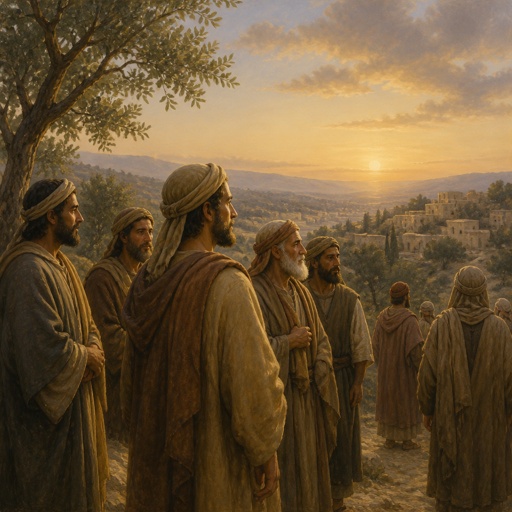
"The men of Ramah and Geba, six hundred twenty and one." - Nehemiah 7:30

Nehemiah 11:30 - "Zanoah, Adullam, and in their villages, at Lachish, and the fields thereof, at Azekah, and in the villages thereof. And they dwelt from Beer-sheba unto the valley of Hinnom."

"Hodijah, Bani, Beninu." - Nehemiah 10:13
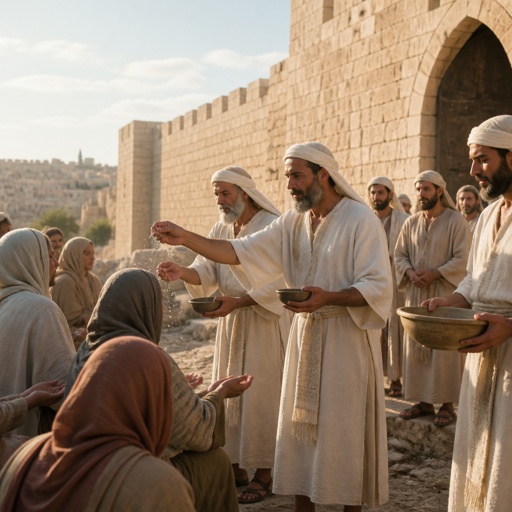
"And the priests and the Levites purified themselves, and purified the people, and the gates, and the wall." - Nehemiah 12:30

"Of Ezra, Meshullam; of Amariah, Jehohanan;" - Nehemiah 12:13

Nehemiah 13:12 - "Then brought all Judah the tithe of the corn and the new wine and the oil unto the treasuries."

Nehemiah 13:31 - "And for the wood offering, at times appointed, and for the firstfruits. Remember me, O my God, for good."

Nehemiah 13:20 - "So the merchants and sellers of all kind of ware lodged without Jerusalem once or twice."

Nehemiah 13:4 - "¶ And before this, Eliashib the priest, having the oversight of the chamber of the house of our God, was allied unto Tobiah:"

Nehemiah 13:23 - "¶ In those days also saw I Jews that had married wives of Ashdod, of Ammon, and of Moab:"

Nehemiah 3:30 - "After him repaired Hananiah the son of Shelemiah, and Hanun the sixth son of Zalaph, another piece. After him repaired Meshullam the son of Berechiah over against his chamber."

Nehemiah 13:29 - "Remember them, O my God, because they have defiled the priesthood, and the covenant of the priesthood, and of the Levites."

Nehemiah 13:24 - "And their children spake half in the speech of Ashdod, and could not speak in the Jews' language, but according to the language of each people."

Nehemiah 13:8 - "And it grieved me sore: therefore I cast forth all the household stuff of Tobiah out of the chamber."

Nehemiah 13:3 - "Now it came to pass, when they had heard the law, that they separated from Israel all the mixed multitude."

Acts 13:30 - "But God raised him from the dead:"

Nehemiah 13:9 - "Then I commanded, and they cleansed the chambers: and thither brought I again the vessels of the house of God, with the meat offering and the frankincense."

Nehemiah 13:7 - "And I came to Jerusalem, and understood of the evil that Eliashib did for Tobiah, in preparing him a chamber in the courts of the house of God."

"The children of Zattu, eight hundred forty and five." - Nehemiah 7:13

Nehemiah 9:30 - "Yet many years didst thou forbear them, and testifiedst against them by thy spirit in thy prophets: yet would they not give ear: therefore gavest thou them into the hand of the people of the lands."

Nehemiah 13:13 - "And I made treasurers over the treasuries, Shelemiah the priest, and Zadok the scribe, and of the Levites, Pedaiah: and next to them was Hanan the son of Zaccur, the son of Mattaniah: for they were counted faithful, and their office was to distribute unto their brethren."