The Power of Intercessory Prayer: Lessons from Nehemiah
"And it came to pass, when I heard these words, that I sat down and wept, and mourned certain days, and fasted, and prayed before the God of heaven, And said, I beseech thee, O Lord God of heaven, the great and terrible God, that keepeth covenant and mercy for them that love him and observe his commandments: Let thine ear now be attentive, and thine eyes open, that thou mayest hear the prayer of thy servant, which I pray before thee now, day and night, for the children of Israel thy servants, and confess the sins of the children of Israel, which we have sinned against thee: both I and my father's house have sinned. We have dealt very corruptly against thee, and have not kept the commandments, nor the statutes, nor the judgments, which thou commandedst thy servant Moses. Remember, I beseech thee, the word that thou commandedst thy servant Moses, saying, If ye transgress, I will scatter you abroad among the nations: But if ye turn unto me, and keep my commandments, and do them; though there were of you cast out unto the uttermost part of the heaven, yet will I gather them from thence, and will bring them unto the place that I have chosen to set my name there. Now these are thy servants and thy people, whom thou hast redeemed by thy great power, and by thy strong hand. O Lord, I beseech thee, let now thine ear be attentive to the prayer of thy servant, and to the prayer of thy servants, who desire to fear thy name: and prosper, I pray thee, thy servant this day, and grant him mercy in the sight of this man. For I was the king's cupbearer." - Nehemiah 1:4-11
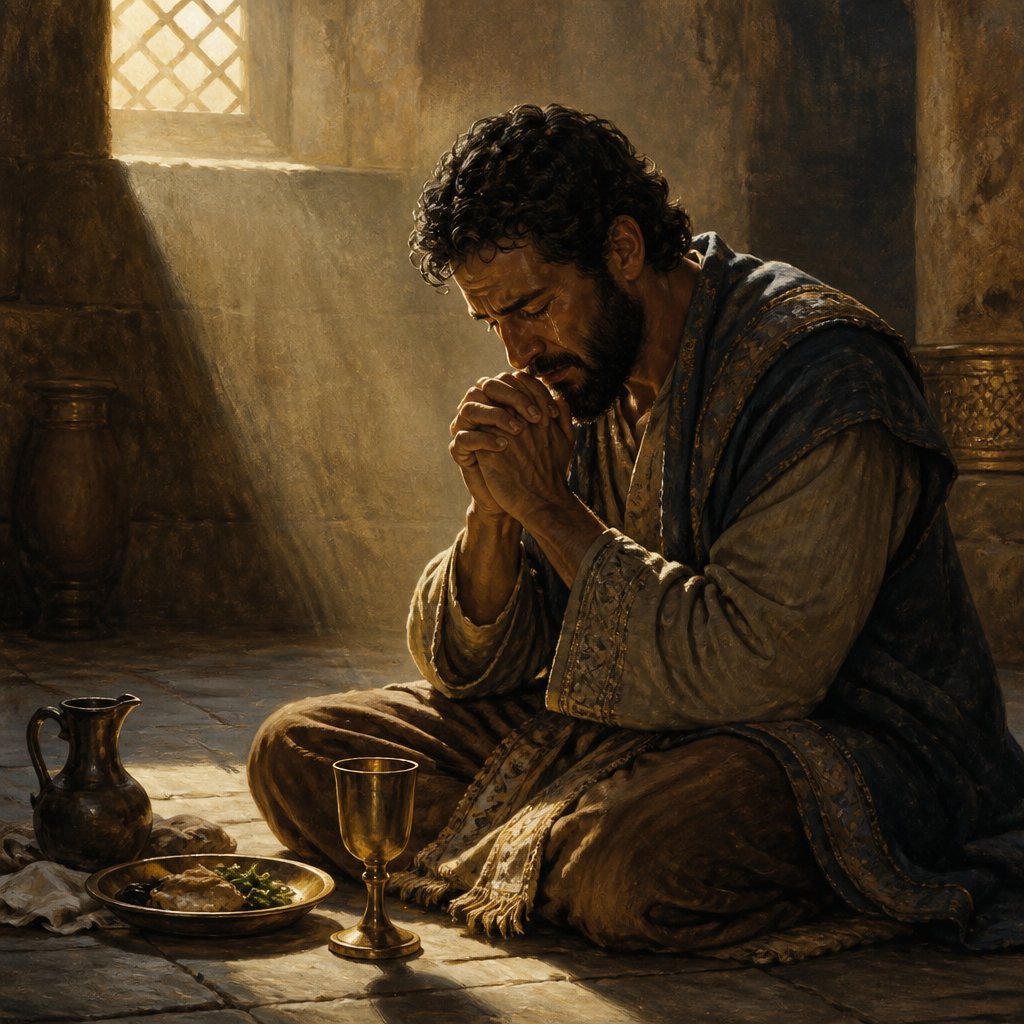
In the book of Nehemiah, we find the poignant moment when Nehemiah hears distressing news about the state of Jerusalem and its people. His immediate reaction is one of deep sorrow, leading him to a powerful period of mourning, fasting, and prayer before God. Nehemiah 1:4-11 captures this earnest conversation with the Lord, highlighting the significance of intercessory prayer and the weight of communal responsibility before God.
"And it came to pass, when I heard these words, that I sat down and wept, and mourned certain days, and fasted, and prayed before the God of heaven" (Nehemiah 1:4, KJV). Nehemiah’s response is deeply moving. His tears reflect not only his emotional pain but also a profound spiritual conviction. Mourning and fasting are not mere expressions of sorrow; they signify an earnestness in Nehemiah’s heart. This is a call for each of us: when we encounter the brokenness around us—whether in our communities, families, or nations—do we take the time to sit in that sorrow before the Lord?
Nehemiah’s prayer is structured and heartfelt. He acknowledges God’s character: "O Lord God of heaven, the great and terrible God, that keepeth covenant and mercy for them that love him and observe his commandments" (Nehemiah 1:5, KJV). Here, Nehemiah begins by recognizing God's sovereignty and faithfulness. In our own prayers, especially in desperate situations, it is essential to ground our pleas in the nature of God. We remind ourselves of who He is—the faithful keeper of His promises, the one who hears our cries. This acknowledgment draws us nearer to God, aligning our perspective with His.
Nehemiah continues, "Let thine ear now be attentive, and thine eyes open, that thou mayest hear the prayer of thy servant" (Nehemiah 1:6, KJV). His desperation is palpable. He requests God's attentive ear, knowing that the harmony of the universe holds still only when the Creator listens. In our prayers, let us cultivate that same humility, recognizing our position as servants, but also as beloved children seeking our Father’s guidance and help.
As he confesses the sins of his people, Nehemiah does not shy away from ownership: "I and my father's house have sinned" (Nehemiah 1:6, KJV). It is a powerful example of communal responsibility. How often do we distance ourselves from the failings of our communities? Nehemiah stands in the gap, bearing not only his sin but the collective sin of his nation. This intercessory role is crucial for us as believers today. When we pray, we need to remember that we are part of something greater. The struggles and failures of those around us impact us as a body of Christ.
He reminds God of the covenant promises: "But if ye turn unto me, and keep my commandments, and do them… I will gather them from thence, and will bring them unto the place that I have chosen to set my name there" (Nehemiah 1:9, KJV). Nehemiah holds God to His promises, not out of doubt but rather out of faith and hope. In our prayers, we too can remind God of His Word, standing firmly on the promises given to us in Scripture. We can declare our needs and invoke His covenant faithfulness, knowing that He delights in the prayers of His people.
Finally, Nehemiah’s prayer culminates in a plea for mercy: "O Lord, I beseech thee, let now thine ear be attentive to the prayer of thy servant... and grant him mercy in the sight of this man" (Nehemiah 1:11, KJV). Here stands the dichotomy of prayer: our request for divine intervention in earthly matters requires a recognition of our dependence on God’s mercy. As Nehemiah was the king's cupbearer, he prayed for influence and favor, not just for himself but for the sake of his people.
In conclusion, Nehemiah teaches us that intercessory prayer—rooted in heartfelt sorrow, acknowledgment of God’s nature, communal ownership of sin, and unwavering faith in His promises—can be a powerful vehicle for change. Our prayers are not just personal entreaties but sacred responsibilities that can lead to transformation not only in ourselves but in the world around us. Let us approach God today in the same spirit of Nehemiah, lifting our voices for those who cannot pray for themselves, seeking restoration and favor in His mighty name.
Want to reflect more on Nehemiah 1:4-11?
Continue your spiritual journey with Bible Chat — an AI-powered tool for exploring God's Word through conversation. Ask questions, discover connections, and deepen your understanding.
Get Our Apps


Nehemiah 1:4-11 Artwork
"And it came to pass, when I heard these words, that I sat down and wept, and mourned certain days, and fasted, and prayed before the God of heaven, And said, I beseech thee, O Lord God of heaven, the great and terrible God, that keepeth covenant and mercy for them that love him and observe his commandments: Let thine ear now be attentive, and thine eyes open, that thou mayest hear the prayer of thy servant, which I pray before thee now, day and night, for the children of Israel thy servants, and confess the sins of the children of Israel, which we have sinned against thee: both I and my father's house have sinned. We have dealt very corruptly against thee, and have not kept the commandments, nor the statutes, nor the judgments, which thou commandedst thy servant Moses. Remember, I beseech thee, the word that thou commandedst thy servant Moses, saying, If ye transgress, I will scatter you abroad among the nations: But if ye turn unto me, and keep my commandments, and do them; though there were of you cast out unto the uttermost part of the heaven, yet will I gather them from thence, and will bring them unto the place that I have chosen to set my name there. Now these are thy servants and thy people, whom thou hast redeemed by thy great power, and by thy strong hand. O Lord, I beseech thee, let now thine ear be attentive to the prayer of thy servant, and to the prayer of thy servants, who desire to fear thy name: and prosper, I pray thee, thy servant this day, and grant him mercy in the sight of this man. For I was the king's cupbearer." - Nehemiah 1:4-11

Nehemiah 1:4-11 - "And it came to pass, when I heard these words, that I sat down and wept, and mourned certain days, and fasted, and prayed before the God of heaven, And said, I beseech thee, O Lord God of heaven, the great and terrible God, that keepeth covenant and mercy for them that love him and observe his commandments: Let thine ear now be attentive, and thine eyes open, that thou mayest hear the prayer of thy servant, which I pray before thee now, day and night, for the children of Israel thy servants, and confess the sins of the children of Israel, which we have sinned against thee: both I and my father's house have sinned. We have dealt very corruptly against thee, and have not kept the commandments, nor the statutes, nor the judgments, which thou commandedst thy servant Moses. Remember, I beseech thee, the word that thou commandedst thy servant Moses, saying, If ye transgress, I will scatter you abroad among the nations: But if ye turn unto me, and keep my commandments, and do them; though there were of you cast out unto the uttermost part of the heaven, yet will I gather them from thence, and will bring them unto the place that I have chosen to set my name there. Now these are thy servants and thy people, whom thou hast redeemed by thy great power, and by thy strong hand. O Lord, I beseech thee, let now thine ear be attentive to the prayer of thy servant, and to the prayer of thy servants, who desire to fear thy name: and prosper, I pray thee, thy servant this day, and grant him mercy in the sight of this man. For I was the king's cupbearer."

Nehemiah 11:11-14

Nehemiah 11:1-19

Nehemiah 11:13

Nehemiah 4:11 - "And our adversaries said, They shall not know, neither see, till we come in the midst among them, and slay them, and cause the work to cease."

Nehemiah 11:4 - "And at Jerusalem dwelt certain of the children of Judah, and of the children of Benjamin. Of the children of Judah; Athaiah the son of Uzziah, the son of Zechariah, the son of Amariah, the son of Shephatiah, the son of Mahalaleel, of the children of Perez;"

Nehemiah 1:4 - "¶ And it came to pass, when I heard these words, that I sat down and wept, and mourned certain days, and fasted, and prayed before the God of heaven,"

Nehemiah 4:1 - "But it came to pass, that when Sanballat heard that we builded the wall, he was wroth, and took great indignation, and mocked the Jews."

Nehemiah 11:34 - "Hadid, Zeboim, Neballat,"

Nehemiah 10:11 - "Micha, Rehob, Hashabiah,"

Nehemiah 11:33 - "Hazor, Ramah, Gittaim,"

Nehemiah 11:32 - "And at Anathoth, Nob, Ananiah,"

Nehemiah 4:6

Nehemiah 11:26 - "And at Jeshua, and at Moladah, and at Beth-phelet,"

Nehemiah 11:29 - "And at En-rimmon, and at Zareah, and at Jarmuth,"

Nehemiah 4:6

Nehemiah 4:6

Nehemiah 11:35 - "Lod, and Ono, the valley of craftsmen."

Nehemiah 11:28 - "And at Ziklag, and at Mekonah, and in the villages thereof,"

Nehemiah 11:1 - "And the rulers of the people dwelt at Jerusalem: the rest of the people also cast lots, to bring one of ten to dwell in Jerusalem the holy city, and nine parts to dwell in other cities."

Nehemiah 11:36 - "And of the Levites were divisions in Judah, and in Benjamin."

Nehemiah 11:10 - "Of the priests: Jedaiah the son of Joiarib, Jachin."

A biblical scene from Nehemiah 1:5-11 - Nehemiah, a Caucasian male in middle-eastern garb, is depicted respectfully requesting time from the king, a Middle-Eastern male seated at the dinner table while Nehemiah is serving his drink. He is asking for the opportunity to return to Judah and help his people build a wall. The setting is a grand royal court marked by golden hues, opulent textiles, and architecturally rich columns.

A biblical scene from Nehemiah 1:5-11 - Nehemiah, a Caucasian male in middle-eastern garb, is depicted respectfully requesting time from the king, a Middle-Eastern male seated on a throne. He is asking for the opportunity to return to Judah and help his people build a wall. The setting is a grand royal court marked by golden hues, opulent textiles, and architecturally rich columns. Nehemiah is the king's servant.

Nehemiah 12:4 - "Iddo, Ginnetho, Abijah,"

Nehemiah 12:11 - "And Joiada begat Jonathan, and Jonathan begat Jaddua."

Nehemiah 10:4 - "Hattush, Shebaniah, Malluch,"

Nehemiah 11:27 - "And at Hazar-shual, and at Beer-sheba, and in the villages thereof,"

Nehemiah 2:11 - "So I came to Jerusalem, and was there three days."