The Significance of the Dung Gate: A Lesson in Faithful Repair
“But the dung gate repaired Malchiah the son of Rechab, the ruler of part of Beth-haccerem; he built it, and set up the doors thereof, the locks thereof, and the bars thereof.” — Nehemiah 3:14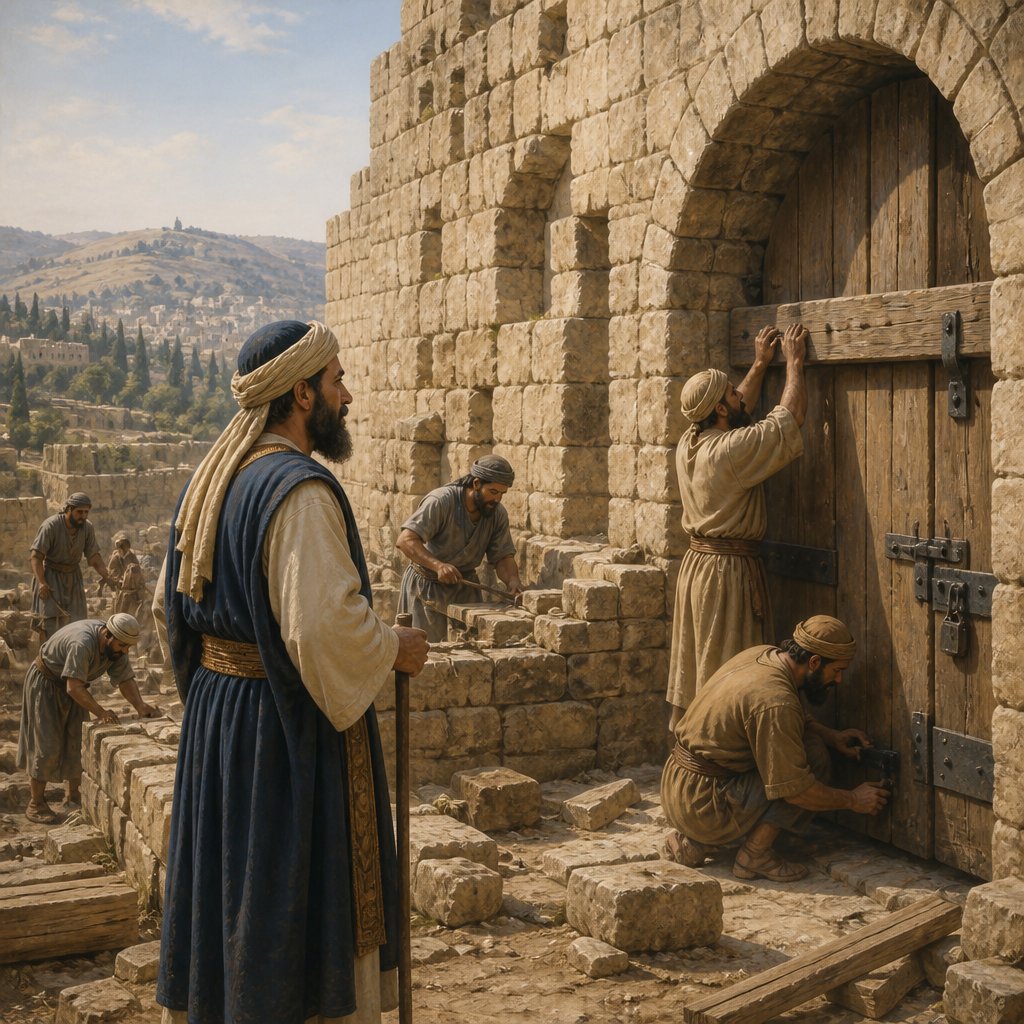
In Nehemiah 3:14, we read, "But the dung gate repaired Malchiah the son of Rechab, the ruler of part of Beth-haccerem; he built it, and set up the doors thereof, the locks thereof, and the bars thereof." At first glance, the mention of a dung gate may seem obscure, perhaps even repulsive. However, through this verse, a profound lesson emerges about the importance of each role in God’s work, regardless of how trivial or unglamorous it may appear.
Nehemiah’s mission was to restore the walls of Jerusalem, which had been broken down and burned. This was not merely a physical reconstruction; it represented a revival of faith and community among the Israelites after years of exile. The walls were a protective measure against their enemies, but they also symbolized the restoration of God’s people to a place of dignity, safety, and covenant relationship with Him. Each gate in the city represented something significant about their journey, and the Dung Gate had its own unique importance.
### The Dung Gate: A Symbol of Purification
The Dung Gate, as the name suggests, was used to remove filth from the city. It served a critical purpose—the disposal of refuse. Spiritually, this can be seen as an analogy for the process of purification and cleansing. Just as refuse was taken through the Dung Gate, so must we allow God to remove impurities from our lives. When we allow God to cleanse us of our sins and shortcomings, we offer ourselves a pathway to greater holiness and service.
Malchiah’s task of repairing the Dung Gate is a reminder that clean hearts, minds, and communities are crucial for the work of God. This was not a glamorous assignment, yet Malchiah undertook it with diligence and care. His role was essential, presuming that the removal of waste contributed to the overall health of the community. Our God is a God who values every contribution—no matter how menial it may seem in the world’s eyes.
### The Lord’s Call to Serve
Malchiah was the ruler of part of Beth-haccerem, which signifies leadership in the hands of a man who chose to serve in a humble capacity. He could have stacked his responsibilities with more prestigious projects but chose instead to embrace the work represented by the Dung Gate. Every one of us is called to serve in our own capacities, whether as leaders in the church, homemakers, teachers, or laborers. God is looking for hearts willing to engage in the work, regardless of how it might be perceived by others.
### Building Up and Repairing
The act of building and setting up the doors, locks, and bars of the gate is a statement about the nature of rebuilding—both physically and spiritually. It reminds us that true restoration begins with acknowledging what needs to be repaired and not shying away from those less desirable tasks. It requires strength, discipline, and commitment. In our own lives, we may face similar tests as we respond to God’s calling. God desires us to build guardrails around our hearts, minds, and relationships. We need to ensure that our lives are secure and protected against the decay of neglect and sin.
### Conclusion: Embracing the Task at Hand
As we reflect on Nehemiah 3:14, let us remember that every effort counts in the kingdom of God. Whether cleaning the Dung Gate of our own hearts or attending to the needs of our communities, we must embrace the tasks at hand with pride and diligence. Let us follow in the footsteps of Malchiah, who did not shrink from what seemed lowly or unimportant. Instead, he served faithfully, contributing to the glory of God’s work. May we each aspire to contribute meaningfully while acknowledging that all parts of His body are vital. The Dung Gate may be insignificant in the eyes of men, but in God’s great story of restoration, it plays an indispensable role.
Get our apps


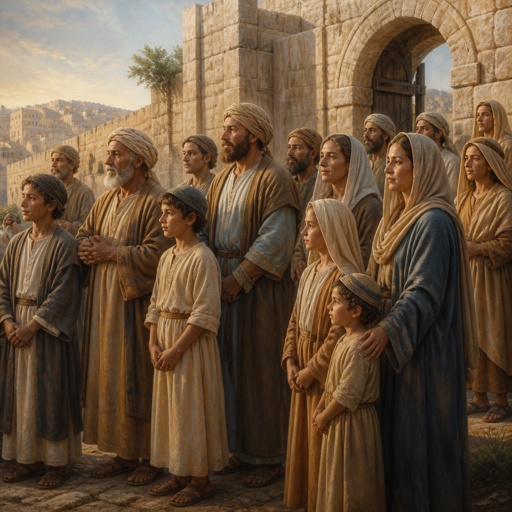
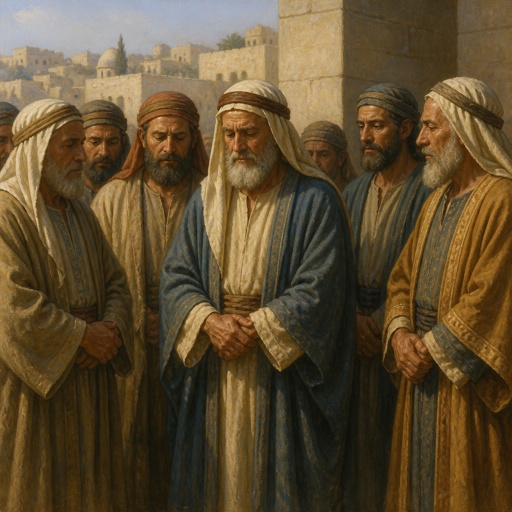
Artwork for Nehemiah 3:14
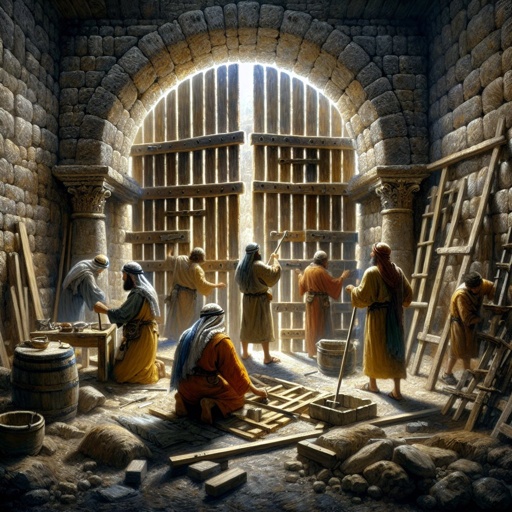
Nehemiah 3:14 - "But the dung gate repaired Malchiah the son of Rechab, the ruler of part of Beth-haccerem; he built it, and set up the doors thereof, the locks thereof, and the bars thereof."
"But the dung gate repaired Malchiah the son of Rechab, the ruler of part of Beth-haccerem; he built it, and set up the doors thereof, the locks thereof, and the bars thereof." - Nehemiah 3:14

Nehemiah 11:11-14

Nehemiah 12:14 - "Of Melicu, Jonathan; of Shebaniah, Joseph;"

Nehemiah 7:14 - "The children of Zaccai, seven hundred and threescore."

Nehemiah 12:3 - "Shechaniah, Rehum, Meremoth,"

Nehemiah 10:3 - "Pashur, Amariah, Malchijah,"

Nehemiah 10:14 - "The chief of the people; Parosh, Pahath-moab, Elam, Zatthu, Bani,"
"Of Melicu, Jonathan; of Shebaniah, Joseph;" - Nehemiah 12:14

Nehemiah 3:22 - "And after him repaired the priests, the men of the plain."

Nehemiah 3:16 - "After him repaired Nehemiah the son of Azbuk, the ruler of the half part of Beth-zur, unto the place over against the sepulchres of David, and to the pool that was made, and unto the house of the mighty."

Nehemiah 2:14 - "Then I went on to the gate of the fountain, and to the king's pool: but there was no place for the beast that was under me to pass."

"Pashur, Amariah, Malchijah," - Nehemiah 10:3
"The children of Zaccai, seven hundred and threescore." - Nehemiah 7:14

"Shechaniah, Rehum, Meremoth," - Nehemiah 12:3

Nehemiah 11:14 - "And their brethren, mighty men of valour, an hundred twenty and eight: and their overseer was Zabdiel, the son of one of the great men."

Nehemiah 3:32 - "And between the going up of the corner unto the sheep gate repaired the goldsmiths and the merchants."

Nehemiah 3:5 - "And next unto them the Tekoites repaired; but their nobles put not their necks to the work of their Lord."

Nehemiah 3:3 - "But the fish gate did the sons of Hassenaah build, who also laid the beams thereof, and set up the doors thereof, the locks thereof, and the bars thereof."

Nehemiah 3:9 - "And next unto them repaired Rephaiah the son of Hur, the ruler of the half part of Jerusalem."

Nehemiah 3:18 - "After him repaired their brethren, Bavai the son of Henadad, the ruler of the half part of Keilah."

Nehemiah 8:14 - "And they found written in the law which the LORD had commanded by Moses, that the children of Israel should dwell in booths in the feast of the seventh month:"

Nehemiah 9:14 - "And madest known unto them thy holy sabbath, and commandedst them precepts, statutes, and laws, by the hand of Moses thy servant:"

Nehemiah 3:11 - "Malchijah the son of Harim, and Hashub the son of Pahath-moab, repaired the other piece, and the tower of the furnaces."

Nehemiah 3:2 - "And next unto him builded the men of Jericho. And next to them builded Zaccur the son of Imri."

Nehemiah 3:28 - "From above the horse gate repaired the priests, every one over against his house."

Nehemiah 13:3 - "Now it came to pass, when they had heard the law, that they separated from Israel all the mixed multitude."

Nehemiah 6:14 - "My God, think thou upon Tobiah and Sanballat according to these their works, and on the prophetess Noadiah, and the rest of the prophets, that would have put me in fear."

"And after him repaired the priests, the men of the plain." - Nehemiah 3:22
"The chief of the people; Parosh, Pahath-moab, Elam, Zatthu, Bani," - Nehemiah 10:14