Restoring Strength Amidst Rubbish
“And Judah said, The strength of the bearers of burdens is decayed, and there is much rubbish; so that we are not able to build the wall.” — Nehemiah 4:10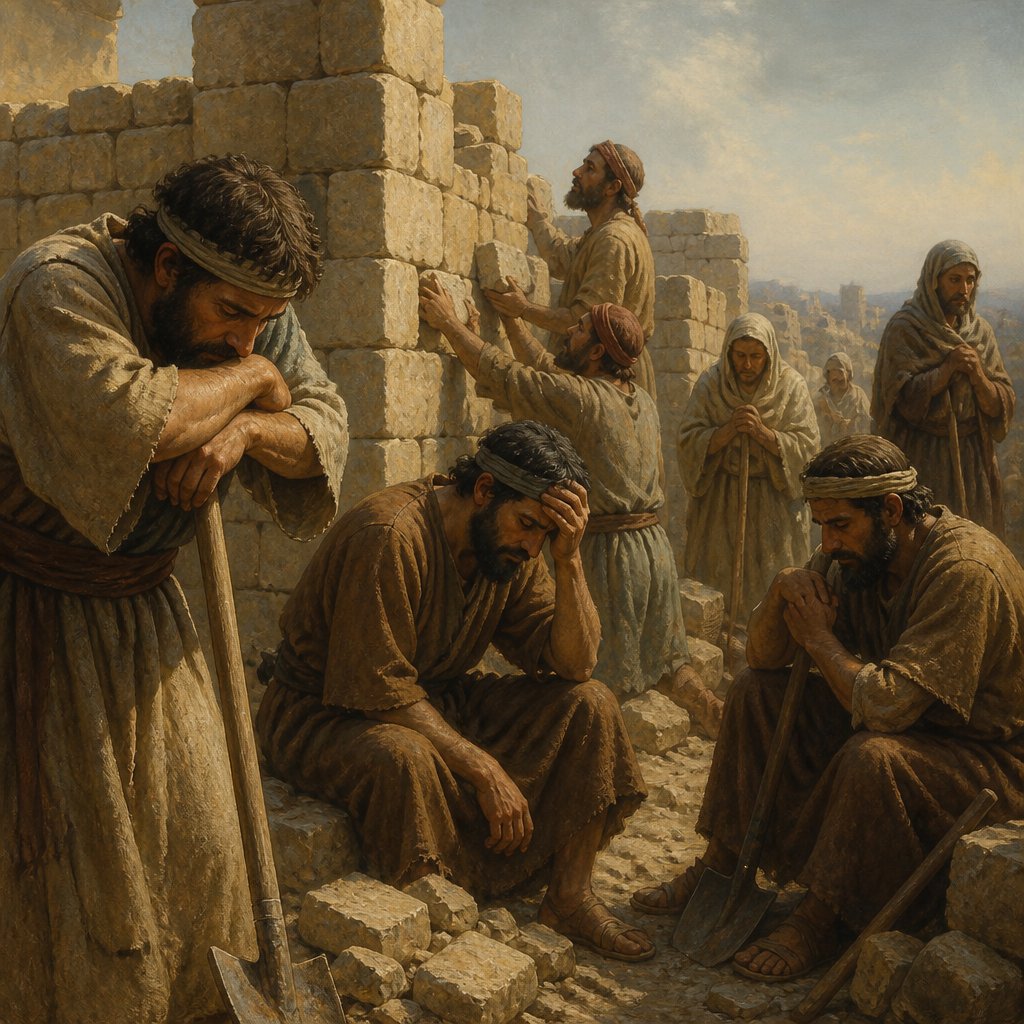
In the book of Nehemiah, we encounter a powerful narrative of God's people striving to rebuild the walls of Jerusalem following a severe period of exile and devastation. The context of Nehemiah 4:10 reveals a critical moment in this rebuilding effort: "And Judah said, The strength of the bearers of burdens is decayed, and there is much rubbish; so that we are not able to build the wall." This poignant verse encapsulates the struggle of the people, highlighting both their physical exhaustion and the overwhelming challenge posed by the debris around them.
At first glance, the statement of Judah, representing a collective voice of the people, communicates a sense of despair. The phrase "The strength of the bearers of burdens is decayed" paints a vivid picture of weariness. The laborers, engaged day after day under the relentless sun, have grown tired. Their hope falters as they face not only fatigue but also the enormity of the task ahead. The walls symbolize security, identity, and the covenant community of Israel. Yet, as they labor, they are confronted with "much rubbish," a physical manifestation of their past—a reality that is too burdensome to carry.
This brings us to a powerful spiritual parallel. In our own lives, how often do we feel like the laborers in this narrative? Do we not experience times when our strength decays, whether due to personal struggles, spiritual fatigue, or the overwhelming chaos in our lives? Each of us bears burdens, whether they be in relationships, work, or our spiritual journeys, and there are times when we feel trapped amidst the rubbish of our circumstances. The debris becomes a symbol of life's trials—failed relationships, lost dreams, and regrets—that block our progress and obscure our vision of God’s promised future.
We need to ask ourselves: What rubbish are we allowing to pile up in our lives? Is it bitterness over past injustices? Is it sin that we've been reluctant to confront? Or perhaps it is the fear of the unknown that holds us back from moving forward? Just as the rubble hampered the rebuilding efforts in Jerusalem, the rubbish in our hearts and minds can impede our spiritual growth and fulfillment. Huckling through the debris can leave us feeling incapable of achieving the purposes God has set for us.
However, the truth that undergirds this scripture is the unwavering call to perseverance. Nehemiah represents a figure of leadership amid despair. He does not shy away from addressing the factions of fear, doubt, and exhaustion, but he also seeks to remind them of God's presence and strength. As believers, we too must look beyond the rubble; we must seek the Lord who is our strength. The same God who empowered Nehemiah to motivate the people towards rebuilding their walls can provide us with the strength to rise above our situations.
In the face of overwhelming discouragement, Nehemiah’s approach was to encourage the people and redirect their focus. He urged them in Nehemiah 4:14, "Be not ye afraid of them: remember the Lord, which is great and terrible, and fight for your brethren, your sons, and your daughters, your wives, and your houses." This call is a reminder to us that rebuilding requires both a collective effort and a dependency on God’s faithfulness.
As we reflect upon Nehemiah 4:10, let us be encouraged to restore strength amidst rubbish. When we find our strength decayed and our vision blocked by the debris of our past, let’s turn to God in prayer and seek His power to assist in the cleanup process. Like the Jewish people in Nehemiah’s time, our task won’t be easy, but we have a God who is willing to renew our strength as we trust Him to clear away the rubbish and guide our efforts.
Thus, let us stand strong and resilient, calling upon the Lord to help us rebuild our lives and restore our fractured spirits. Let us rise up and say with faith: though the rubbish may be great, our God is greater.
Get our apps


Artwork for Nehemiah 4:10

Nehemiah 4:10 - "And Judah said, The strength of the bearers of burdens is decayed, and there is much rubbish; so that we are not able to build the wall."
"And Judah said, The strength of the bearers of burdens is decayed, and there is much rubbish; so that we are not able to build the wall." - Nehemiah 4:10

Nehemiah 10:4 - "Hattush, Shebaniah, Malluch,"

"Hattush, Shebaniah, Malluch," - Nehemiah 10:4

Nehemiah 10:1 - "Now those that sealed were, Nehemiah, the Tirshatha, the son of Hachaliah, and Zidkijah,"

Nehemiah 10:10 - "And their brethren, Shebaniah, Hodijah, Kelita, Pelaiah, Hanan,"

Nehemiah 8:10

Nehemiah 8:10

Nehemiah 8:10

Nehemiah 10:24 - "Hallohesh, Pileha, Shobek,"

Nehemiah 10:22 - "Pelatiah, Hanan, Anaiah,"

Nehemiah 10:5 - "Harim, Meremoth, Obadiah,"

Nehemiah 10:23 - "Hoshea, Hananiah, Hashub,"

Nehemiah 10:21 - "Meshezabeel, Zadok, Jaddua,"

Nehemiah 10:7 - "Meshullam, Abijah, Mijamin,"

Nehemiah 10:11 - "Micha, Rehob, Hashabiah,"

Nehemiah 10:27 - "Malluch, Harim, Baanah."

Nehemiah 10:25 - "Rehum, Hashabnah, Maaseiah,"

Nehemiah 10:19 - "Hariph, Anathoth, Nebai,"

Nehemiah 10:6 - "Daniel, Ginnethon, Baruch,"

Nehemiah 4:6

Nehemiah 4:6

Nehemiah 10:26 - "And Ahijah, Hanan, Anan,"

Nehemiah 10:16 - "Adonijah, Bigvai, Adin,"

Nehemiah 10:18 - "Hodijah, Hashum, Bezai,"

Nehemiah 10:20 - "Magpiash, Meshullam, Hezir,"

Nehemiah 10:3 - "Pashur, Amariah, Malchijah,"

Nehemiah 10:17 - "Ater, Hizkijah, Azzur,"

Nehemiah 10:2 - "Seraiah, Azariah, Jeremiah,"

Nehemiah 10:12 - "Zaccur, Sherebiah, Shebaniah,"