Reviving the Ruins: Strength Amidst Scorn
“And he spake before his brethren and the army of Samaria, and said, What do these feeble Jews? will they fortify themselves? will they sacrifice? will they make an end in a day? will they revive the stones out of the heaps of the rubbish which are burned?” — Nehemiah 4:2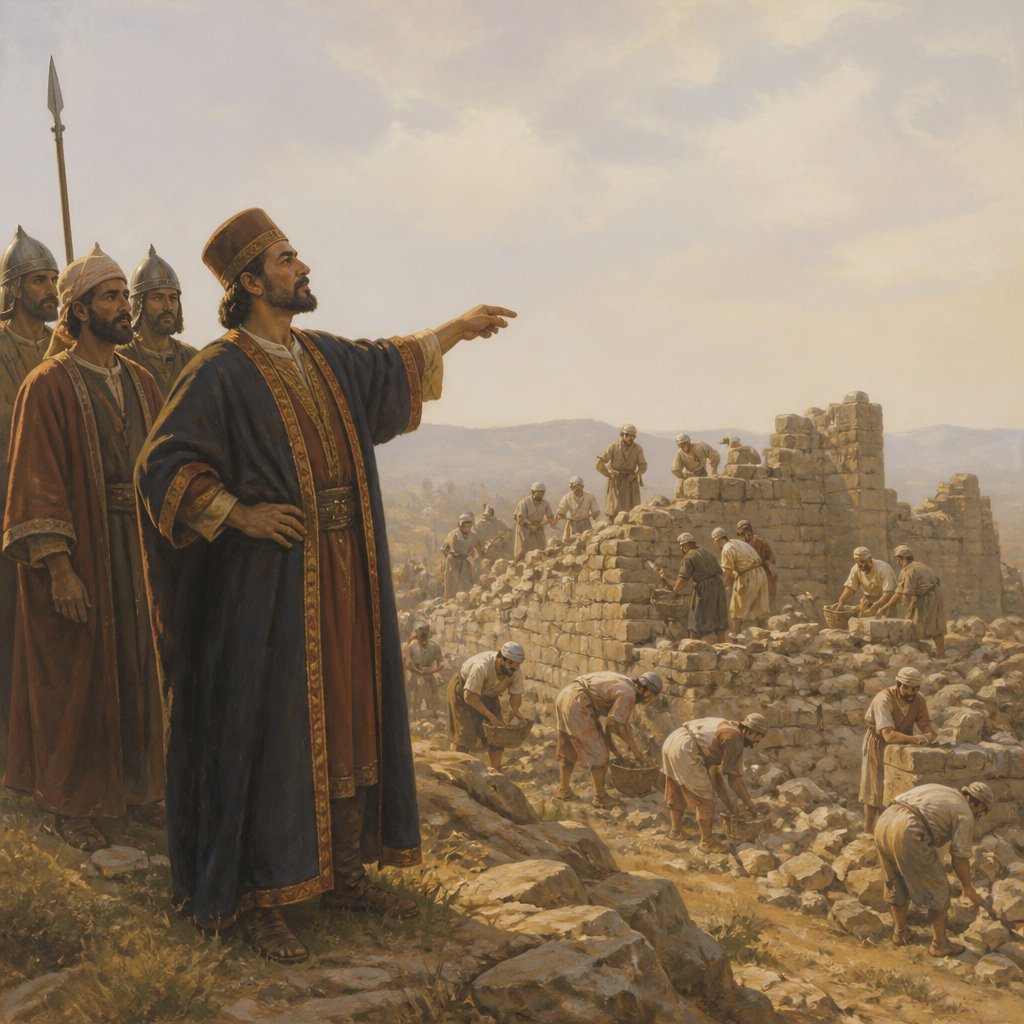
In the book of Nehemiah, we find an extraordinary story of perseverance, faith, and divine restoration. Chapter 4, verse 2 captures a moment of deep challenge and ridicule aimed at the people of Israel as they endeavored to rebuild the walls of Jerusalem. The King James Version eloquently captures Sanballat’s scorn: "And he spake before his brethren and the army of Samaria, and said, What do these feeble Jews? will they fortify themselves? will they sacrifice? will they make an end in a day? will they revive the stones out of the heaps of the rubbish which are burned?"
Sanballat, a leader of the Samaritans, stood in stark contrast to the faithful remnant of Jews who had returned from captivity. He openly mocked them, questioning their strength, commitment, and capability. The terms "feeble" and "rubbish" are deliberately chosen to undermine the Jewish people, reflecting not only their physical weakness but also their spiritual condition as perceived by their enemies. In these words, we uncover a profound truth: whenever we try to undertake a significant work for God, there will inevitably be voices of discouragement seeking to undermine our efforts.
This verse emphasizes the challenges faced by the Jewish people at that time; rebuilding the walls seemed insurmountable in the face of despair. Yet, it is precisely in circumstances like these that God's faithfulness shines through most brightly. Nehemiah’s response to that mockery filled with scorn was not to retaliate verbally or to despair over their circumstances. Instead, he turns to the Lord, seeking strength through prayer and encouraging the people to remember the might of their God: "Hear, O our God; for we are despised: and turn their reproach upon their own head…" (Nehemiah 4:4).
When we face ridicule or doubt about our spiritual journey or calling, we might resonate with the feelings of despair that the Jews experienced. The voices surrounding us—whether they come from outside or within—may question our resolve, our abilities, and our purpose. Like the "feeble Jews" rebuilding the walls of Jerusalem, we too face our own spiritual battles and sometimes feel overwhelmed by what God has called us to do, wondering, "Can these dry bones live?" (Ezekiel 37:3).
However, it is essential not to lose heart amidst the challenges. Nehemiah's leadership offers us a beacon of hope. He rallies the people around a common vision and calls them to prayer. When the walls seemed like a pile of burnt stones, like the endless rubbish mocked by Sanballat, Nehemiah helped the Jews see them as something God could restore. For every adversary telling them they were powerless, Nehemiah reminded them of a powerful God who specializes in making a way where there seems to be none.
So, the question remains, how do we respond to the wounds of mockery and doubt? We invite God into our struggles and recognize that He has a plan for every seemingly impossible situation. When we feel like we are merely attempting to revive rubble or build on what seems worthless, we must remember that God can take our brokenness and bring forth beauty. In Isaiah 61:3, He promises to provide for those who mourn in Zion, giving them a crown of beauty instead of ashes, and the oil of joy instead of mourning.
As we build our lives, churches, and communities in faith, let's not be deterred by the doubts cast upon us. We must embrace the calling to fortify ourselves with prayer, work hard, and remind each other of God’s faithfulness. Like Nehemiah, we can declare that the muck of mockery will be transformed into monuments of God's glory, showing that even the feeblest among us can accomplish great things when fortified by faith and the power of our Lord. Let us revive, restore, and rebuild, trusting in the God who can turn our ashes into beauty.
Get our apps


Artwork for Nehemiah 4:2
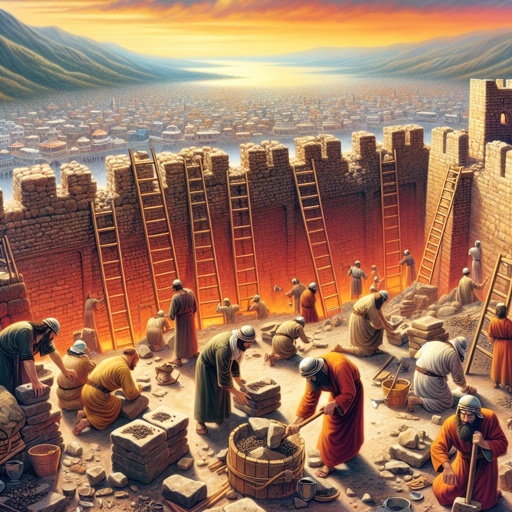
Nehemiah 4:2 - "And he spake before his brethren and the army of Samaria, and said, What do these feeble Jews? will they fortify themselves? will they sacrifice? will they make an end in a day? will they revive the stones out of the heaps of the rubbish which are burned?"
"And he spake before his brethren and the army of Samaria, and said, What do these feeble Jews? will they fortify themselves? will they sacrifice? will they make an end in a day? will they revive the stones out of the heaps of the rubbish which are burned?" - Nehemiah 4:2

Nehemiah 2:4 - "Then the king said unto me, For what dost thou make request? So I prayed to the God of heaven."

Nehemiah 2:4 (KJVA) 4 Then the king said unto me, For what dost thou make request? So I prayed to the God of heaven.

Nehemiah 2:4 (KJVA) 4 Then the king said unto me, For what dost thou make request? So I prayed to the God of heaven.

Nehemiah 4:6

Nehemiah 4:6

Nehemiah 4:6

Nehemiah 12:4 - "Iddo, Ginnetho, Abijah,"

Nehemiah 10:4 - "Hattush, Shebaniah, Malluch,"

"Iddo, Ginnetho, Abijah," - Nehemiah 12:4

"Hattush, Shebaniah, Malluch," - Nehemiah 10:4

Nehemiah 4:4 - "Hear, O our God; for we are despised: and turn their reproach upon their own head, and give them for a prey in the land of captivity:"

Nehemiah 4:8 - "And conspired all of them together to come and to fight against Jerusalem, and to hinder it."

Nehemiah 12:2 - "Amariah, Malluch, Hattush,"

Nehemiah 10:2 - "Seraiah, Azariah, Jeremiah,"

Nehemiah 4:17 – "Those who carried materials did their work with one hand and held a weapon in the other."
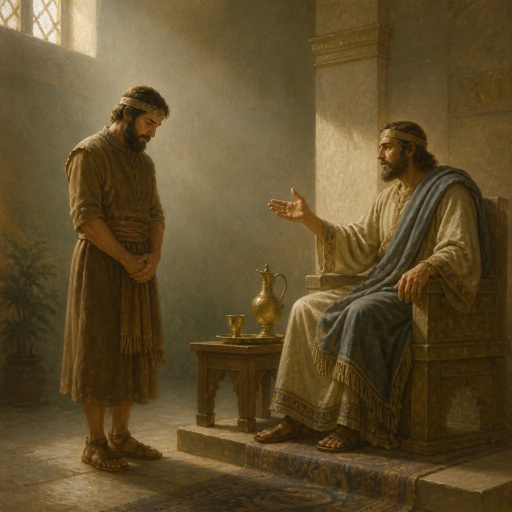
"Then the king said unto me, For what dost thou make request? So I prayed to the God of heaven." - Nehemiah 2:4

Nehemiah 7:4 - "Now the city was large and great: but the people were few therein, and the houses were not builded."

Nehemiah 4:17 – "Those who carried materials did their work with one hand and held a weapon in the other."

Nehemiah 13:4 - "¶ And before this, Eliashib the priest, having the oversight of the chamber of the house of our God, was allied unto Tobiah:"

Nehemiah 2:11 - "So I came to Jerusalem, and was there three days."

Nehemiah 5:4 - "There were also that said, We have borrowed money for the king's tribute, and that upon our lands and vineyards."

Nehemiah 4:10 - "And Judah said, The strength of the bearers of burdens is decayed, and there is much rubbish; so that we are not able to build the wall."

Nehemiah 6:4 - "Yet they sent unto me four times after this sort; and I answered them after the same manner."

Nehemiah 4:21 - "So we laboured in the work: and half of them held the spears from the rising of the morning till the stars appeared."
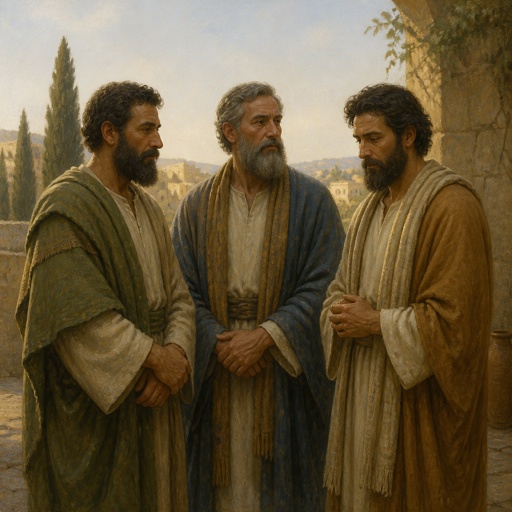
"Seraiah, Azariah, Jeremiah," - Nehemiah 10:2
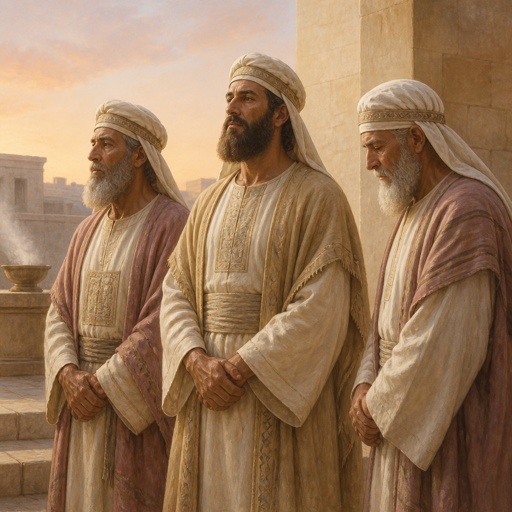
"Amariah, Malluch, Hattush," - Nehemiah 12:2

Nehemiah 4:5 - "And cover not their iniquity, and let not their sin be blotted out from before thee: for they have provoked thee to anger before the builders."

Nehemiah 4:18 - "For the builders, every one had his sword girded by his side, and so builded. And he that sounded the trumpet was by me."