Standing Firm Against Opposition: A Nehemiah Experience
“But it came to pass, that when Sanballat, and Tobiah, and the Arabians, and the Ammonites, and the Ashdodites, heard that the walls of Jerusalem were made up, and that the breaches began to be stopped, then they were very wroth,” — Nehemiah 4:7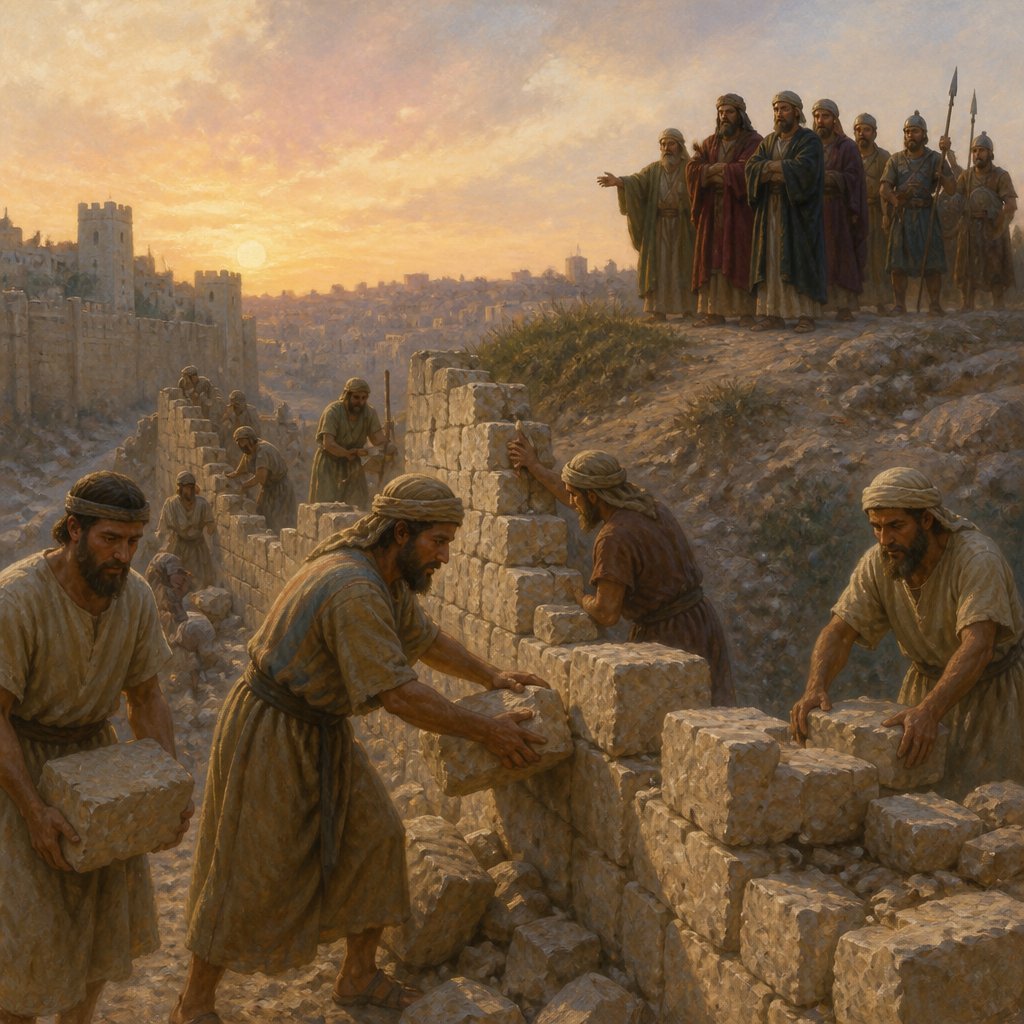
In Nehemiah 4:7 we read, "But it came to pass, that when Sanballat, and Tobiah, and the Arabians, and the Ammonites, and the Ashdodites, heard that the walls of Jerusalem were made up, and that the breaches began to be stopped, then they were very wroth." This verse encapsulates the fierce opposition faced by Nehemiah and the people of Jerusalem as they endeavored to restore their city after years of desolation. It beckons us to reflect on the trials and tribulations we face when undertaking a work for God, especially in the face of adversaries who reject our purpose and undermine our mission.
As we engage in spiritual building and restoration, like Nehemiah’s crew, we can expect opposition. The walls of Jerusalem represent not just physical protection, but spiritual strength, identity, and community purpose. The work Nehemiah took on was monumental, not merely in terms of brick and mortar, but in spiritual significance—restoring a people’s hope and God’s glory in their heritage. The hostility from Sanballat and the others was a direct response to the threat their efforts posed against their own influence and power. In this, we see that progress invites challenges; opposition often arises when we begin to make strides in our spiritual walks or seek to uplift others.
Let’s break down what the response of Sanballat and his cohorts reveals about human nature and the spiritual warfare that accompanies growth. Their wrath indicates a fear of loss—loss of control, loss of the status quo, and ultimately, loss of authority that disrupts their power structure. It serves as a stark reminder that those who oppose God’s work often try to intimidate and sow discord among the builders. They summon disdain, mockery, and personal attacks to dissuade the faithful from their mission: just like the whispers of doubt that often echo in our own hearts when we attempt to change, or as we pursue what God has put before us.
In our lives, whether we are leading a ministry, guiding our family, or striving to overcome personal battles, we must be prepared for backlash. There will be healers who oppose your healing; there will be accusers who doubt your integrity; there will be naysayers who question your call. Sanballat and Tobiah's wrath directed towards Nehemiah and the rebuilding efforts of Jerusalem illustrates this universal truth.
However, it is critical to realize that their anger aimed to instill fear and discourage the work at hand. Yet, Nehemiah responded with courage, relying on prayer and the steadfast support of his people. In verses following this opposition, Nehemiah does not cower; rather, he calls upon the leaders and the people to remember God's greatness and to persevere regardless of the threats. They fortified themselves in prayer and with a mind to work. This highlights an essential truth: when we engage in God's work, it must be rooted in fervent prayer and communal solidarity, reinforcing a shared vision and purpose.
In our endeavor to build the walls of our own Jerusalem—whether they are relationships, ministries, or personal projects—we must embrace Nehemiah’s spirit of tenacity. Opposition is not a sign of failure; it is often a confirmation that we are on the right track. Let it propel us toward deeper prayer, unity with fellow believers, and a steadfast commitment to the calling we have received. Nehemiah reminds us to place our confidence in the Lord rather than the discouragement of detractors.
The lesson from this verse is profound: as we pursue God's work, let us steel ourselves against opposition. Commit your projects to prayer, fortify your spirit with the truth of Scripture, and surround yourself with those who share your vision. As Nehemiah taught us, even when faced with great wrath, we must remain firmly resolved to fulfill our calling, for the walls of our Jerusalem may just be waiting for our unwavering faith to rise once more.
Get our apps


Artwork for Nehemiah 4:7

Nehemiah 4:7 - "¶ But it came to pass, that when Sanballat, and Tobiah, and the Arabians, and the Ammonites, and the Ashdodites, heard that the walls of Jerusalem were made up, and that the breaches began to be stopped, then they were very wroth,"
"¶ But it came to pass, that when Sanballat, and Tobiah, and the Arabians, and the Ammonites, and the Ashdodites, heard that the walls of Jerusalem were made up, and that the breaches began to be stopped, then they were very wroth," - Nehemiah 4:7

Nehemiah 7:4 - "Now the city was large and great: but the people were few therein, and the houses were not builded."

Nehemiah 7:7 - "Who came with Zerubbabel, Jeshua, Nehemiah, Azariah, Raamiah, Nahamani, Mordecai, Bilshan, Mispereth, Bigvai, Nehum, Baanah. The number, I say, of the men of the people of Israel was this;"
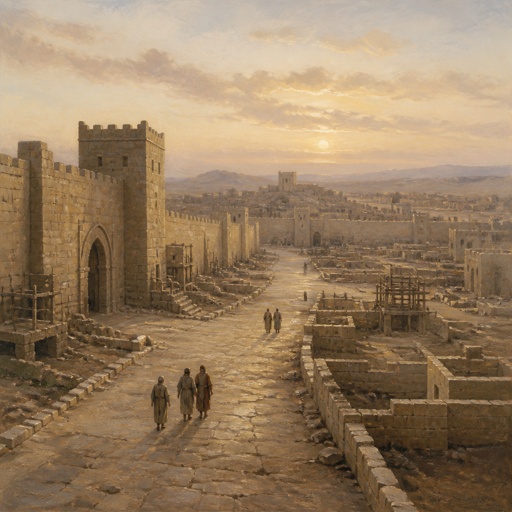
"Now the city was large and great: but the people were few therein, and the houses were not builded." - Nehemiah 7:4

Nehemiah 4:6

Nehemiah 4:6

Nehemiah 4:6

Nehemiah 10:7 - "Meshullam, Abijah, Mijamin,"

Nehemiah 7:42 - "The children of Harim, a thousand and seventeen."

Nehemiah 7:24 - "The children of Hariph, an hundred and twelve."

Nehemiah 7:56 - "The children of Neziah, the children of Hatipha."

Nehemiah 7:25 - "The children of Gibeon, ninety and five."

Nehemiah 12:4 - "Iddo, Ginnetho, Abijah,"

Nehemiah 10:4 - "Hattush, Shebaniah, Malluch,"

Nehemiah 7:40 - "The children of Immer, a thousand fifty and two."

Nehemiah 7:31 - "The men of Michmas, an hundred and twenty and two."

Nehemiah 7:33 - "The men of the other Nebo, fifty and two."

Nehemiah 7:28 - "The men of Beth-azmaveth, forty and two."

Nehemiah 7:21 - "The children of Ater of Hezekiah, ninety and eight."

Nehemiah 7:14 - "The children of Zaccai, seven hundred and threescore."

Nehemiah 7:27 - "The men of Anathoth, an hundred twenty and eight."

Nehemiah 7:35 - "The children of Harim, three hundred and twenty."

Nehemiah 7:16 - "The children of Bebai, six hundred twenty and eight."

Nehemiah 7:58 - "The children of Jaala, the children of Darkon, the children of Giddel,"

Nehemiah 7:9 - "The children of Shephatiah, three hundred seventy and two."

Nehemiah 7:48 - "The children of Lebana, the children of Hagaba, the children of Shalmai,"

Nehemiah 7:15 - "The children of Binnui, six hundred forty and eight."

Nehemiah 7:19 - "The children of Bigvai, two thousand threescore and seven."

Nehemiah 7:44 - "¶ The singers: the children of Asaph, an hundred forty and eight."