Leadership Through Servanthood: Lessons from Nehemiah 5:14
“Moreover from the time that I was appointed to be their governor in the land of Judah, from the twentieth year even unto the two and thirtieth year of Artaxerxes the king, that is, twelve years, I and my brethren have not eaten the bread of the governor.” — Nehemiah 5:14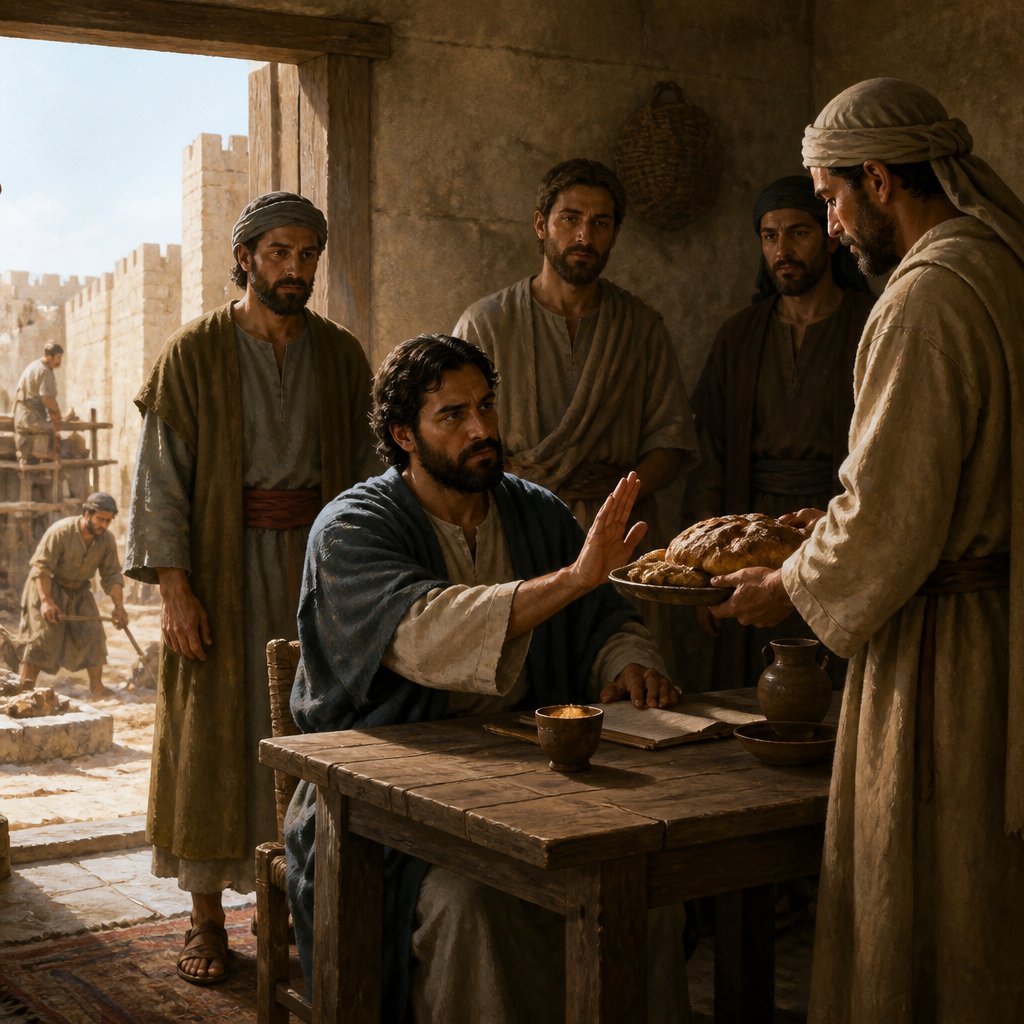
In Nehemiah 5:14, we encounter a striking revelation about leadership and selflessness: "Moreover from the time that I was appointed to be their governor in the land of Judah, from the twentieth year even unto the two and thirtieth year of Artaxerxes the king, that is, twelve years, I and my brethren have not eaten the bread of the governor." This passage gives us a meaningful glimpse into the character of Nehemiah, who served not only as a leader but as a servant to his people.
Nehemiah was appointed by King Artaxerxes to govern Judah during a time of profound distress and rebuilding after the Babylonian exile. The walls of Jerusalem lay in ruins, and the people were subject to external pressures and internal strife. Faced with these overwhelming challenges, Nehemiah chose to exemplify a leadership style rooted in humility and sacrifice.
From the very outset of his governorship, Nehemiah made a deliberate choice to abstain from the privileges typically afforded to those in positions of power. In the KJV text, he highlights a critical point: he did not eat the "bread of the governor." This phrase encapsulates the concept that a leader’s role is not to indulge in personal gain but to prioritize the needs of the community. Nehemiah's refusal to partake in such benefits showcases his unwavering commitment to the welfare of his people. His leadership was marked by responsibility rather than entitlement.
In a world where power often breeds selfishness, Nehemiah stands out as an illustration of what it means to lead through service. He was aware of the burdens faced by the families in Jerusalem—poverty, scarcity, and oppression. In his foresight, Nehemiah understood that demonstrating compassion and deliberately disconnecting himself from lavishness would foster trust and unity among his people. His leadership was not about self-preservation but about lifting others up.
As we meditate on Nehemiah's example, it is essential to consider how this applies to our own lives. Whether we lead in our families, communities, or workplaces, the challenge remains the same: can we prioritize service over status? In our pursuit of success, do we pause to consider how our decisions affect those around us?
Nehemiah's leadership was not merely about making wise decisions; it was about cultivating a culture of empathy and shared sacrifice. His actions inspire us to be mindful of the weight that our leadership can carry. When we exhibit the heart of a servant, we create an environment where people feel valued and equipped to thrive.
When reflecting upon Nehemiah, we must also recognize the source of his strength. This was not a feat he accomplished alone. Nehemiah’s success stemmed from his unwavering faith in God and his commitment to prayer and discernment. At various points throughout the book of Nehemiah, we see him turning to God for wisdom, strength, and courage. He knew that true leadership flows from a deep relationship with the Almighty, who equips us with the heart to serve.
In practice, serving as Nehemiah did might require us to sacrifice our own desires for the greater good. It could mean setting aside personal advancement to advocate for those less fortunate or making decisions that may not always align with our own comforts. True leadership, inspired by Nehemiah’s example, emanates from a genuine love for those we lead, recognizing that our role is to guide them through challenges, not to merely oversee their performance.
In conclusion, as we strive to embody leadership that mirrors that of Nehemiah, let us embrace a spirit of servanthood. May we challenge ourselves to empty our plates of entitlement and fill them instead with the bread of humility and sacrifice for the benefit of others. In doing so, we honor God and empower those around us, reflecting the character of Christ, who came not to be served, but to serve.
Get our apps


Artwork for Nehemiah 5:14

Nehemiah 5:14 - "¶ Moreover from the time that I was appointed to be their governor in the land of Judah, from the twentieth year even unto the two and thirtieth year of Artaxerxes the king, that is, twelve years, I and my brethren have not eaten the bread of the governor."
"¶ Moreover from the time that I was appointed to be their governor in the land of Judah, from the twentieth year even unto the two and thirtieth year of Artaxerxes the king, that is, twelve years, I and my brethren have not eaten the bread of the governor." - Nehemiah 5:14

Nehemiah 11:11-14

Nehemiah 12:14 - "Of Melicu, Jonathan; of Shebaniah, Joseph;"

Nehemiah 10:5 - "Harim, Meremoth, Obadiah,"

Nehemiah 12:5 - "Miamin, Maadiah, Bilgah,"

Nehemiah 7:14 - "The children of Zaccai, seven hundred and threescore."

Nehemiah 10:14 - "The chief of the people; Parosh, Pahath-moab, Elam, Zatthu, Bani,"

Nehemiah 5:1 - "And there was a great cry of the people and of their wives against their brethren the Jews."
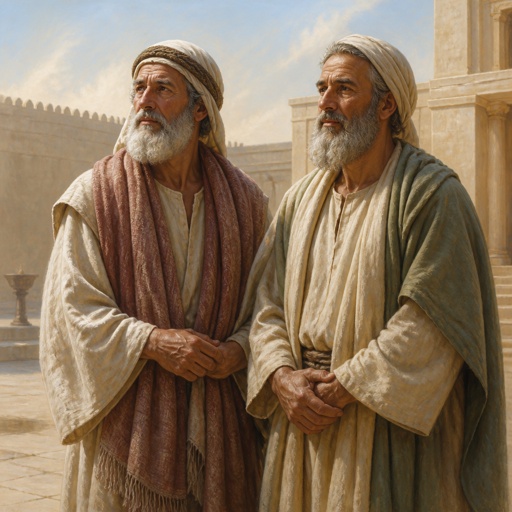
"Of Melicu, Jonathan; of Shebaniah, Joseph;" - Nehemiah 12:14

"Harim, Meremoth, Obadiah," - Nehemiah 10:5

"Miamin, Maadiah, Bilgah," - Nehemiah 12:5

Nehemiah 5:6 - "¶ And I was very angry when I heard their cry and these words."

Nehemiah 2:14 - "Then I went on to the gate of the fountain, and to the king's pool: but there was no place for the beast that was under me to pass."
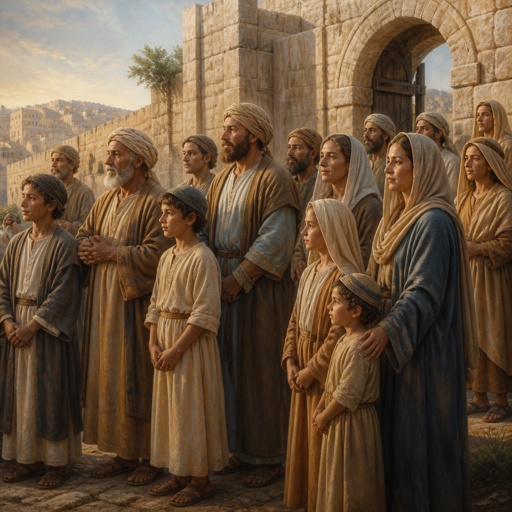
"The children of Zaccai, seven hundred and threescore." - Nehemiah 7:14

Nehemiah 3:5 - "And next unto them the Tekoites repaired; but their nobles put not their necks to the work of their Lord."

Nehemiah 11:14 - "And their brethren, mighty men of valour, an hundred twenty and eight: and their overseer was Zabdiel, the son of one of the great men."

Nehemiah 5:19 - "Think upon me, my God, for good, according to all that I have done for this people."

Nehemiah 5:4 - "There were also that said, We have borrowed money for the king's tribute, and that upon our lands and vineyards."

Nehemiah 8:14 - "And they found written in the law which the LORD had commanded by Moses, that the children of Israel should dwell in booths in the feast of the seventh month:"

Nehemiah 9:14 - "And madest known unto them thy holy sabbath, and commandedst them precepts, statutes, and laws, by the hand of Moses thy servant:"

Nehemiah 6:5 - "Then sent Sanballat his servant unto me in like manner the fifth time with an open letter in his hand;"

Nehemiah 4:5 - "And cover not their iniquity, and let not their sin be blotted out from before thee: for they have provoked thee to anger before the builders."

Nehemiah 6:14 - "My God, think thou upon Tobiah and Sanballat according to these their works, and on the prophetess Noadiah, and the rest of the prophets, that would have put me in fear."
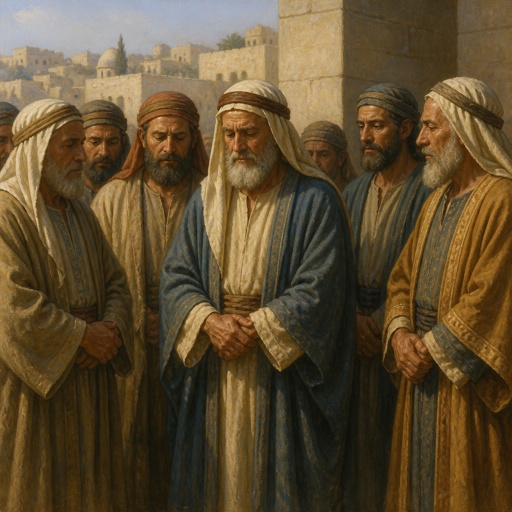
"The chief of the people; Parosh, Pahath-moab, Elam, Zatthu, Bani," - Nehemiah 10:14

Nehemiah 11:5 - "And Maaseiah the son of Baruch, the son of Col-hozeh, the son of Hazaiah, the son of Adaiah, the son of Joiarib, the son of Zechariah, the son of Shiloni."

"And there was a great cry of the people and of their wives against their brethren the Jews." - Nehemiah 5:1

Nehemiah 13:14 - "Remember me, O my God, concerning this, and wipe not out my good deeds that I have done for the house of my God, and for the offices thereof."

A biblical scene from Nehemiah 1:5-11 - Nehemiah, a Caucasian male in middle-eastern garb, is depicted respectfully requesting time from the king, a Middle-Eastern male seated at the dinner table while Nehemiah is serving his drink. He is asking for the opportunity to return to Judah and help his people build a wall. The setting is a grand royal court marked by golden hues, opulent textiles, and architecturally rich columns.

Nehemiah 5:3 - "Some also there were that said, We have mortgaged our lands, vineyards, and houses, that we might buy corn, because of the dearth."