Letters of Allegiance: The Call to Integrity in Challenging Times
“Moreover in those days the nobles of Judah sent many letters unto Tobiah, and the letters of Tobiah came unto them.” — Nehemiah 6:17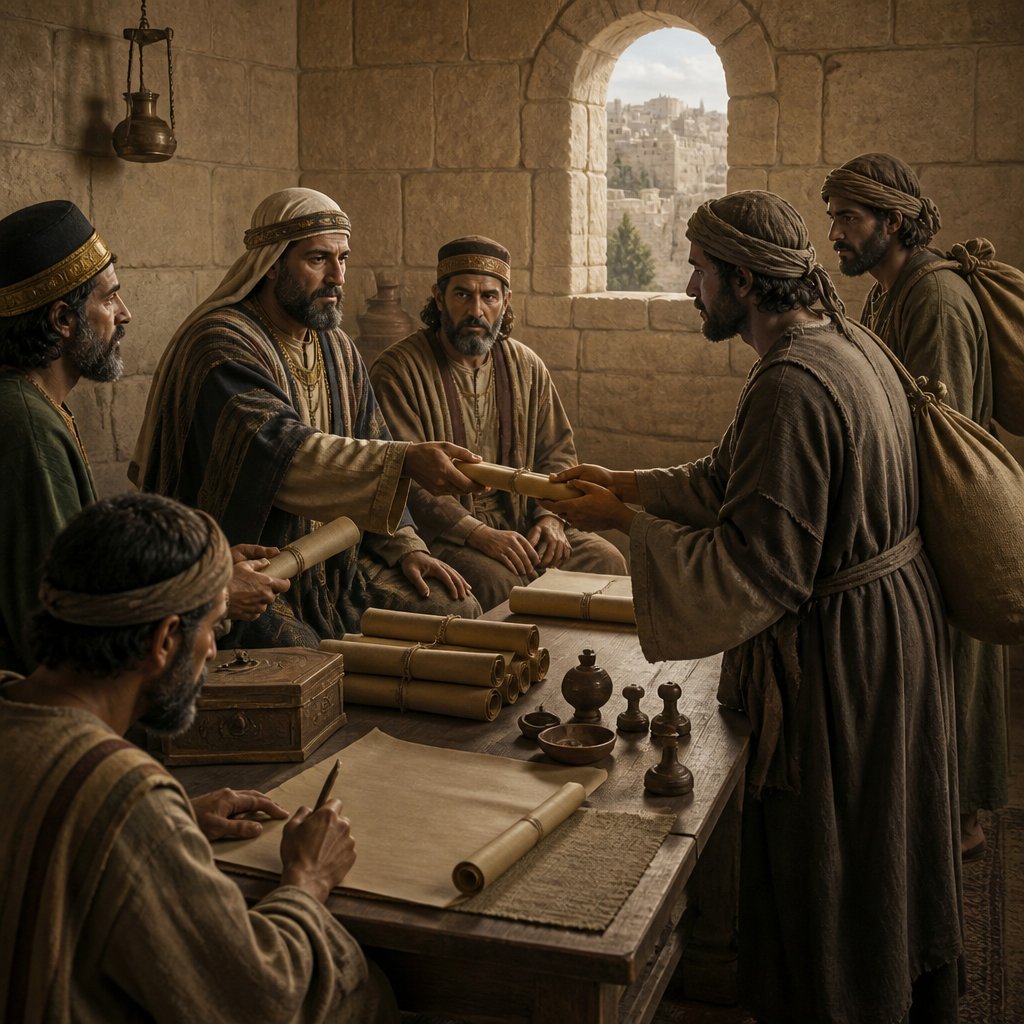
As we delve into Nehemiah 6:17, "Moreover in those days the nobles of Judah sent many letters unto Tobiah, and the letters of Tobiah came unto them," we uncover a profound moment in the history of Jerusalem during a time of rebuilding and restoration. Nehemiah, a devoted servant of God, had returned to Jerusalem to initiate the monumental task of rebuilding the walls and the spirit of the people of Israel. His unwavering commitment to God’s mission placed him in direct opposition to enemies like Tobiah and Sanballat, who were determined to thwart the restoration efforts.
The act of sending letters back and forth between the nobles of Judah and Tobiah reveals a deeper issue—one of divided loyalties and conflicted allegiances. The nobles, who were meant to support Nehemiah’s vision, instead chose to communicate with those who were actively against their community’s welfare. This action raises inevitable questions on the nature of our collaborations and friendships and where our loyalties lie.
In today’s world, we find analogous situations within our spiritual lives. Are we aligning ourselves with those who uplift us, challenge us positively, and foster the love of Christ, or are we entangled with those who dilute our values and distract us from God’s purpose? In the United States especially, where society often places importance on relationships and networks, we must discern whether our connections are compromising our integrity or enhancing our effectiveness for God.
The nobles carrying on correspondence with Tobiah were likely engaging in a desire for political advantage or social acceptance. They may have believed they could negotiate with the enemy or gain some favoritism in return for their support. However, this illustrates a fragile foundation built on fear and the desire for approval rather than on faith and obedience. Nehemiah’s commitment to God’s call, by contrast, emphasizes the importance of making a stand, regardless of popular sentiment.
Nehemiah himself was situated in a precarious position. He had witnessed firsthand the devastation of Jerusalem, and his heart was burdened for the restoration not only of the physical walls but of the people's spiritual integrity. His response to the enemies’ threats and the divided loyalties surrounding him was rooted in unwavering faith and a singular focus on God’s promise. His leadership was marked by prayer, perseverance, and a determination to keep moving forward despite opposition. He understood that the task was greater than his comfort; it was about the glory of God and the future of His people.
As we meditate on this passage, we must ask ourselves whom we choose to align with in our personal lives. Are we fostering relationships that encourage spiritual growth or are we courting those who lead us toward complacency or compromise? Are we sending letters of encouragement and truth, or are we inadvertently sending invitations to distraction?
Furthermore, Nehemiah’s example teaches us to be vigilant. Just as he was aware of the subtle divisions among his people, we too must be watchful regarding who we let influence us. In the book of James, we read how a double-minded man is unstable in all his ways (James 1:8). If our hearts are torn between loyalty to God and the allure of worldly acceptance, we cannot fulfill His mission.
In this season of reflection, let us commit to forming bonds that honor God. Let us be known for our allegiance to His kingdom alone. As we embrace these principles, may we strengthen the walls of our hearts and communities, making them fit for the work of God now and in the future. Rather than sending letters to those who lead us astray, let us send missives of encouragement to one another as we collectively engage in the work set before us.
Get our apps


Artwork for Nehemiah 6:17

Nehemiah 6:17 - "¶ Moreover in those days the nobles of Judah sent many letters unto Tobiah, and the letters of Tobiah came unto them."
"¶ Moreover in those days the nobles of Judah sent many letters unto Tobiah, and the letters of Tobiah came unto them." - Nehemiah 6:17

Nehemiah 10:17 - "Ater, Hizkijah, Azzur,"

Nehemiah 12:17 - "Of Abijah, Zichri; of Miniamin, of Moadiah, Piltai;"

Nehemiah 4:6

Nehemiah 4:6

Nehemiah 4:6

Nehemiah 6:9

Nehemiah 10:6 - "Daniel, Ginnethon, Baruch,"

Nehemiah 12:6 - "Shemaiah, and Joiarib, Jedaiah,"
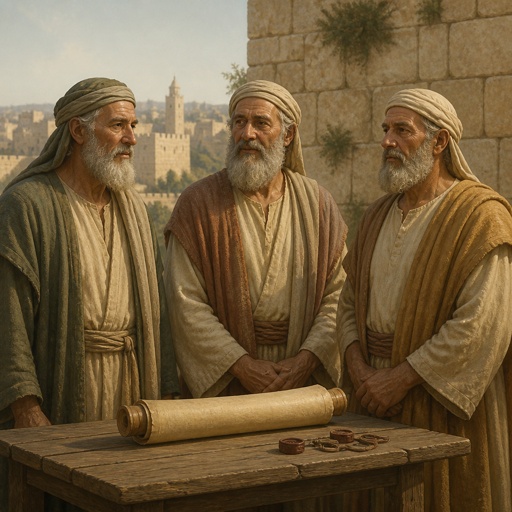
"Ater, Hizkijah, Azzur," - Nehemiah 10:17

Nehemiah 7:17 - "The children of Azgad, two thousand three hundred twenty and two."

Nehemiah 4:17 – "Those who carried materials did their work with one hand and held a weapon in the other."

Nehemiah 4:17 – "Those who carried materials did their work with one hand and held a weapon in the other."

"Shemaiah, and Joiarib, Jedaiah," - Nehemiah 12:6

"Daniel, Ginnethon, Baruch," - Nehemiah 10:6
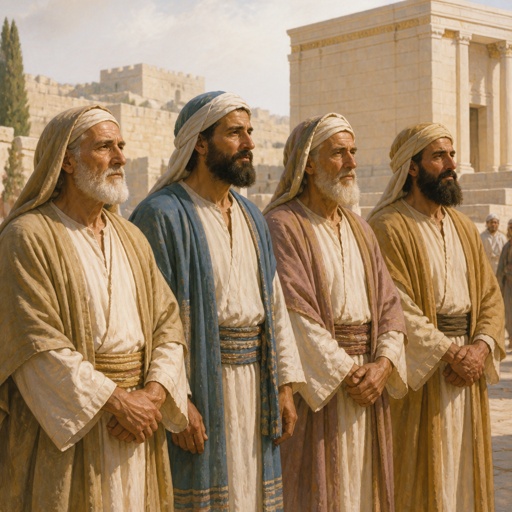
"Of Abijah, Zichri; of Miniamin, of Moadiah, Piltai;" - Nehemiah 12:17

Nehemiah 5:6 - "¶ And I was very angry when I heard their cry and these words."

Nehemiah 6:15 – "So the wall was completed on the twenty-fifth of Elul, in fifty-two days."
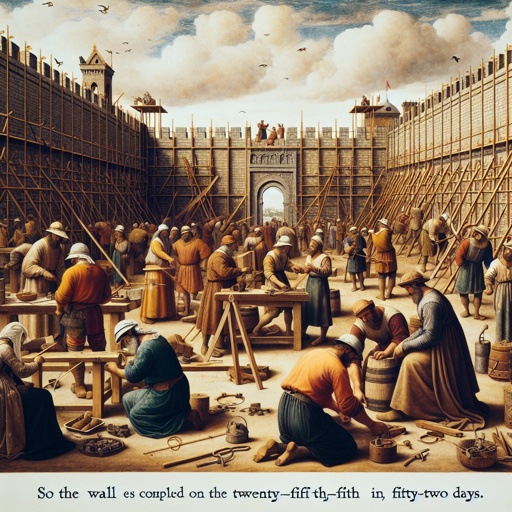
Nehemiah 6:15 – "So the wall was completed on the twenty-fifth of Elul, in fifty-two days."

Nehemiah 13:17 - "Then I contended with the nobles of Judah, and said unto them, What evil thing is this that ye do, and profane the sabbath day?"

Nehemiah 4:17 – "Those who carried materials did their work with one hand and held a weapon in the other."

Nehemiah 6:15 - "¶ So the wall was finished in the twenty and fifth day of the month Elul, in fifty and two days."

Nehemiah 11:6 - "All the sons of Perez that dwelt at Jerusalem were four hundred threescore and eight valiant men."

Nehemiah 6:6 - "Wherein was written, It is reported among the heathen, and Gashmu saith it, that thou and the Jews think to rebel: for which cause thou buildest the wall, that thou mayest be their king, according to these words."

Nehemiah 5:17 - "Moreover there were at my table an hundred and fifty of the Jews and rulers, beside those that came unto us from among the heathen that are about us."

Nehemiah 4:17 - "They which builded on the wall, and they that bare burdens, with those that laded, every one with one of his hands wrought in the work, and with the other hand held a weapon."
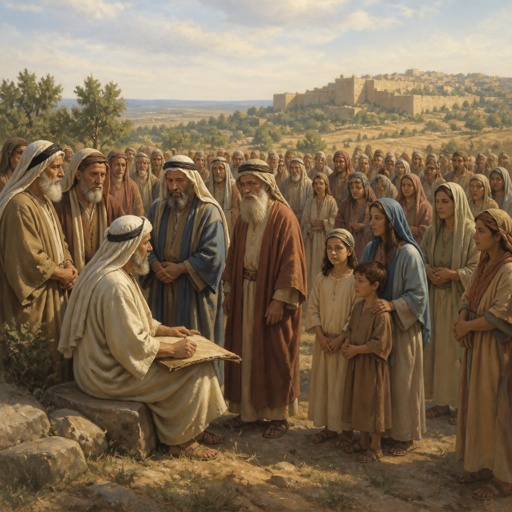
"The children of Azgad, two thousand three hundred twenty and two." - Nehemiah 7:17

Nehemiah 6:4 - "Yet they sent unto me four times after this sort; and I answered them after the same manner."

Nehemiah 6:5 - "Then sent Sanballat his servant unto me in like manner the fifth time with an open letter in his hand;"