The Urim and Thummim: Divine Guidance in Holy Matters
"And the Tirshatha said unto them, that they should not eat of the most holy things, till there stood up a priest with Urim and Thummim." - Nehemiah 7:65
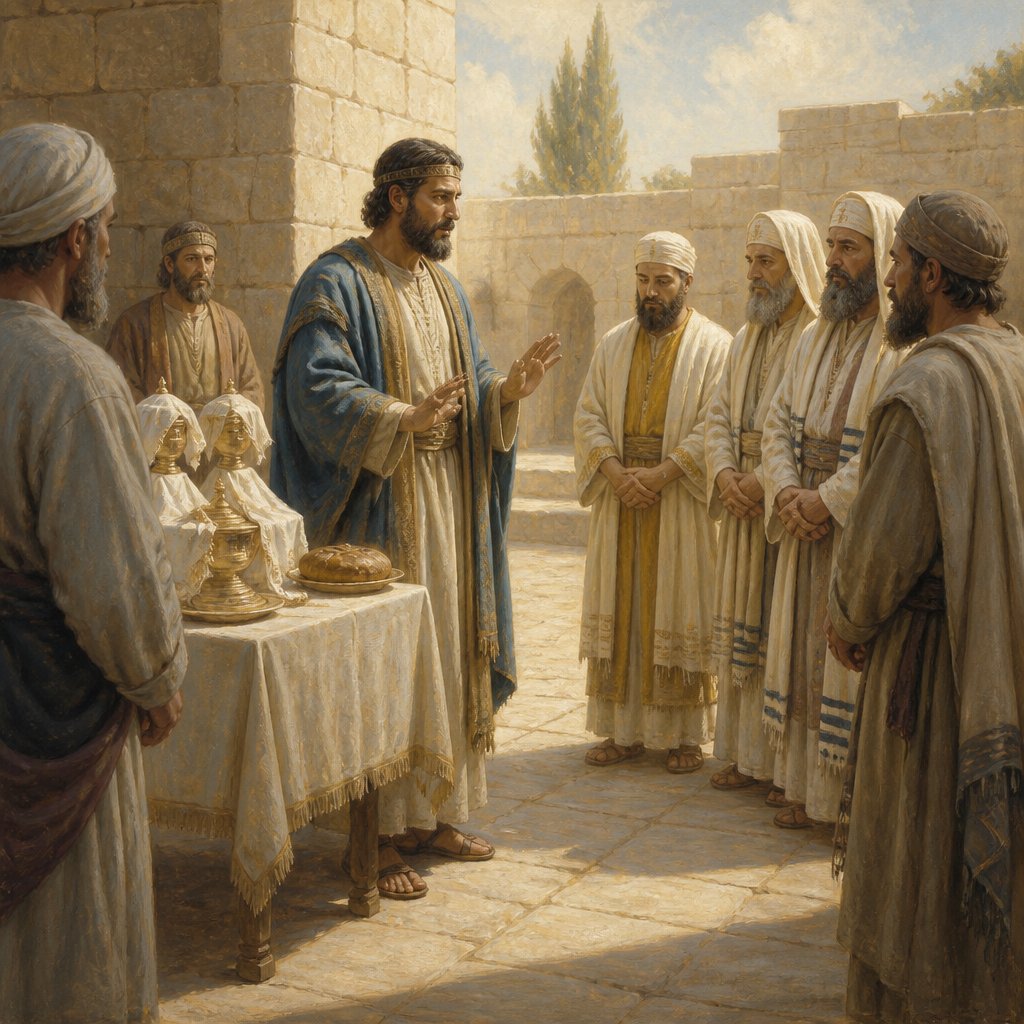
In the book of Nehemiah, we find a significant moment in the restoration of Jerusalem and, by extension, the restoration of God’s people. Nehemiah, a godly leader, had returned to Jerusalem to rebuild the walls and the community that had been ravaged and torn apart by sin and adversity. Among the many challenges faced by Nehemiah and the returning exiles was that of restoring worship and the adherence to God's laws—essentially, rebuilding the social and spiritual fabric of their lives.
In Nehemiah 7:65, we read: "And the Tirshatha said unto them, that they should not eat of the most holy things, till there stood up a priest with Urim and Thummim." This verse holds profound implications for the understanding of holiness, divine approval, and spiritual leadership. It reveals the meticulousness with which God desires His people to approach sacred matters, especially those pertinent to worship.
### The Role of the Tirshatha
The term "Tirshatha" is likely a title denoting Nehemiah himself, as it translates to a governor or leader. Nehemiah's role here is critical—he serves not only as a civil leader but also as an administrator of spiritual practice. His command to refrain from consuming the sacred offerings until a priest could consult the Urim and Thummim shows a deep respect for divine order and an understanding of the weight of spiritual authority. Nehemiah recognized that in order to partake in what was holy, one must be eligible and guided in accordance with God’s directives.
### The Urim and Thummim
The Urim and Thummim were sacred objects used by the high priest to discern God's will (Exodus 28:30). Their exact nature remains somewhat mysterious in scripture, but they were essential in making decisions about the community that could only be validated through divine approval. The Urim and Thummim illustrate the relationship between God and His people. They reflect a heart posture that seeks God's guidance, emphasizing the importance of divine wisdom over human understanding. Nehemiah's insistence on waiting for the priest signifies a humble approach to leadership—one that does not presume to act without God's foundational input.
### Holiness Requires Reverence
This directive serves as a reminder that holiness is not merely about behavior but about attitude and reverence toward God. In the Old Testament, consuming the most holy things carried immense significance. It demonstrated the individual's standing before God and their readiness to engage in the sacred. By waiting for the priest with the Urim and Thummim, Nehemiah was teaching the people to treat their relationship with God as sacred—something not to be approached lightly.
In our contemporary lives, we may not have the Urim and Thummim, but we possess the Holy Spirit and the Word of God—the guiding principles for our spiritual decisions and life choices. When faced with decisions regarding our spiritual walk or community engagement, how often do we pause to seek divine guidance? Do we treat the things of God with the reverence they deserve? Nehemiah's example challenges us to uphold spiritual integrity in all we do.
### Conclusion
As we reflect on Nehemiah 7:65, let us be reminded that our approach to holiness in worship, service, and daily life should always be undergirded by an earnest seeking of God's will. May we be leaders in our own spheres, establishing practices that require divine guidance before we partake in what is holy. Let us actively seek the heart of God through His Word and prayer, asking for the Spirit's wisdom in every decision. The call to holiness is a call to embrace a life led and validated by God, who knows our hearts and longs for us to reflect His love and righteousness to the world.
Want to reflect more on Nehemiah 7:65?
Continue your spiritual journey with Bible Chat — an AI-powered tool for exploring God's Word through conversation. Ask questions, discover connections, and deepen your understanding.
Get Our Apps


Nehemiah 7:65 Artwork
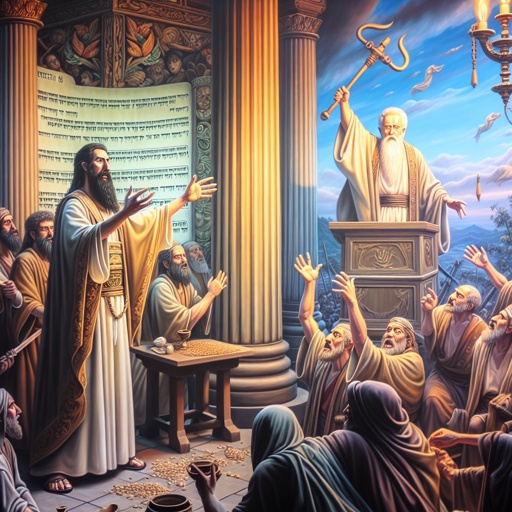
Nehemiah 7:65 - "And the Tirshatha said unto them, that they should not eat of the most holy things, till there stood up a priest with Urim and Thummim."
"And the Tirshatha said unto them, that they should not eat of the most holy things, till there stood up a priest with Urim and Thummim." - Nehemiah 7:65

Psalms 65:7 - "Which stilleth the noise of the seas, the noise of their waves, and the tumult of the people."

Nehemiah 7:7 - "Who came with Zerubbabel, Jeshua, Nehemiah, Azariah, Raamiah, Nahamani, Mordecai, Bilshan, Mispereth, Bigvai, Nehum, Baanah. The number, I say, of the men of the people of Israel was this;"
"Which stilleth the noise of the seas, the noise of their waves, and the tumult of the people." - Psalms 65:7

Numbers 7:65 - "And for a sacrifice of peace offerings, two oxen, five rams, five he goats, five lambs of the first year: this was the offering of Abidan the son of Gideoni."

Nehemiah 10:7 - "Meshullam, Abijah, Mijamin,"

Nehemiah 7:42 - "The children of Harim, a thousand and seventeen."

Nehemiah 7:24 - "The children of Hariph, an hundred and twelve."

Nehemiah 7:56 - "The children of Neziah, the children of Hatipha."

Nehemiah 7:25 - "The children of Gibeon, ninety and five."

Isaiah 65:7 - "Your iniquities, and the iniquities of your fathers together, saith the LORD, which have burned incense upon the mountains, and blasphemed me upon the hills: therefore will I measure their former work into their bosom."

Nehemiah 7:40 - "The children of Immer, a thousand fifty and two."

Nehemiah 7:31 - "The men of Michmas, an hundred and twenty and two."

Nehemiah 7:33 - "The men of the other Nebo, fifty and two."

Nehemiah 7:21 - "The children of Ater of Hezekiah, ninety and eight."

Nehemiah 7:28 - "The men of Beth-azmaveth, forty and two."

Nehemiah 7:14 - "The children of Zaccai, seven hundred and threescore."

Nehemiah 7:27 - "The men of Anathoth, an hundred twenty and eight."

Nehemiah 7:35 - "The children of Harim, three hundred and twenty."

Nehemiah 7:16 - "The children of Bebai, six hundred twenty and eight."

Nehemiah 7:58 - "The children of Jaala, the children of Darkon, the children of Giddel,"

Nehemiah 7:9 - "The children of Shephatiah, three hundred seventy and two."

Nehemiah 7:48 - "The children of Lebana, the children of Hagaba, the children of Shalmai,"

Nehemiah 7:19 - "The children of Bigvai, two thousand threescore and seven."

Nehemiah 7:15 - "The children of Binnui, six hundred forty and eight."

Nehemiah 7:44 - "¶ The singers: the children of Asaph, an hundred forty and eight."

Nehemiah 7:18 - "The children of Adonikam, six hundred threescore and seven."

Nehemiah 7:13 - "The children of Zattu, eight hundred forty and five."

Nehemiah 7:49 - "The children of Hanan, the children of Giddel, the children of Gahar,"