The Legacy of Faithfulness: Reflections on Nehemiah 7:15
“The children of Binnui, six hundred forty and eight.” — Nehemiah 7:15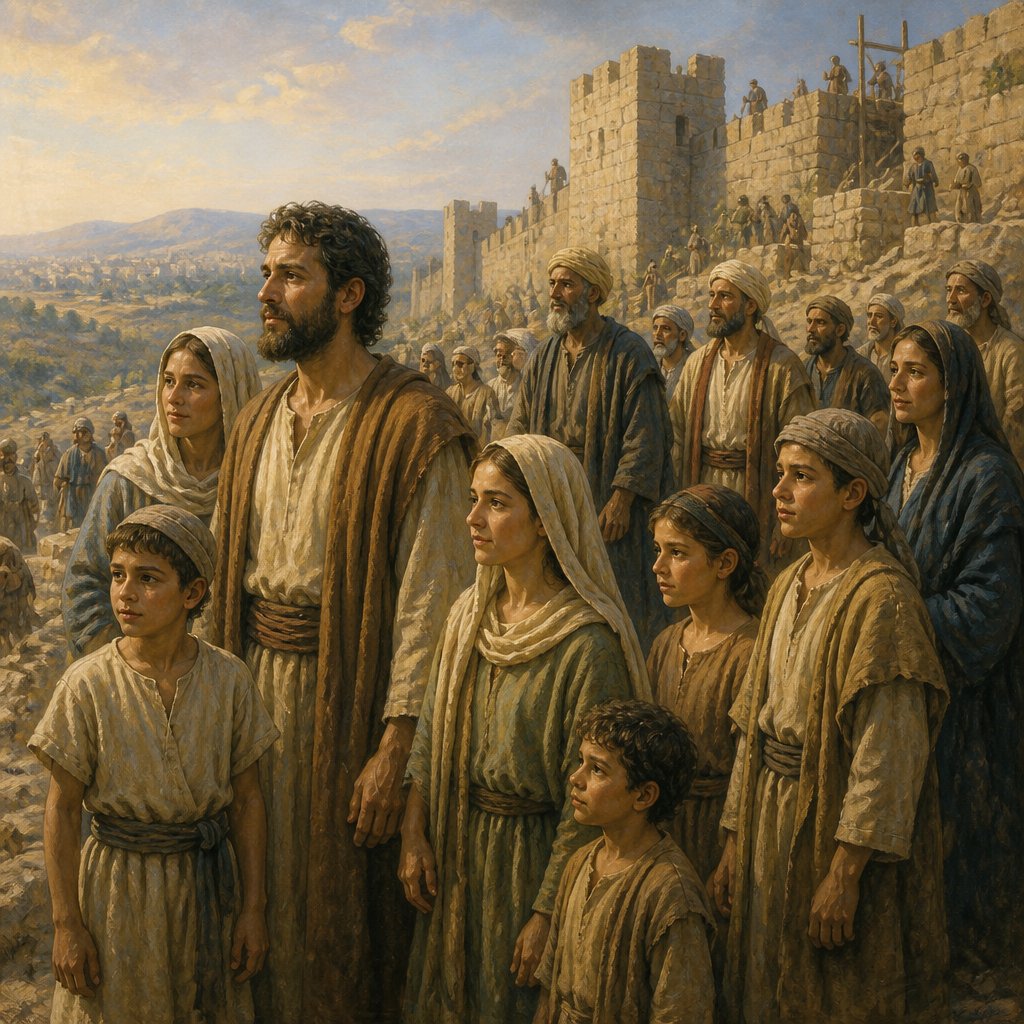
As we delve into Nehemiah 7:15, "The children of Binnui, six hundred forty and eight," we encounter what might appear to be a mere census detail, a summary of numbers, and a listing of descendants. Yet, this verse, nestled within the storied context of Nehemiah's restoration work, offers profound insights into the nature of community, legacy, and faithfulness.
Nehemiah was faced with the monumental task of rebuilding the walls of Jerusalem and re-establishing a community that was once broken. The listing of the families and their numbers in chapters 7 and 8 serves not only as a record but as a testament to God’s faithfulness. Each name and number represents a story, a life committed to the collective mission of God’s people.
In meditating on the children of Binnui, we first reflect on the significance of names in Biblical literature. Names link individuals to their heritage, their stories, and their responsibilities. The name 'Binnui' itself means "built up," which is symbolic of what God was doing through His people at this time—He was restoring and building up Jerusalem from the ruins left by exile. This connection invites us to consider how our own names and legacies fit into God’s redemptive narrative.
The families listed in Nehemiah's census were not just numbers; they were individuals with hopes, dreams, and a shared purpose. The fact that the children of Binnui numbered six hundred forty-eight signifies strength in numbers but also completeness in community. It reminds us that we are not called to faithful living in isolation; God’s design for His people encompasses unity and collaboration. As we reflect on our own community—whether it be our church, family, or workplace—how can we ensure that we are contributors to the collective good, strengthening one another in our God-ordained purposes?
Moreover, the number six hundred forty-eight itself can provoke a deeper reflection on the idea of divine providence and preparation. Numbers throughout Scripture often convey messages of God’s character and His work among His people. Six hundred forty and eight provides a focus for us to consider the abundance of God in our lives. In times of struggle or uncertainty, it can be easy to focus solely on lack, yet this verse invites us to celebrate what God has provided. We must adopt a posture of gratitude for the ways God has built His people, our families, and our congregations.
As we seek to apply this verse in our lives, we may ask ourselves: "What legacy am I building? Am I fostering a community of faithfulness?" The children of Binnui, like the other families recounted in this chapter, were called to actively participate in the restoration of Jerusalem. Similarly, our faith is not merely something to be passively observed but actively lived out. How can we embody the essence of restoration in our lives today? Perhaps it means reaching out to mend broken relationships, serving in our local ministries, or investing in the next generation.
In conclusion, Nehemiah 7:15 beckons us into deeper contemplation. It calls us to recognize our place within God’s greater story; we are not without purpose or significance. Our lives are intricately woven into the fabric of our communities. As individual threads make up a tapestry, so too do we come together as one body in Christ. Let us remember that our faithfulness today will shape our legacy for tomorrow. May we strive to be like the children of Binnui—known for our dedication to God’s work, and counted among those who are building His kingdom here on earth.
Get our apps


Artwork for Nehemiah 7:15

Nehemiah 7:15 - "The children of Binnui, six hundred forty and eight."
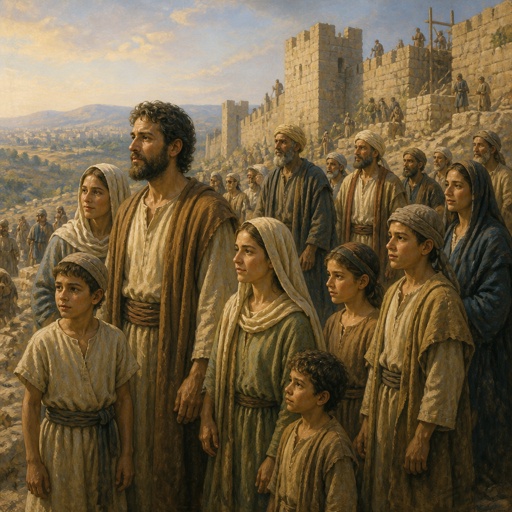
"The children of Binnui, six hundred forty and eight." - Nehemiah 7:15

Nehemiah 7:7 - "Who came with Zerubbabel, Jeshua, Nehemiah, Azariah, Raamiah, Nahamani, Mordecai, Bilshan, Mispereth, Bigvai, Nehum, Baanah. The number, I say, of the men of the people of Israel was this;"

Nehemiah 10:15 - "Bunni, Azgad, Bebai,"

Nehemiah 12:15 - "Of Harim, Adna; of Meraioth, Helkai;"

Nehemiah 10:7 - "Meshullam, Abijah, Mijamin,"

Nehemiah 7:42 - "The children of Harim, a thousand and seventeen."

Nehemiah 7:24 - "The children of Hariph, an hundred and twelve."

Nehemiah 7:56 - "The children of Neziah, the children of Hatipha."

Nehemiah 7:25 - "The children of Gibeon, ninety and five."
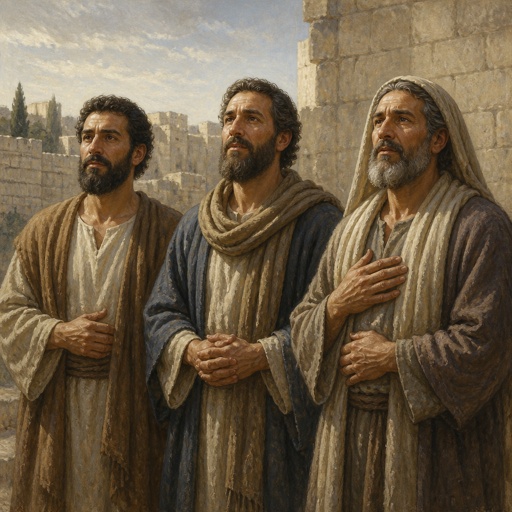
"Bunni, Azgad, Bebai," - Nehemiah 10:15

Nehemiah 7:40 - "The children of Immer, a thousand fifty and two."

Nehemiah 7:31 - "The men of Michmas, an hundred and twenty and two."

Nehemiah 7:33 - "The men of the other Nebo, fifty and two."

Nehemiah 7:28 - "The men of Beth-azmaveth, forty and two."

Nehemiah 7:21 - "The children of Ater of Hezekiah, ninety and eight."

Nehemiah 7:14 - "The children of Zaccai, seven hundred and threescore."

Nehemiah 7:27 - "The men of Anathoth, an hundred twenty and eight."

Nehemiah 7:35 - "The children of Harim, three hundred and twenty."

Nehemiah 6:15 – "So the wall was completed on the twenty-fifth of Elul, in fifty-two days."
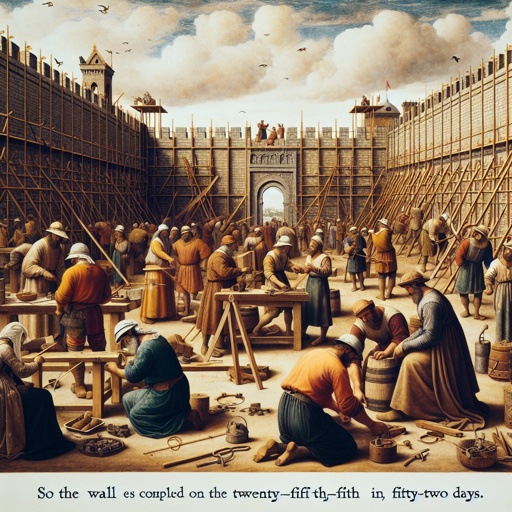
Nehemiah 6:15 – "So the wall was completed on the twenty-fifth of Elul, in fifty-two days."

Nehemiah 7:16 - "The children of Bebai, six hundred twenty and eight."

Nehemiah 7:58 - "The children of Jaala, the children of Darkon, the children of Giddel,"

Nehemiah 7:9 - "The children of Shephatiah, three hundred seventy and two."

Nehemiah 7:48 - "The children of Lebana, the children of Hagaba, the children of Shalmai,"

Nehemiah 7:19 - "The children of Bigvai, two thousand threescore and seven."

Nehemiah 7:44 - "¶ The singers: the children of Asaph, an hundred forty and eight."

Nehemiah 7:13 - "The children of Zattu, eight hundred forty and five."

Nehemiah 7:18 - "The children of Adonikam, six hundred threescore and seven."

Nehemiah 7:49 - "The children of Hanan, the children of Giddel, the children of Gahar,"