Restoration of a People: A Reflection on Nehemiah 7:17
“The children of Azgad, two thousand three hundred twenty and two.” — Nehemiah 7:17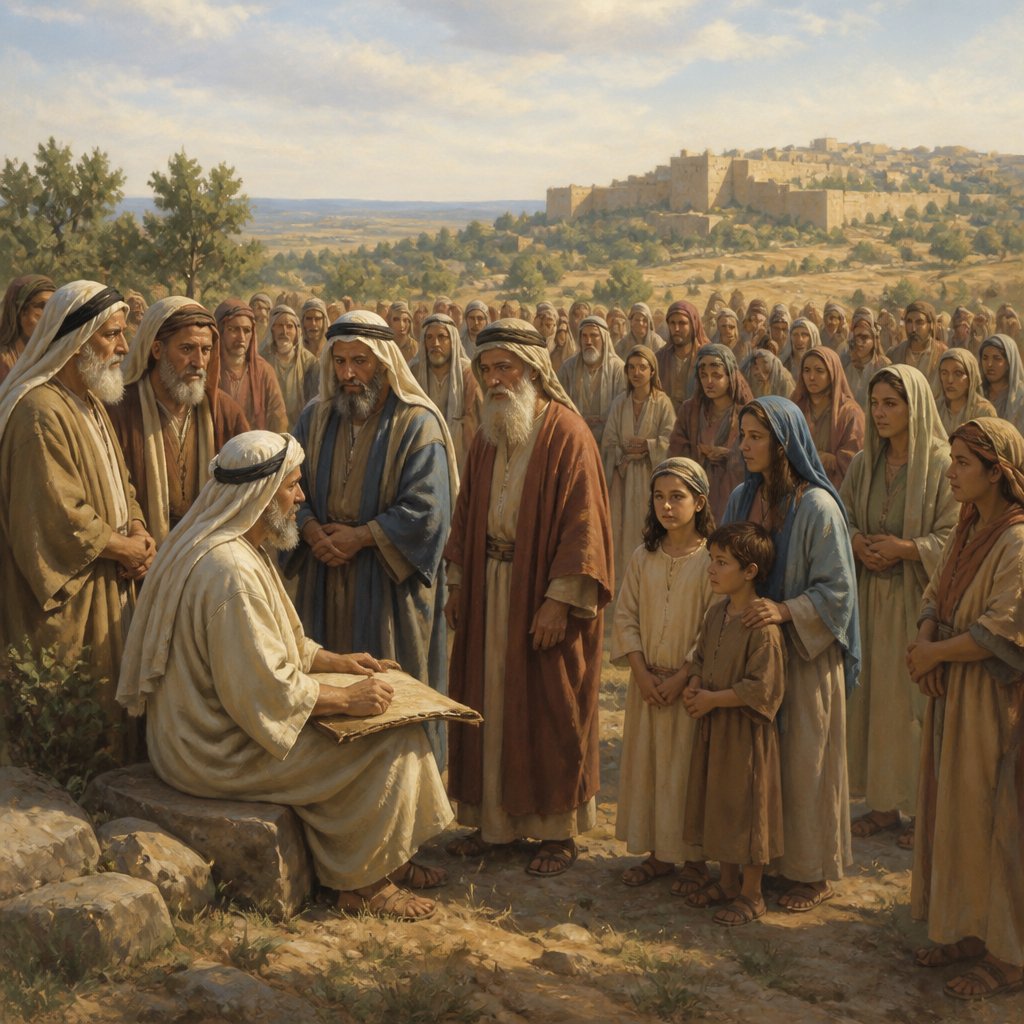
In Nehemiah 7:17, we find a significant detail amidst the meticulous records of those who returned to Jerusalem after the Babylonian exile. The King James Version states, "The children of Azgad, two thousand three hundred twenty and two." At first glance, this verse appears merely as a numerical account, a simple census report amidst the long list of names and numbers, yet it holds profound significance for believers today.
To understand the importance of these numbers, we must first reflect on the context of Nehemiah's efforts. After years of captivity, the Jewish people began returning to their homeland, facing immense challenges. Nehemiah’s mission was clear: to rebuild the walls of Jerusalem, restore its glory, and re-establish the identity of the people of God. The return of the exiles signified more than a physical journey; it represented spiritual renewal, hope, and the fulfillment of God's promises. Each family and individual who returned played a crucial role in this restoration.
Now, let’s consider the group mentioned in our verse—"the children of Azgad." The name Azgad means 'a strong leader' or 'a helper,' evoking the strength and assistance necessary for rebuilding both the city and the community. Their inclusion in this historical record emphasizes the importance of each individual within the collective restoration effort. They were not just numbers; they had names, stories, and purpose. God is not only concerned with the collective; He values the individual. This realization should stir our hearts as we understand that each of us, like the children of Azgad, has a unique role in God's economic of redemption.
The specific number—two thousand three hundred twenty and two—is significant because it portrays a remnant that has been preserved through trials and tribulations. Numbers in the Bible often have deeper meanings, and while this verse lists a specific population count, it reminds us of God’s faithfulness to preserve His people. He had promised a return, and here we see that promise fulfilled even down to the smallest detail. In our own lives, we can find comfort in knowing that God is intimately involved in our stories, counting each moment that shapes us.
Moreover, this verse invites us to ponder the broader implications of rebuilding. As Nehemiah initiated the physical reconstruction of Jerusalem’s walls, each returned individual contributed to something larger than themselves. Their returning was not just an act of going back but a movement towards establishing a community aimed at worship, fidelity, and obedience to God’s will. This serves as a poignant reminder for us today—how do we contribute to the work of restoration in our communities? Whether through acts of service, love, or commitment to our church, we are called to actively participate in God's continual work of restoration in today's world.
As believers, we are also called to reflect on our identity and purpose. Nehemiah's account challenges us to assess how we individually and collectively reflect the characteristics of God’s people. Are we willing to rise up and take personal responsibility for the spiritual edifice of our communities? Are we recognizing our identity as children of God, contributing our unique gifts toward restoring not just our neighborhoods but also our relationships, our families, and our personal lives?
As we meditate on Nehemiah 7:17, may we find inspiration in the commitment of the children of Azgad and the broader community that returned. Let us carry the weight of our identities as part of God’s chosen people and step boldly into our roles—as builders, restorers, and faithful children of God. Let us pray for the strength to fulfill our divine calling and to recognize that it is through our unity and purpose that God’s kingdom is advanced.
Get our apps


Artwork for Nehemiah 7:17
Nehemiah 7:17 - "The children of Azgad, two thousand three hundred twenty and two."
"The children of Azgad, two thousand three hundred twenty and two." - Nehemiah 7:17

Nehemiah 10:17 - "Ater, Hizkijah, Azzur,"

Nehemiah 7:7 - "Who came with Zerubbabel, Jeshua, Nehemiah, Azariah, Raamiah, Nahamani, Mordecai, Bilshan, Mispereth, Bigvai, Nehum, Baanah. The number, I say, of the men of the people of Israel was this;"

Nehemiah 12:17 - "Of Abijah, Zichri; of Miniamin, of Moadiah, Piltai;"

Nehemiah 10:7 - "Meshullam, Abijah, Mijamin,"
"Ater, Hizkijah, Azzur," - Nehemiah 10:17

Nehemiah 7:42 - "The children of Harim, a thousand and seventeen."

Nehemiah 7:24 - "The children of Hariph, an hundred and twelve."

Nehemiah 7:56 - "The children of Neziah, the children of Hatipha."

Nehemiah 7:25 - "The children of Gibeon, ninety and five."

Nehemiah 7:40 - "The children of Immer, a thousand fifty and two."

Nehemiah 7:31 - "The men of Michmas, an hundred and twenty and two."

Nehemiah 7:33 - "The men of the other Nebo, fifty and two."

Nehemiah 7:28 - "The men of Beth-azmaveth, forty and two."

Nehemiah 7:21 - "The children of Ater of Hezekiah, ninety and eight."

Nehemiah 7:14 - "The children of Zaccai, seven hundred and threescore."

Nehemiah 7:27 - "The men of Anathoth, an hundred twenty and eight."

Nehemiah 7:35 - "The children of Harim, three hundred and twenty."

Nehemiah 7:16 - "The children of Bebai, six hundred twenty and eight."

Nehemiah 7:58 - "The children of Jaala, the children of Darkon, the children of Giddel,"

Nehemiah 7:9 - "The children of Shephatiah, three hundred seventy and two."

Nehemiah 7:48 - "The children of Lebana, the children of Hagaba, the children of Shalmai,"

Nehemiah 7:15 - "The children of Binnui, six hundred forty and eight."

Nehemiah 7:19 - "The children of Bigvai, two thousand threescore and seven."

Nehemiah 7:44 - "¶ The singers: the children of Asaph, an hundred forty and eight."

Nehemiah 7:13 - "The children of Zattu, eight hundred forty and five."

Nehemiah 7:18 - "The children of Adonikam, six hundred threescore and seven."

Nehemiah 7:49 - "The children of Hanan, the children of Giddel, the children of Gahar,"

Nehemiah 7:55 - "The children of Barkos, the children of Sisera, the children of Tamah,"