Restoration and Community: A Lesson from Nehemiah 7:48
“The children of Lebana, the children of Hagaba, the children of Shalmai,” — Nehemiah 7:48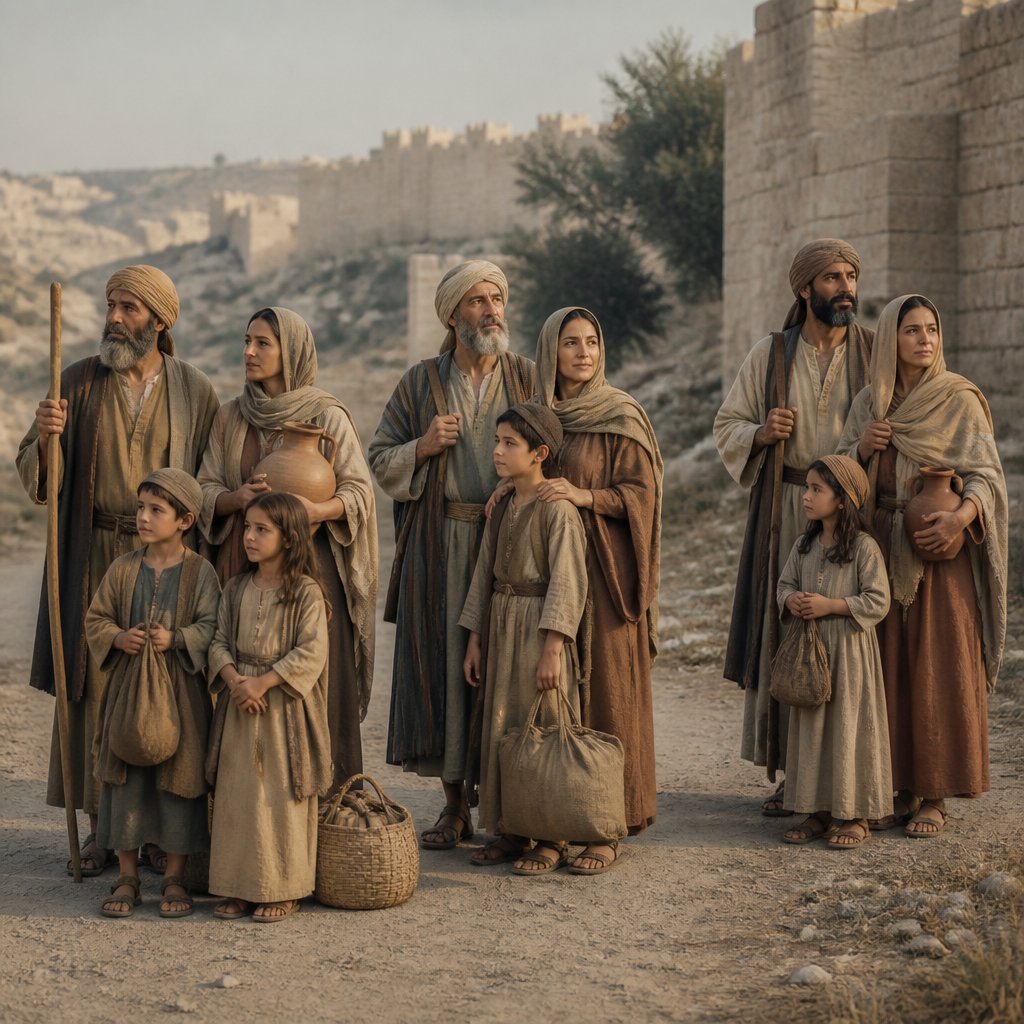
As we delve into the depths of Nehemiah 7:48, which states, "The children of Lebana, the children of Hagaba, the children of Shalmai," we may find ourselves grappling with the challenge of finding meaning within a list of names. Lists can feel mundane or even tedious, yet they serve a profound purpose within scripture, especially within the narrative framework of Nehemiah. In this chapter, God is chronicling the restoration not just of a city but also of a community, revealing that every name carries significance in the larger tapestry of God’s work.
To understand the weight of this moment, we must revisit the context surrounding the return of the exiles to Jerusalem after years in Babylonian captivity. Nehemiah, empowered by God, returns as a leader to rebuild the walls of Jerusalem and to restore the city’s identity. The enumeration of individuals and families who returned signifies that God values every person, every family, and every group. It demonstrates that restoration is not merely a physical act; it’s also about revitalizing the relationships and community ties that bind us.
When we consider the children of Lebana, Hagaba, and Shalmai, we uncover a powerful message about identity and belonging. Each group represents a segment of the community that was affected by a shared history and experience of exile. The act of naming them signifies their importance in the Plan of God—an equitable representation of His people. In today’s context, we must reflect on how we honor community and identify with each other amid diverse backgrounds and experiences. Just as these families were recognized in the scripture, we too are called to celebrate the uniqueness of individuals within the body of Christ.
The work of the kingdom requires collective effort, much like the rebuilding of Jerusalem's walls. As believers, we must understand that nobody is insignificant; every soul matters in the eyes of God. It encourages us to be involved in our communities—recognizing that interactions with our neighbors, our churches, and our families contribute to the overall health of society and reflect God's design for restoring and reconciling humanity to Himself.
In a world where individuality is often prized over community, Nehemiah reminds us of the importance of relationships. Each person's role is vital in a collective mission. This truth permeates throughout scripture, as God often works through collective identities: from small communities to entire nations. In the New Testament, this ethos evolves into the church as the body of Christ, where all members (though different) are essential for a fully functioning and vibrant spiritual ecosystem. Each family listed in Nehemiah serves as a testament to God’s faithfulness to gather His scattered people, a theme that is echoed throughout the biblical narrative.
Let us not overlook the significance of what we share with one another—but instead, embrace our unique stories and backgrounds. When we gather in worship and fellowship, we are remembering those who have gone before us, acknowledging their struggles and victories as part of our spiritual inheritance.
Moreover, this verse challenges us to ask ourselves: who within our community may feel overlooked or insignificant? In moments where the collective story is told, who are the names that are absent? Just as Nehemiah made a point to recognize the children of Lebana, Hagaba, and Shalmai, we are called to extend our recognition and care towards those around us. Let’s commit to fostering an environment where every voice can be heard, every heart can be healed, and every individual can know they belong.
In conclusion, as we reflect on Nehemiah 7:48, let us celebrate each unique narrative that contributes to our community. This passage should inspire us to honor relationships, understand our role within the body of believers, and strive towards a restoration that values every name and every story as crucial to God's kingdom work. May we adopt a heart of gratitude for our community and work together in unity, building bridges rather than walls, and cultivating a sense of belonging that reflects the love of Christ.
Get our apps


Artwork for Nehemiah 7:48

Nehemiah 7:48 - "The children of Lebana, the children of Hagaba, the children of Shalmai,"
"The children of Lebana, the children of Hagaba, the children of Shalmai," - Nehemiah 7:48

Nehemiah 7:7 - "Who came with Zerubbabel, Jeshua, Nehemiah, Azariah, Raamiah, Nahamani, Mordecai, Bilshan, Mispereth, Bigvai, Nehum, Baanah. The number, I say, of the men of the people of Israel was this;"

John 7:48 - "Have any of the rulers or of the Pharisees believed on him?"

Psalms 48:7 - "Thou breakest the ships of Tarshish with an east wind."

Luke 7:48 - "And he said unto her, Thy sins are forgiven."

Nehemiah 10:7 - "Meshullam, Abijah, Mijamin,"

Nehemiah 7:42 - "The children of Harim, a thousand and seventeen."

Nehemiah 7:24 - "The children of Hariph, an hundred and twelve."

Nehemiah 7:56 - "The children of Neziah, the children of Hatipha."

Acts 7:48 - "Howbeit the most High dwelleth not in temples made with hands; as saith the prophet,"

Numbers 7:48 - "¶ On the seventh day Elishama the son of Ammihud, prince of the children of Ephraim, offered:"

Nehemiah 7:25 - "The children of Gibeon, ninety and five."

Ezekiel 48:7 - "And by the border of Reuben, from the east side unto the west side, a portion for Judah."

Nehemiah 7:40 - "The children of Immer, a thousand fifty and two."

Nehemiah 7:31 - "The men of Michmas, an hundred and twenty and two."

Nehemiah 7:33 - "The men of the other Nebo, fifty and two."

Nehemiah 7:28 - "The men of Beth-azmaveth, forty and two."

Nehemiah 7:21 - "The children of Ater of Hezekiah, ninety and eight."

Nehemiah 7:14 - "The children of Zaccai, seven hundred and threescore."

Nehemiah 7:27 - "The men of Anathoth, an hundred twenty and eight."

Nehemiah 7:35 - "The children of Harim, three hundred and twenty."

Nehemiah 7:16 - "The children of Bebai, six hundred twenty and eight."

Nehemiah 7:58 - "The children of Jaala, the children of Darkon, the children of Giddel,"

Nehemiah 7:9 - "The children of Shephatiah, three hundred seventy and two."

Nehemiah 7:15 - "The children of Binnui, six hundred forty and eight."

Nehemiah 7:19 - "The children of Bigvai, two thousand threescore and seven."

Nehemiah 7:44 - "¶ The singers: the children of Asaph, an hundred forty and eight."

Nehemiah 7:13 - "The children of Zattu, eight hundred forty and five."

Nehemiah 7:18 - "The children of Adonikam, six hundred threescore and seven."