Restoration in the Midst of History: Lessons from Nehemiah 7:59
“The children of Shephatiah, the children of Hattil, the children of Pochereth of Zebaim, the children of Amon.” — Nehemiah 7:59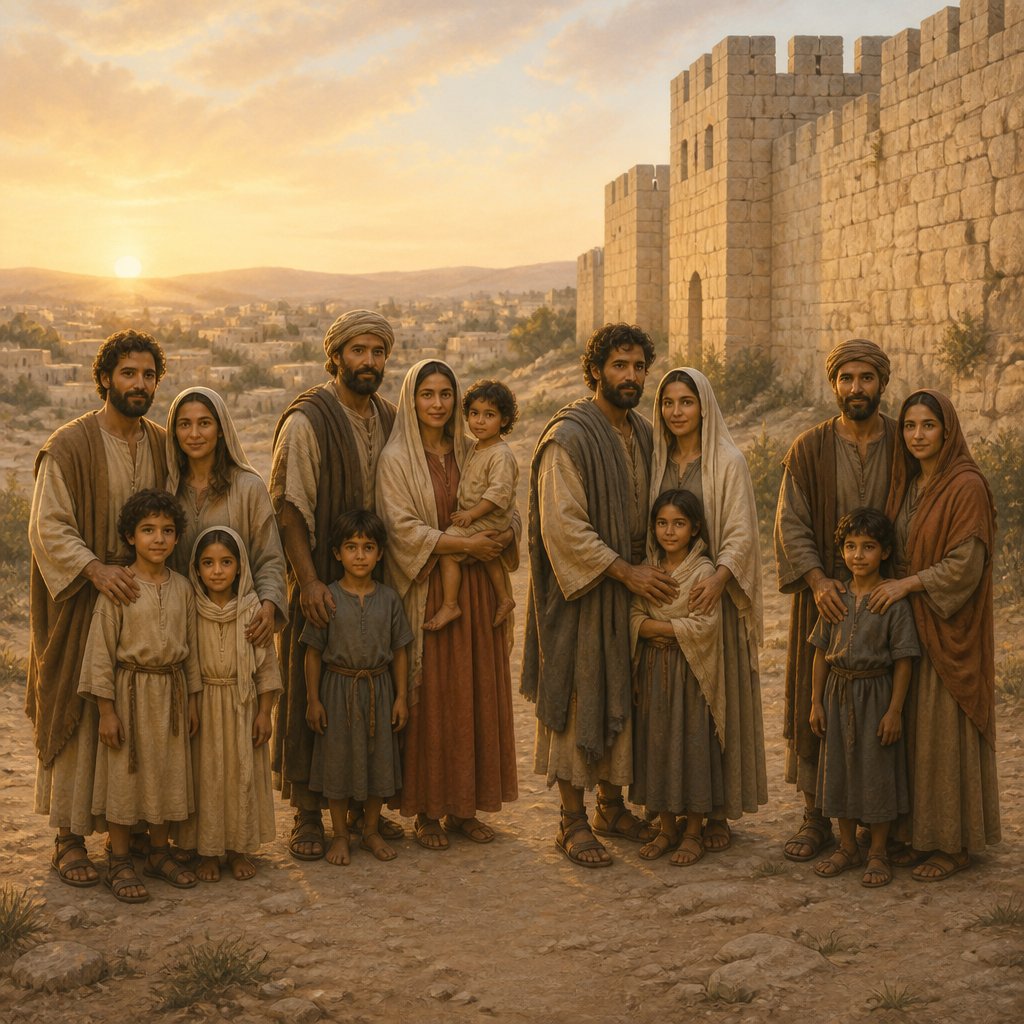
When we look at the book of Nehemiah, we find a rich tapestry woven with the threads of history, leadership, and community. Nehemiah 7:59 presents us with a seemingly simple list of names: "The children of Shephatiah, the children of Hattil, the children of Pochereth of Zebaim, the children of Amon." At first glance, verses like this may appear to be nothing more than a genealogical record, a list of family names that might easily be overlooked in our modern reading of the Bible. However, upon closer examination, we discover profound insights and valuable lessons on restoration, identity, and divine purpose.
### The Importance of Heritage
Genealogy has often been undervalued in contemporary society, yet in the time of Nehemiah, these family lines were critical for establishing identity and community belonging. The names listed in this verse are not mere titles; they represent individuals and families who played distinct roles in the history of Israel, specifically during a time of great national restoration. Each family name carries with it a legacy and a story that contributes to the larger narrative of God’s people.
When we engage with our own family histories, we uncover a wealth of experiences, traditions, and faith legacies that have shaped who we are today. Similarly, just as these names connected the Israelites to their past, we are encouraged to recognize our roots—spiritual or otherwise—and the legacies of faith passed down through generations. These families, along with many others, were returning to Jerusalem after years of exile and disconnection, signifying a restoration of not just land but of identity as a people chosen by God.
### A Call to Community
The lists in Nehemiah serve a crucial purpose: they remind us that restoration is a collective journey rather than an individual endeavor. The returning exiles were not coming back as solo travelers; they were returning as clans, communities, and families. The mention of groups like Shephatiah and Amon paints a picture of a reunited community, focused on rebuilding what had been lost—namely, their city, their worship practices, and their covenant relationship with God.
As we reflect on this communal aspect, we are reminded of our own churches, families, and communities. In times of difficulty, division, or exile—whether metaphorically or literally—God calls us to come together in faith and purpose. The strength of the community can foster an environment for healing and restoration, enabling us to support one another in our walks with Christ. Like the families in Nehemiah’s time, we must band together as we face our challenges, recognizing that we each carry important roles in the body of Christ.
### Divine Restoration and Identity
The act of listing these names plays a significant role in reminding the Jewish people of their identity. In calling out the names of the families, Nehemiah was reaffirming their place in God’s plan. Each family's transition back to Jerusalem symbolizes the restoration of their relationship with God—a move from being scattered and displaced to being rooted and reestablished in their homeland.
For us, there is a valuable parallel. We often experience seasons of spiritual exile; times when our faith feels distant or our identity in Christ is challenged. Yet, God, in His infinite wisdom, calls us back to Him, seeking to restore not only our relationship with Him but also our sense of purpose and community. Reflect on your identity in Christ and recognize how God sees you—chosen, loved, and valued. Your name is written in the book of life, a significant part of His family.
### Conclusion
In the simple enumeration of names in Nehemiah 7:59, we find powerful themes of heritage, community, and restoration. These verses remind us that God is a God of second chances, who values every individual and every family's contribution to the larger story of redemption. As we ponder this passage, may we be inspired to seek restoration not only personally but also communally, embracing our identity as part of the family of God. Let us celebrate our heritage, recognizing that each of us plays a vital role in God’s ongoing story of love and redemption.
Get our apps


Artwork for Nehemiah 7:59
Nehemiah 7:59 - "The children of Shephatiah, the children of Hattil, the children of Pochereth of Zebaim, the children of Amon."
"The children of Shephatiah, the children of Hattil, the children of Pochereth of Zebaim, the children of Amon." - Nehemiah 7:59

Psalms 59:7 - "Behold, they belch out with their mouth: swords are in their lips: for who, say they, doth hear?"

Acts 7:59 - "And they stoned Stephen, calling upon God, and saying, Lord Jesus, receive my spirit."

Isaiah 59:7 - "Their feet run to evil, and they make haste to shed innocent blood: their thoughts are thoughts of iniquity; wasting and destruction are in their paths."

Nehemiah 7:7 - "Who came with Zerubbabel, Jeshua, Nehemiah, Azariah, Raamiah, Nahamani, Mordecai, Bilshan, Mispereth, Bigvai, Nehum, Baanah. The number, I say, of the men of the people of Israel was this;"

Numbers 7:59 - "And for a sacrifice of peace offerings, two oxen, five rams, five he goats, five lambs of the first year: this was the offering of Gamaliel the son of Pedahzur."

Nehemiah 10:7 - "Meshullam, Abijah, Mijamin,"

Nehemiah 7:42 - "The children of Harim, a thousand and seventeen."

Nehemiah 7:24 - "The children of Hariph, an hundred and twelve."

Nehemiah 7:56 - "The children of Neziah, the children of Hatipha."

Nehemiah 7:25 - "The children of Gibeon, ninety and five."

Nehemiah 7:40 - "The children of Immer, a thousand fifty and two."

Nehemiah 7:31 - "The men of Michmas, an hundred and twenty and two."

Nehemiah 7:33 - "The men of the other Nebo, fifty and two."

Nehemiah 7:21 - "The children of Ater of Hezekiah, ninety and eight."

Nehemiah 7:28 - "The men of Beth-azmaveth, forty and two."

Nehemiah 7:14 - "The children of Zaccai, seven hundred and threescore."

Nehemiah 7:27 - "The men of Anathoth, an hundred twenty and eight."

Nehemiah 7:35 - "The children of Harim, three hundred and twenty."
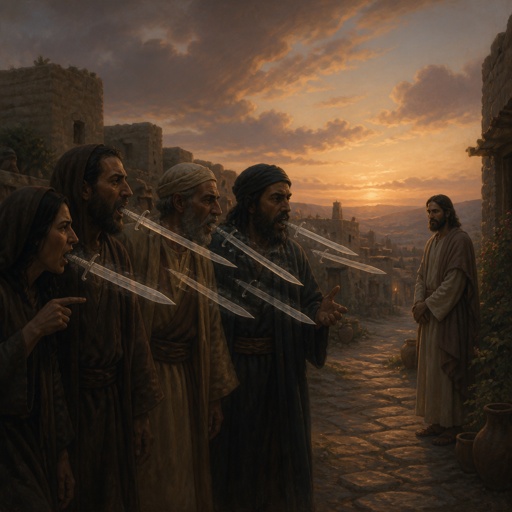
"Behold, they belch out with their mouth: swords are in their lips: for who, say they, doth hear?" - Psalms 59:7

Nehemiah 7:16 - "The children of Bebai, six hundred twenty and eight."

Nehemiah 7:58 - "The children of Jaala, the children of Darkon, the children of Giddel,"

Nehemiah 7:9 - "The children of Shephatiah, three hundred seventy and two."

Nehemiah 7:48 - "The children of Lebana, the children of Hagaba, the children of Shalmai,"

Nehemiah 7:19 - "The children of Bigvai, two thousand threescore and seven."

Nehemiah 7:15 - "The children of Binnui, six hundred forty and eight."

Nehemiah 7:44 - "¶ The singers: the children of Asaph, an hundred forty and eight."

Nehemiah 7:18 - "The children of Adonikam, six hundred threescore and seven."

Nehemiah 7:13 - "The children of Zattu, eight hundred forty and five."