Finding Strength in Holy Silence
“So the Levites stilled all the people, saying, Hold your peace, for the day is holy; neither be ye grieved.” — Nehemiah 8:11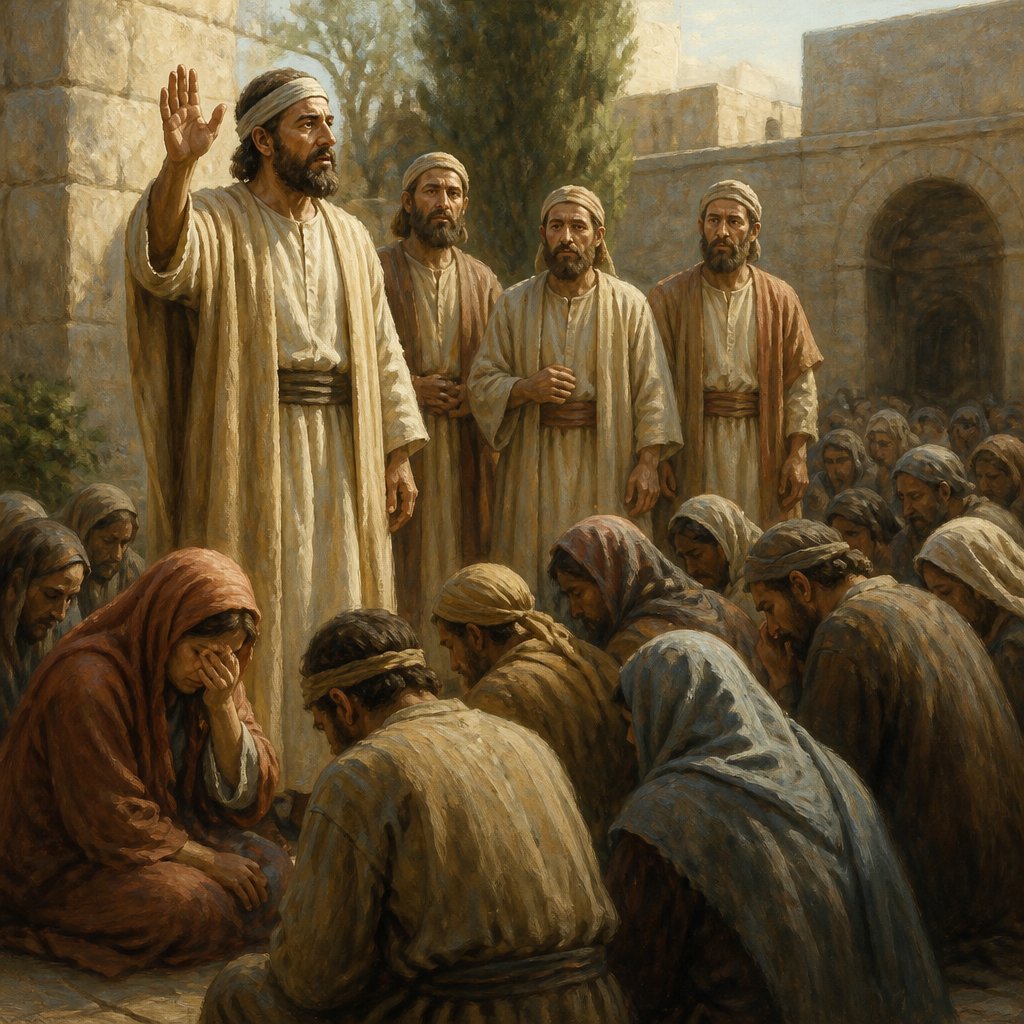
In the bustling world we live in, the days often seem to whirl around us like leaves in a tempest. It's easy to succumb to anxiety, to feel overwhelmed by our responsibilities, our worries, and the demands of life. However, Nehemiah 8:11 speaks to a time of great anticipation and reverence: "So the Levites stilled all the people, saying, Hold your peace, for the day is holy; neither be ye grieved." This verse invites us to consider the profound power of stillness and holiness, especially in times when our hearts are heavy.
The context of this verse is essential to understanding its significance. The people of Israel had returned from exile, and they gathered to listen to the words of the Law being read by Ezra. This was a pivotal moment for them, marking a return to their identity and their covenant with God. After years of separation from their homeland and their customs, the reading of the Law stirred their souls and reminded them of the God they served. Yet, in the midst of this momentous occasion, grief began to rise within them as they reflected on their past failures and the burdens of their transgressions.
The Levites, serving as mediators between the people and God, stepped in with a crucial reminder: "Hold your peace." In our world today, the phrase might prompt us to pause and consider the value of silence. Silence does not indicate emptiness; rather, it is where deep reflection and communion with God can occur. In our silence, we can still the chaos in our minds and hearts to create space for the Holy Spirit to speak.
Why does the Levites’ proclamation mention that the day is holy? Holiness signifies a separation, a divine purpose intertwined with the presence of God. The day was sanctified not just by the rituals performed, but by the acknowledgment of God's sustaining grace and the new beginnings He offered. In our own lives, moments of holiness may arise during times of prayer, reflection, worship, or meditation on His Word. When holiness is acknowledged, it creates an atmosphere for healing and renewal.
Furthermore, the statement, "neither be ye grieved" calls us to a holistic understanding of God’s intent for us. Grief carries its own weight—it can signify loss, disappointment, or even guilt. However, in the holy assembly before God, our grief is transformed when we turn our attention away from our struggles and focus on His goodness. 2 Corinthians 7:10 reminds us that godly sorrow brings repentance that leads to salvation, but worldly sorrow brings death.
The Levites’ advice is particularly poignant: in the face of shared grief, we are encouraged to seek peace and restoration. Herein lies the heart of this text: while it acknowledges our struggles, it also assures us of a divine comfort that surpasses our circumstances. It exhorts us to practice the peace of God rather than remain engulfed in sorrow. Philippians 4:7 reminds us that when we surrender our anxieties to God, the peace of God, which transcends all understanding, will guard our hearts and minds.
As we meditate on Nehemiah 8:11, let us embrace the invitation to silence. When the tumult of life threatens to overwhelm us, let us remember to hold our peace. Let us find hope in the holiness surrounding us and acknowledge it as a catalyst for healing. We can recite this verse as a mantra whenever we find ourselves in distress: Hold your peace for there is a divine presence, and let His peace settle our troubled hearts. This is a powerful reminder that while we may face grief, our God offers joy in the morning, inviting us to embrace the moments that are set apart for Him.
Get our apps


Artwork for Nehemiah 8:11

Nehemiah 8:11 - "So the Levites stilled all the people, saying, Hold your peace, for the day is holy; neither be ye grieved."
"So the Levites stilled all the people, saying, Hold your peace, for the day is holy; neither be ye grieved." - Nehemiah 8:11

Nehemiah 11:8 - "And after him Gabbai, Sallai, nine hundred twenty and eight."
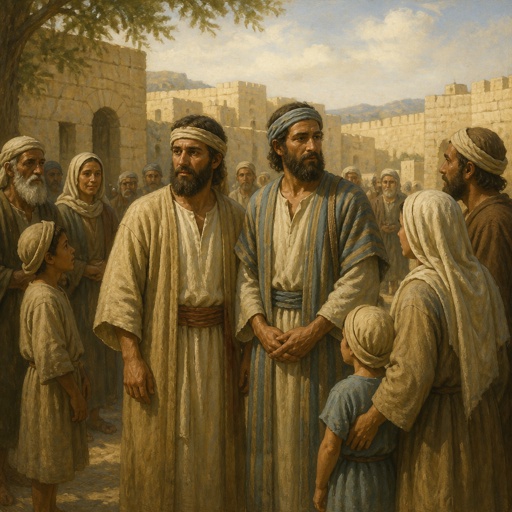
"And after him Gabbai, Sallai, nine hundred twenty and eight." - Nehemiah 11:8

Nehemiah 8:10

Nehemiah 11:11-14

Nehemiah 11:13

Nehemiah 8:10

Nehemiah 8:10

Nehemiah 11:34 - "Hadid, Zeboim, Neballat,"

Nehemiah 10:11 - "Micha, Rehob, Hashabiah,"

Nehemiah 11:33 - "Hazor, Ramah, Gittaim,"

Nehemiah 11:32 - "And at Anathoth, Nob, Ananiah,"

Nehemiah 11:1-19

Nehemiah 11:26 - "And at Jeshua, and at Moladah, and at Beth-phelet,"

Nehemiah 11:29 - "And at En-rimmon, and at Zareah, and at Jarmuth,"

Nehemiah 11:35 - "Lod, and Ono, the valley of craftsmen."

Nehemiah 11:28 - "And at Ziklag, and at Mekonah, and in the villages thereof,"

Romans 8:11

Nehemiah 11:36 - "And of the Levites were divisions in Judah, and in Benjamin."

Nehemiah 11:10 - "Of the priests: Jedaiah the son of Joiarib, Jachin."

Nehemiah 8:8 - "So they read in the book in the law of God distinctly, and gave the sense, and caused them to understand the reading."

Nehemiah 12:11 - "And Joiada begat Jonathan, and Jonathan begat Jaddua."

Nehemiah 10:8 - "Maaziah, Bilgai, Shemaiah: these were the priests."

Psalm 80:8-11

Nehemiah 11:27 - "And at Hazar-shual, and at Beer-sheba, and in the villages thereof,"

Nehemiah 2:11 - "So I came to Jerusalem, and was there three days."

Nehemiah 11:11 - "Seraiah the son of Hilkiah, the son of Meshullam, the son of Zadok, the son of Meraioth, the son of Ahitub, was the ruler of the house of God."

"And at Anathoth, Nob, Ananiah," - Nehemiah 11:32

"Hadid, Zeboim, Neballat," - Nehemiah 11:34