The Pillars of Faithfulness: Standing Together in God’s Word
“And Ezra the scribe stood upon a pulpit of wood, which they had made for the purpose; and beside him stood Mattithiah, and Shema, and Anaiah, and Urijah, and Hilkiah, and Maaseiah, on his right hand; and on his left hand, Pedaiah, and Mishael, and Malchiah, and Hashum, and Hashbadana, Zechariah, and Meshullam.” — Nehemiah 8:4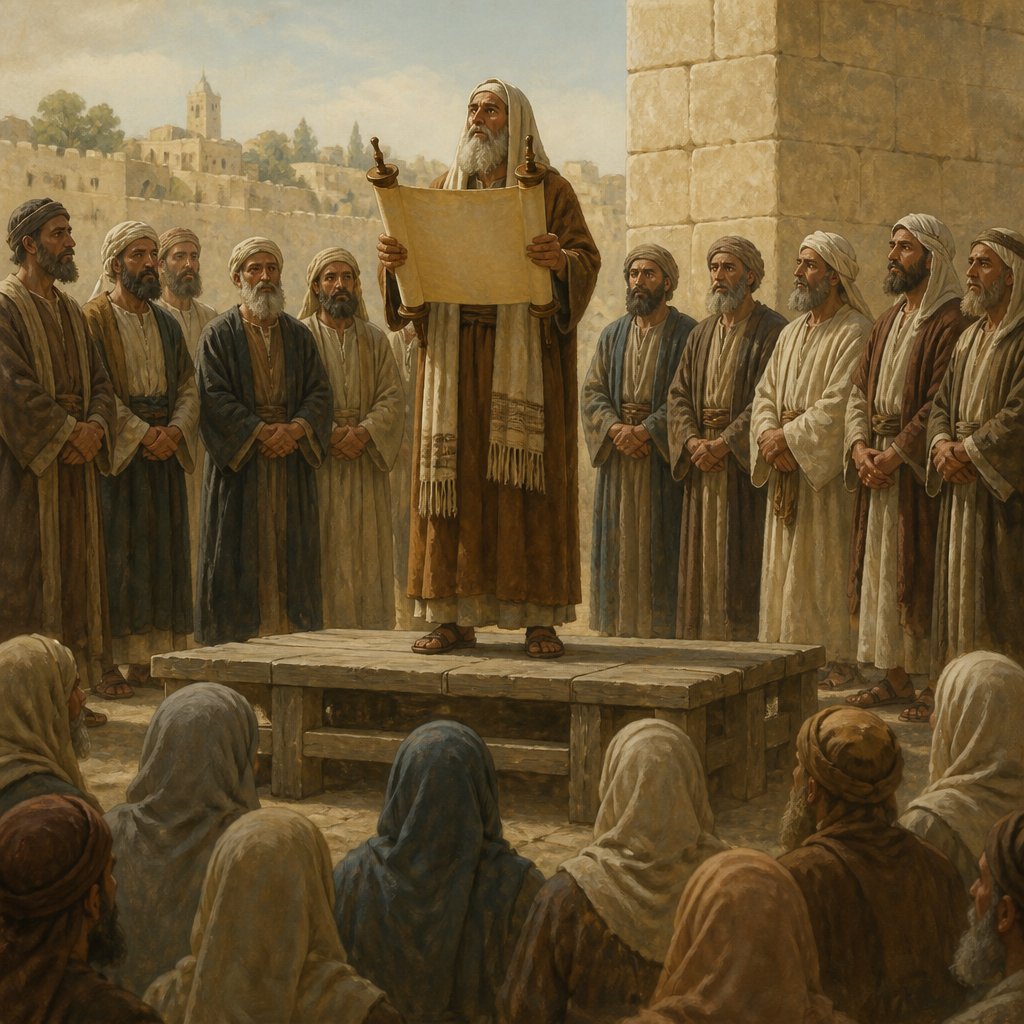
The moment encapsulated in Nehemiah 8:4 is monumental, not only for its historical significance but also for the profound truths it conveys about the community of faith and the centrality of God’s Word in their lives.
The verse introduces us to a scene where Ezra the scribe stands upon a pulpit of wood, an emblematic structure made specifically for the reading and exposition of God’s Law. Surrounding Ezra are key figures of the community: leaders praised for their commitment to God’s Word standing together, bolstering his authority and illustrating the unity of their mission. To fully appreciate this moment, we must first understand the context: after seventy years of captivity in Babylon, the people of Israel are returning to Jerusalem, striving to rebuild not only their city but also their spiritual lives.
The pulpit itself, a raised platform made of wood, represents the reverence and honor given to Scripture in that gathered assembly. In a world where distractions loom large, the act of physically elevating the Word symbolizes the need to elevate God’s truths above the clamor of daily existence. As believers, we must ask ourselves, how can we erect our modern-day pulpits—perhaps in our homes, in our communities, or within our own hearts? Are we allowing God’s Word to transcend our circumstances, becoming the guiding force in how we navigate not only our personal lives but also our interactions with others?
Ezra’s prominence on the pulpit also sheds light on leadership in the church. It is not merely about occupying a position but about facilitating an encounter with God’s Word. The scriptures are infused with life, wisdom, and instruction, and as Ezra stands there, he reminds us that the role of a scribe is not entirely removed from responsibility. In his case, this involved teaching the Law to a people who had lost their way, reminding them of their covenant relationship with God. This challenge persists in our context today—how often are we called to return to God’s Word, to study it deeply, to teach it faithfully?
The assembly of leaders standing beside Ezra is equally significant. Each name mentioned—Mattithiah, Shema, Anaiah, Urijah, Hilkiah, Maaseiah, Pedaiah, Mishael, Malchiah, Hashum, Hashbadana, Zechariah, and Meshullam—reminds us of the diverse body of Christ, which consists of many members working in tandem for a singular purpose: to glorify God and grow His Kingdom. The names represent different backgrounds and functions, yet they stand shoulder to shoulder in shared commitment to God and His message.
In our contemporary society, where individuality often overshadows community, this scripture compels us to reflect on our unity as the Body of Christ. Are we supporting our leaders and one another in our shared worship and study of God’s Word? Are we coming together not just to attend services or meetings but to engage in true fellowship that honors God and encourages each member of our community?
As we consider the weight of Ezra's reading of the law following the return from exile, we must also recognize the renewed covenant it represents. For the Israelites, this was a call to repentance and restoration, and it reflected their need for God’s guidance in their rebuilding process—not just physically, but spiritually as well. When we find ourselves in seasons of renewal or rebuilding—perhaps after personal trials or within our church communities—turning back to Scripture should be our first response. It is where we find guidance, strength, and clarity.
Finally, let us not underestimate the power of our gatherings. When we come together around God’s Word—like the assembly that stood with Ezra—we too can experience transformation. May we elevate His Word amidst our lives, standing firm in faith as a community, and let it penetrate our hearts, leading us towards a deeper understanding and relationship with God.
Get our apps


Artwork for Nehemiah 8:4

Nehemiah 8:4 - "And Ezra the scribe stood upon a pulpit of wood, which they had made for the purpose; and beside him stood Mattithiah, and Shema, and Anaiah, and Urijah, and Hilkiah, and Maaseiah, on his right hand; and on his left hand, Pedaiah, and Mishael, and Malchiah, and Hashum, and Hashbadana, Zechariah, and Meshullam."
"And Ezra the scribe stood upon a pulpit of wood, which they had made for the purpose; and beside him stood Mattithiah, and Shema, and Anaiah, and Urijah, and Hilkiah, and Maaseiah, on his right hand; and on his left hand, Pedaiah, and Mishael, and Malchiah, and Hashum, and Hashbadana, Zechariah, and Meshullam." - Nehemiah 8:4

Nehemiah 4:8 - "And conspired all of them together to come and to fight against Jerusalem, and to hinder it."
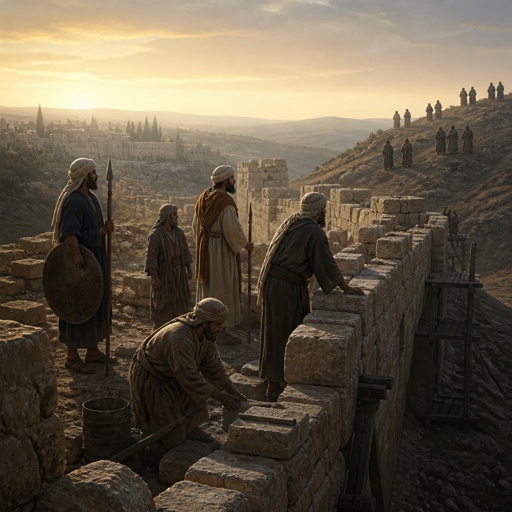
"And conspired all of them together to come and to fight against Jerusalem, and to hinder it." - Nehemiah 4:8

Nehemiah 8:10

Nehemiah 8:10

Nehemiah 8:10

Nehemiah 4:6

Nehemiah 4:6

Nehemiah 4:6

Nehemiah 8:8 - "So they read in the book in the law of God distinctly, and gave the sense, and caused them to understand the reading."

Nehemiah 12:4 - "Iddo, Ginnetho, Abijah,"

Nehemiah 10:4 - "Hattush, Shebaniah, Malluch,"

Nehemiah 10:8 - "Maaziah, Bilgai, Shemaiah: these were the priests."

Nehemiah 7:8 - "The children of Parosh, two thousand an hundred seventy and two."

Nehemiah 11:8 - "And after him Gabbai, Sallai, nine hundred twenty and eight."

"Iddo, Ginnetho, Abijah," - Nehemiah 12:4

"Hattush, Shebaniah, Malluch," - Nehemiah 10:4

Nehemiah 4:4 - "Hear, O our God; for we are despised: and turn their reproach upon their own head, and give them for a prey in the land of captivity:"
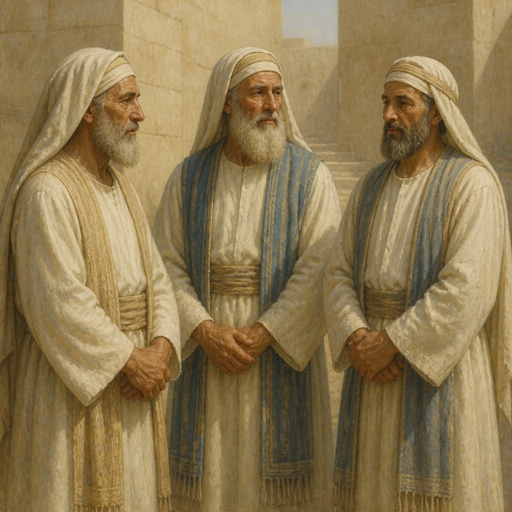
"Maaziah, Bilgai, Shemaiah: these were the priests." - Nehemiah 10:8

Nehemiah 8:9 - "¶ And Nehemiah, which is the Tirshatha, and Ezra the priest the scribe, and the Levites that taught the people, said unto all the people, This day is holy unto the LORD your God; mourn not, nor weep. For all the people wept, when they heard the words of the law."

Nehemiah 4:17 – "Those who carried materials did their work with one hand and held a weapon in the other."

Nehemiah 13:8 - "And it grieved me sore: therefore I cast forth all the household stuff of Tobiah out of the chamber."

Nehemiah 7:4 - "Now the city was large and great: but the people were few therein, and the houses were not builded."

Nehemiah 4:17 – "Those who carried materials did their work with one hand and held a weapon in the other."

Nehemiah 13:4 - "¶ And before this, Eliashib the priest, having the oversight of the chamber of the house of our God, was allied unto Tobiah:"

Nehemiah 12:8 - "Moreover the Levites: Jeshua, Binnui, Kadmiel, Sherebiah, Judah, and Mattaniah, which was over the thanksgiving, he and his brethren."

Nehemiah 8:11 - "So the Levites stilled all the people, saying, Hold your peace, for the day is holy; neither be ye grieved."

Nehemiah 2:4 (KJVA) 4 Then the king said unto me, For what dost thou make request? So I prayed to the God of heaven.

Nehemiah 5:4 - "There were also that said, We have borrowed money for the king's tribute, and that upon our lands and vineyards."