Understanding the Law: The Call to Reverent Attention
“Also Jeshua, and Bani, and Sherebiah, Jamin, Akkub, Shabbethai, Hodijah, Maaseiah, Kelita, Azariah, Jozabad, Hanan, Pelaiah, and the Levites, caused the people to understand the law: and the people stood in their place.” — Nehemiah 8:7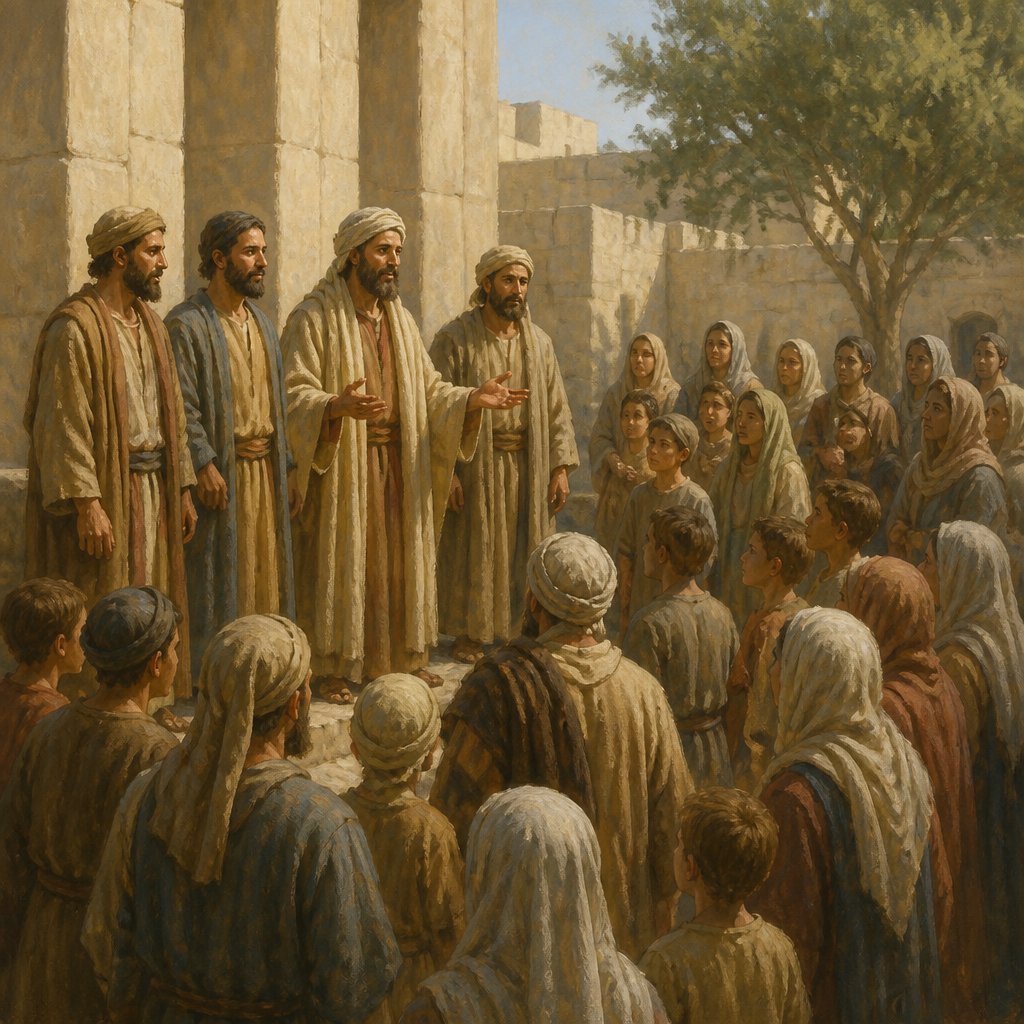
As we turn our attention to Nehemiah 8:7, we find a remarkable scene that echoes profound truths about understanding, reverence, and communal worship. The verse states: "Also Jeshua, and Bani, and Sherebiah, Jamin, Akkub, Shabbethai, Hodijah, Maaseiah, Kelita, Azariah, Jozabad, Hanan, Pelaiah, and the Levites, caused the people to understand the law: and the people stood in their place."
In this moment in history, the Israelites had returned from exile, longing to reconnect with their spiritual heritage and the God who had brought them back to their homeland. Nehemiah, the cupbearer turned governor, alongside Ezra, the scribe, spearheaded this movement reestablishing the relationship between the people and their covenant with God. The Levites, a group chosen to assist in the matters of worship in the temple, played a crucial role in this endeavor, ensuring that the people not only heard the words of the law but also that they understood its significance.
This event was not just a mere reading but an intense moment of instruction. The passage indicates a purposeful effort by the Levites to elucidate the law. It shows us that understanding is vital in our relationship with the Lord. In a world that bombards us with information and distractions, how often do we take the time to comprehend the depth of God’s Word? The Levites recognized that it wasn’t enough to simply recite the scriptures; they needed to unpack them so that the people could grasp their meanings and implications.
An essential element of this scripture is the posture of the people. The phrase "and the people stood in their place" signifies more than physical dismissal; it symbolizes reverence, attention, and a commitment to hear and absorb the Word of God. Standing, especially in a communal aspect, reflects a readiness to receive, to learn, and to align oneself with God’s will. When was the last time we stood with anticipation in our worship, ready to hear from God?
A profound impact of the Levites’ work was not just in teaching the law but in leading the people to an acknowledgment of their shared identity and commitment to follow God’s commandments. The act of causing them to understand wasn’t simply educational; it was transformational. They provided the people with the theological knowledge necessary for them to live out their faith in tangible ways. Here’s a question to ponder—are we actively seeking to understand the laws and teachings of God, not just to accumulate knowledge, but to transform our lives and the lives of those around us?
In our current landscape, we often find ourselves caught up in interpretations that can lead to divisions, or worse, apathy. The narrative in Nehemiah reminds us of the power of coming together as a community to seek understanding. The act of learning in the presence of others fosters relationships built on faith and shared goals. Just as the Levites facilitated understanding, we too can become instruments of clarification and good news.
Thus, as we reflect on Nehemiah 8:7, let us remember to approach God's Word with the heart of a learner. We are called to gather in our communities just as the Israelites did, to contend for understanding, and to reverently stand in the presence of our God. Let us engage with scripture earnestly and share it with others, becoming pathways of knowledge and living testimonies of God’s enduring truths.
Let us pray:
Father, thank You for the gift of Your law and the understanding You provide through Your Word. Help us to approach it with reverence and open hearts. May we motivate each other, just as the Levites did, to grasp not just the words on the page but their meanings for our lives. Grant us clarity and courage to live out Your commandments so that we may be lights in our communities, reflecting Your love and truth to a world that desperately needs it. In Jesus’ name, Amen.
Get our apps


Artwork for Nehemiah 8:7

Nehemiah 8:7 - "Also Jeshua, and Bani, and Sherebiah, Jamin, Akkub, Shabbethai, Hodijah, Maaseiah, Kelita, Azariah, Jozabad, Hanan, Pelaiah, and the Levites, caused the people to understand the law: and the people stood in their place."
"Also Jeshua, and Bani, and Sherebiah, Jamin, Akkub, Shabbethai, Hodijah, Maaseiah, Kelita, Azariah, Jozabad, Hanan, Pelaiah, and the Levites, caused the people to understand the law: and the people stood in their place." - Nehemiah 8:7

Nehemiah 7:8 - "The children of Parosh, two thousand an hundred seventy and two."
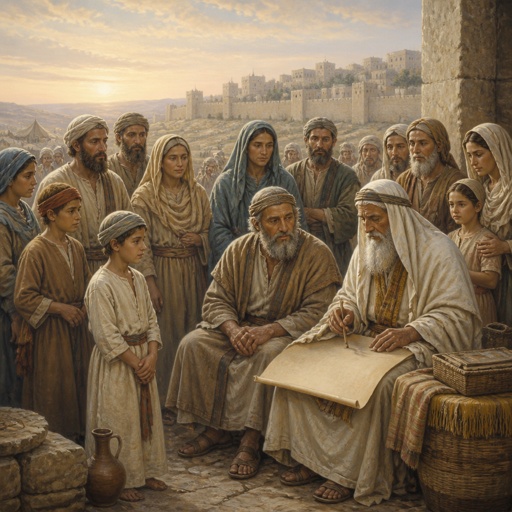
"The children of Parosh, two thousand an hundred seventy and two." - Nehemiah 7:8

Nehemiah 7:7 - "Who came with Zerubbabel, Jeshua, Nehemiah, Azariah, Raamiah, Nahamani, Mordecai, Bilshan, Mispereth, Bigvai, Nehum, Baanah. The number, I say, of the men of the people of Israel was this;"

Nehemiah 8:10

Nehemiah 8:10

Nehemiah 8:10

Nehemiah 10:7 - "Meshullam, Abijah, Mijamin,"

Nehemiah 7:42 - "The children of Harim, a thousand and seventeen."

Nehemiah 7:24 - "The children of Hariph, an hundred and twelve."

Nehemiah 7:56 - "The children of Neziah, the children of Hatipha."

Nehemiah 8:8 - "So they read in the book in the law of God distinctly, and gave the sense, and caused them to understand the reading."

Nehemiah 7:25 - "The children of Gibeon, ninety and five."

Nehemiah 10:8 - "Maaziah, Bilgai, Shemaiah: these were the priests."

Nehemiah 7:40 - "The children of Immer, a thousand fifty and two."

Nehemiah 7:31 - "The men of Michmas, an hundred and twenty and two."

Nehemiah 7:33 - "The men of the other Nebo, fifty and two."

Nehemiah 7:28 - "The men of Beth-azmaveth, forty and two."

Nehemiah 7:21 - "The children of Ater of Hezekiah, ninety and eight."

Nehemiah 7:14 - "The children of Zaccai, seven hundred and threescore."

Nehemiah 7:27 - "The men of Anathoth, an hundred twenty and eight."

Nehemiah 7:35 - "The children of Harim, three hundred and twenty."

Nehemiah 7:16 - "The children of Bebai, six hundred twenty and eight."

Nehemiah 7:58 - "The children of Jaala, the children of Darkon, the children of Giddel,"

Nehemiah 7:9 - "The children of Shephatiah, three hundred seventy and two."

Nehemiah 7:48 - "The children of Lebana, the children of Hagaba, the children of Shalmai,"

Nehemiah 7:15 - "The children of Binnui, six hundred forty and eight."

Nehemiah 7:19 - "The children of Bigvai, two thousand threescore and seven."

Nehemiah 7:44 - "¶ The singers: the children of Asaph, an hundred forty and eight."