Faith amidst the Waters: A Journey of Deliverance
“And thou didst divide the sea before them, so that they went through the midst of the sea on the dry land; and their persecutors thou threwest into the deeps, as a stone into the mighty waters.” — Nehemiah 9:11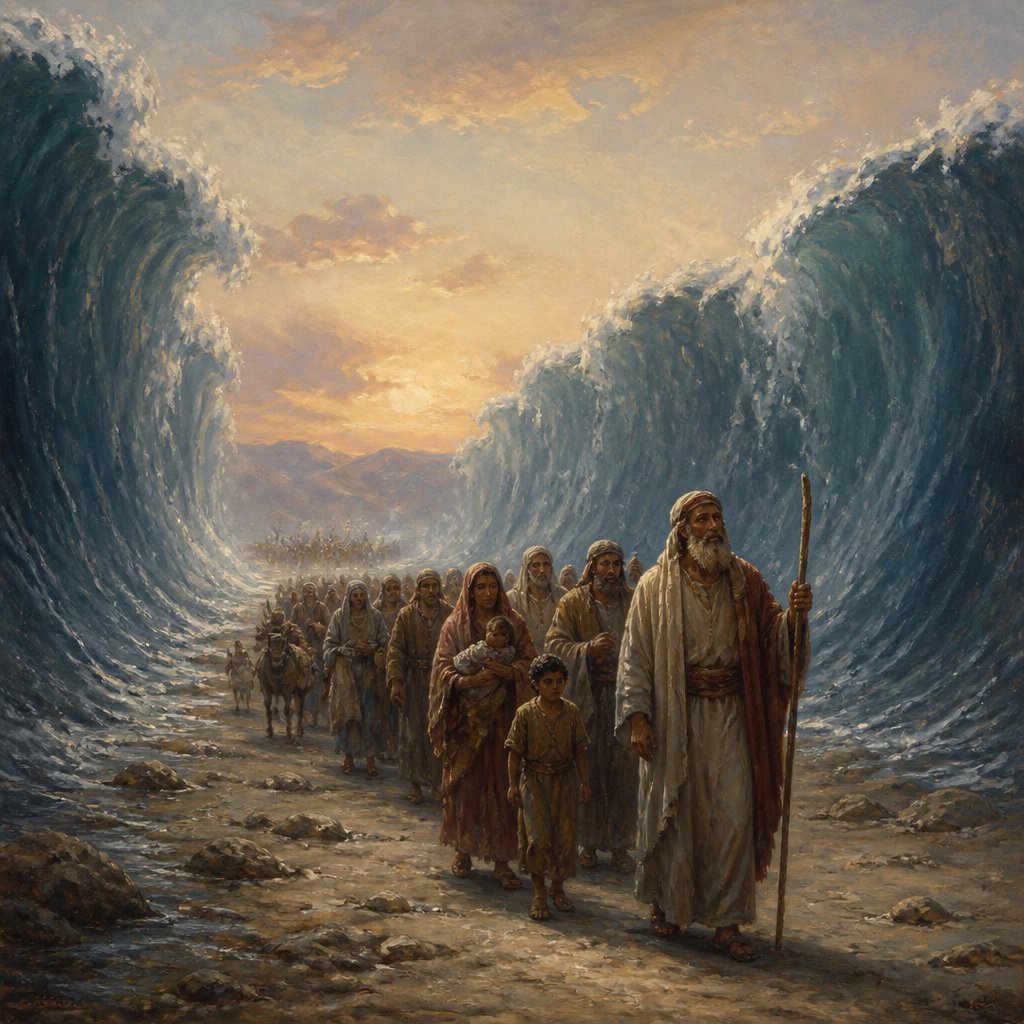
In Nehemiah 9:11, we find a profound testament to God’s unfathomable power and His unwavering faithfulness to His people: "And thou didst divide the sea before them, so that they went through the midst of the sea on the dry land; and their persecutors thou threwest into the deeps, as a stone into the mighty waters." This verse encapsulates a pivotal moment in the history of Israel—a moment where divine intervention met human desperation, illustrating not only God's grandeur but also His commitment to the deliverance of His chosen.
The imagery painted within this passage is striking. The sea, a potent symbol of chaos and danger, was split to provide a pathway for the Israelites. Imagine the awe of witnessing a towering wall of water on either side, the ground beneath their feet firm and dry. For the Israelites, this act was more than a mere miracle; it was a sign of God's great deliverance from the oppressive hand of Pharaoh. This event is echoed throughout scripture as a reminder of God’s ability to rescue and save, reflecting His character as the Redeemer.
In exploring the deeper significance of this moment, we must consider what it meant for the Israelites to walk through the divided sea. Encased by the intimidating forces of nature, standing upon dry land where once turbulent waters roared, they were faced with a decision of faith. Would they trust in the God who had delivered them out of slavery, or would fear of their former captors hold them captive even now? To step forward was to embrace an uncertainty filled with hope rather than dread—an act of faith that signified leaving behind their old lives in search of the promised land.
Moreover, the latter part of the verse provides reassurance: “and their persecutors thou threwest into the deeps, as a stone into the mighty waters.” Not only were the Israelites safe on dry land, but their oppressors were dealt with decisively. This serves as a powerful reminder that God is not passive in our struggles; He actively engages against those who seek to harm us. Like a stone cast into deep waters, their adversaries were submerged and silenced, a powerful metaphor for how God can drown out the voices of those who pursue us with malign intent.
This account is vital in its encouragement to us today. Many of us find ourselves overwhelmed by the ‘sea’ of challenges—the weight of personal struggles, doubts, or fears that threaten to drown us. Yet, like the Israelites, we must remember that God is capable of parting these seas. Our faith is called to rest in the God of the impossible, who offers us a pathway through every difficulty we face.
As we reflect on this verse, we can draw strength from the promises embedded within it. God is a God who sees our distress and intervenes on our behalf; He is the one who brings order out of chaos. Indeed, the act of stepping onto dry land symbolizes the hope that is ours in Christ. He calls us to move forward, to trust Him in the unknown, and to embrace the new life He offers beyond our trials.
In our prayers, let us ask God to help us identify the currents of fear or anxiety in our lives. May we seek His guidance to lead us through the places that seem impossible to traverse. As we lift our eyes to Him, may we find a faithful God who divides the seas of our despair and leads us through to freedom, with the assurance that our pursuing fears will be dealt with justly, never to rise again.
Let us take heart in the truth that, just as the Israelites experienced God’s mighty hand, we too can trust in His transformative power to lead us from bondage into the promises of His love and grace.
Get our apps


Artwork for Nehemiah 9:11

Nehemiah 9:11 - "And thou didst divide the sea before them, so that they went through the midst of the sea on the dry land; and their persecutors thou threwest into the deeps, as a stone into the mighty waters."
"And thou didst divide the sea before them, so that they went through the midst of the sea on the dry land; and their persecutors thou threwest into the deeps, as a stone into the mighty waters." - Nehemiah 9:11

Nehemiah 11:9 - "And Joel the son of Zichri was their overseer: and Judah the son of Senuah was second over the city."
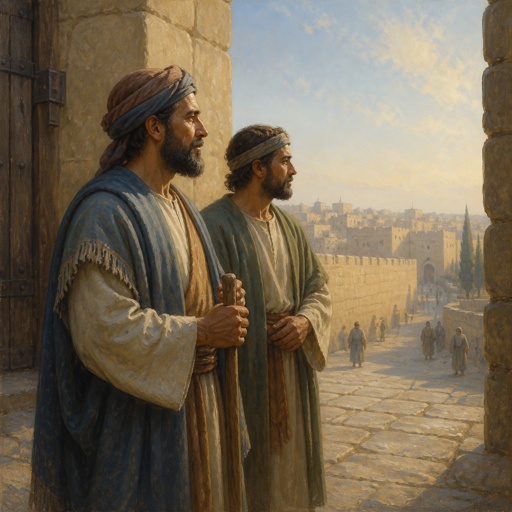
"And Joel the son of Zichri was their overseer: and Judah the son of Senuah was second over the city." - Nehemiah 11:9

Nehemiah 11:11-14

Nehemiah 11:13

Nehemiah 6:9

Nehemiah 11:34 - "Hadid, Zeboim, Neballat,"

Nehemiah 10:11 - "Micha, Rehob, Hashabiah,"

Nehemiah 11:33 - "Hazor, Ramah, Gittaim,"

Nehemiah 11:32 - "And at Anathoth, Nob, Ananiah,"

Nehemiah 11:1-19

Nehemiah 11:26 - "And at Jeshua, and at Moladah, and at Beth-phelet,"

Nehemiah 11:29 - "And at En-rimmon, and at Zareah, and at Jarmuth,"

Nehemiah 9:9 - "And didst see the affliction of our fathers in Egypt, and heardest their cry by the Red sea;"

Nehemiah 11:35 - "Lod, and Ono, the valley of craftsmen."

Nehemiah 11:28 - "And at Ziklag, and at Mekonah, and in the villages thereof,"

Nehemiah 11:36 - "And of the Levites were divisions in Judah, and in Benjamin."

Nehemiah 11:10 - "Of the priests: Jedaiah the son of Joiarib, Jachin."

Nehemiah 12:11 - "And Joiada begat Jonathan, and Jonathan begat Jaddua."

Nehemiah 7:9 - "The children of Shephatiah, three hundred seventy and two."

Nehemiah 11:27 - "And at Hazar-shual, and at Beer-sheba, and in the villages thereof,"

Nehemiah 2:11 - "So I came to Jerusalem, and was there three days."

Nehemiah 11:11 - "Seraiah the son of Hilkiah, the son of Meshullam, the son of Zadok, the son of Meraioth, the son of Ahitub, was the ruler of the house of God."

"And at Anathoth, Nob, Ananiah," - Nehemiah 11:32

"Hadid, Zeboim, Neballat," - Nehemiah 11:34

"Hazor, Ramah, Gittaim," - Nehemiah 11:33

"Micha, Rehob, Hashabiah," - Nehemiah 10:11

Nehemiah 11:21 - "But the Nethinims dwelt in Ophel: and Ziha and Gispa were over the Nethinims."

Nehemiah 11:8 - "And after him Gabbai, Sallai, nine hundred twenty and eight."