Empowered in the Wilderness: The Spirit’s Work in Unexpected Places
“But there remained two of the men in the camp, the name of the one was Eldad, and the name of the other Medad: and the spirit rested upon them; and they were of them that were written, but went not out unto the tabernacle: and they prophesied in the camp.” — Numbers 11:26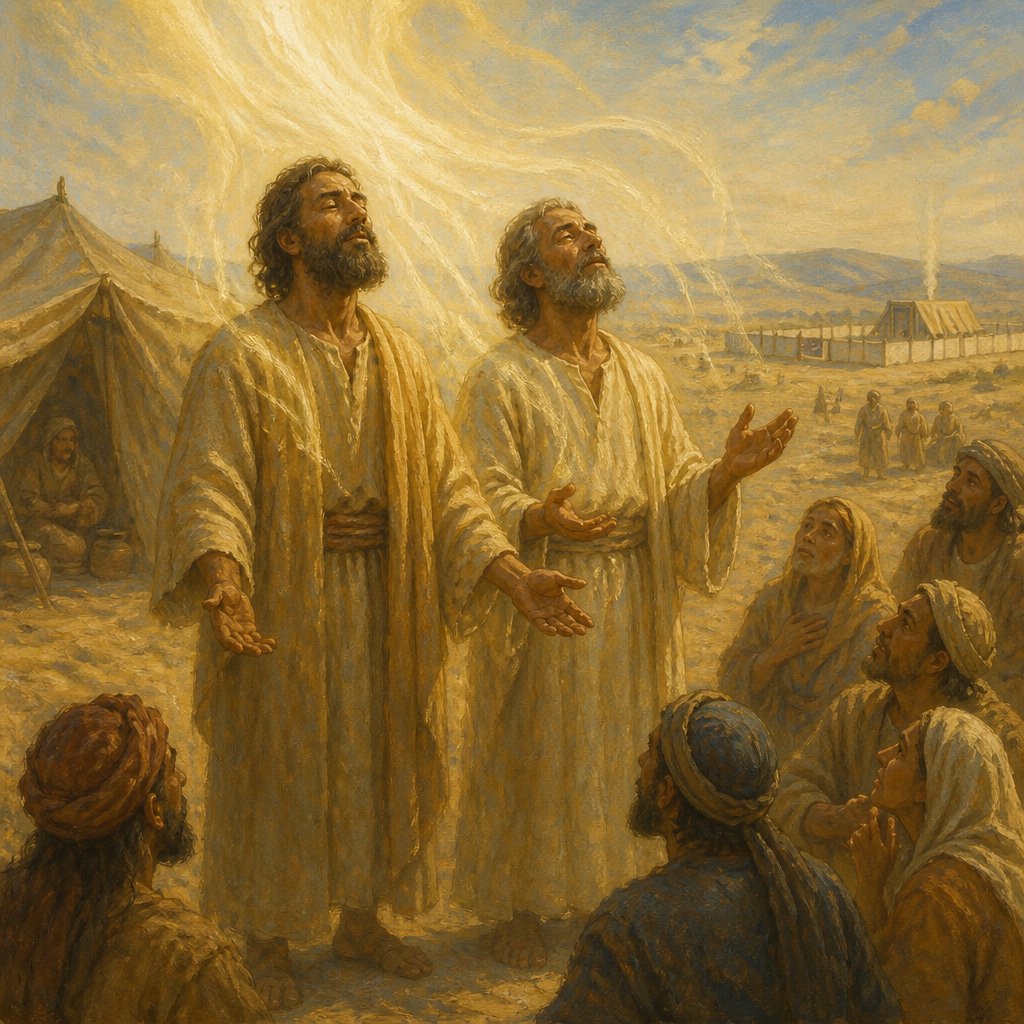
In the narrative of Numbers 11:26, we encounter an intriguing moment in the story of the Israelites as they wander through the wilderness. The scripture reads, "But there remained two of the men in the camp, the name of the one was Eldad, and the name of the other Medad: and the spirit rested upon them; and they were of them that were written, but went not out unto the tabernacle: and they prophesied in the camp" (KJV). This verse invites us to explore profound themes of divine empowerment, the spirit’s presence, and the breaking of traditional boundaries.
## Contextual Background
First, let’s set the scene. The Israelites were in a transitional phase, moving from slavery in Egypt to the Promised Land. On their way, they faced trials, discontentment, and challenges to their faith in God’s provision. In response to the people’s complaints about manna, God instructed Moses to gather seventy elders to assist him and promised that He would take some of the spirit that was upon Moses and place it upon the elders as well (Numbers 11:17). This was a sign of divine empowerment for leadership.
Among those seventy were Eldad and Medad, who surprisingly did not attend the gathering at the Tabernacle yet received the spirit. Their story challenges our expectations of where and how God chooses to work.
## The Spirit Rested Upon Them
The phrase "the spirit rested upon them" is critical. It indicates a divine initiative where God’s power was not restricted to specific locations or circumstances. Eldad and Medad remained in the camp, yet they were chosen as vessels of God's message. This anointing was not confined to the ritualistic practices of the Tabernacle; rather, it illustrates that God moves mightily even in the mundane. It is a powerful reminder that God’s presence transcends physical spaces and that He can empower us right where we are.
For many of us, life can feel like a wilderness experience, full of uncertainties and struggles. We might feel as though we are in our own ‘camp’, away from the main action where we believe God operates. Yet, through Eldad and Medad, we are reminded that we do not need to wait for a special moment or a particular place to experience the fullness of the Holy Spirit’s presence.
## Prophesying in the Camp
Their prophecy in the camp represents an overflow of God’s Spirit to the community, indicating that divine communication is not limited to the select few leaders with formal training or authority. Prophecy is often associated with declaring God’s truth and direction. Eldad and Medad exemplify that boldness and anointing can arise in any setting, including the least expected places. The camp, often seen as a place of hardship and struggle, became a platform for revelation and inspiration.
This speaks directly to us today. Are we open to what God might be doing in our lives, particularly during the less glamorous moments and settings? The message of hope and encouragement can arise at any time or place, transforming our spaces into places of worship and witness.
## Inclusiveness of God’s Spirit
Furthermore, the story of Eldad and Medad highlights the inclusiveness of God’s Spirit. It challenges us to reflect on our own perceptions of who is entitled to speak for God. God’s gifts and calling are not limited to those we might consider "worthy" or "qualified". His Spirit seeks willing hearts, regardless of their location or situation. When we create barriers in our minds regarding people’s abilities to hear from God, we limit what God can do through His creations.
## Conclusion
In conclusion, Eldad and Medad enrich our understanding of the Holy Spirit. They teach us that God can empower any individual at any location to speak His truth and lead others back to Him, even in the turmoil of the wilderness. So let us seek to be like them—open to God’s spirit and willing to share His truth wherever we find ourselves. May we be aware that even in our camps of hardship, God’s presence can turn our ordinary into extraordinary, igniting a fire that empowers us to prophesy His goodness in the world today.
Get our apps


Artwork for Numbers 11:26

Numbers 11:26 - "But there remained two of the men in the camp, the name of the one was Eldad, and the name of the other Medad: and the spirit rested upon them; and they were of them that were written, but went not out unto the tabernacle: and they prophesied in the camp."
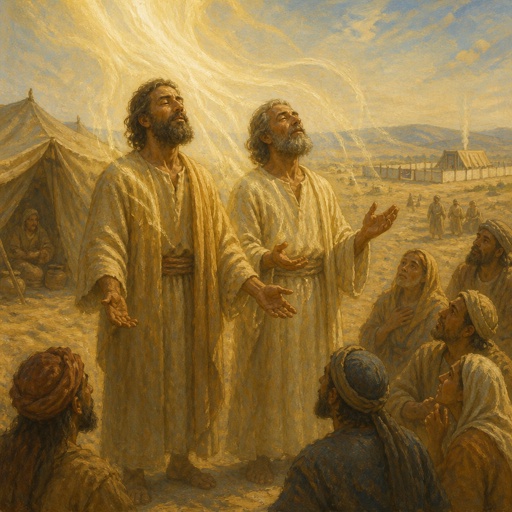
"But there remained two of the men in the camp, the name of the one was Eldad, and the name of the other Medad: and the spirit rested upon them; and they were of them that were written, but went not out unto the tabernacle: and they prophesied in the camp." - Numbers 11:26

Numbers 11:16-26

Numbers 26:11 - "Notwithstanding the children of Korah died not."

"Notwithstanding the children of Korah died not." - Numbers 26:11

Numbers 11. 4 to 6

Numbers 26:8 - "And the sons of Pallu; Eliab."

Numbers 26:26 - "¶ Of the sons of Zebulun after their families: of Sered, the family of the Sardites: of Elon, the family of the Elonites: of Jahleel, the family of the Jahleelites."

Numbers 26:46 - "And the name of the daughter of Asher was Sarah."

Numbers 33:26 - "And they removed from Makheloth, and encamped at Tahath."

Israelites taking census in Numbers 26

Numbers 26:52 - "¶ And the LORD spake unto Moses, saying,"

Numbers 26:36 - "And these are the sons of Shuthelah: of Eran, the family of the Eranites."

Numbers 26:53 - "Unto these the land shall be divided for an inheritance according to the number of names."

Numbers 26:39 - "Of Shupham, the family of the Shuphamites: of Hupham, the family of the Huphamites."

Numbers 26:31 - "And of Asriel, the family of the Asrielites: and of Shechem, the family of the Shechemites:"

Numbers 26:6 - "Of Hezron, the family of the Hezronites: of Carmi, the family of the Carmites."

Numbers 26:49 - "Of Jezer, the family of the Jezerites: of Shillem, the family of the Shillemites."

Numbers 26:24 - "Of Jashub, the family of the Jashubites: of Shimron, the family of the Shimronites."

Numbers 26:17 - "Of Arod, the family of the Arodites: of Areli, the family of the Arelites."

Numbers 26:13 - "Of Zerah, the family of the Zarhites: of Shaul, the family of the Shaulites."
Numbers 11

Numbers 26:32 - "And of Shemida, the family of the Shemidaites: and of Hepher, the family of the Hepherites."

Numbers 26:16 - "Of Ozni, the family of the Oznites: of Eri, the family of the Erites:"

Numbers 7:26 - "One golden spoon of ten shekels, full of incense:"

Numbers 26:60 - "And unto Aaron was born Nadab, and Abihu, Eleazar, and Ithamar."

Numbers 26:14 - "These are the families of the Simeonites, twenty and two thousand and two hundred."

Numbers 26:28 - "¶ The sons of Joseph after their families were Manasseh and Ephraim."

Numbers 14:26 - "¶ And the LORD spake unto Moses and unto Aaron, saying,"

Numbers 34:26 - "And the prince of the tribe of the children of Issachar, Paltiel the son of Azzan."