The Heart of Rebellion: Lessons from Korah's Revolt
"Now Korah, the son of Izhar, the son of Kohath, the son of Levi, and Dathan and Abiram, the sons of Eliab, and On, the son of Peleth, sons of Reuben, took men: And they rose up before Moses, with certain of the children of Israel, two hundred and fifty princes of the assembly, famous in the congregation, men of renown: And they gathered themselves together against Moses and against Aaron, and said unto them, Ye take too much upon you, seeing all the congregation are holy, every one of them, and the Lord is among them: wherefore then lift ye up yourselves above the congregation of the Lord?" - Numbers 16:1-3
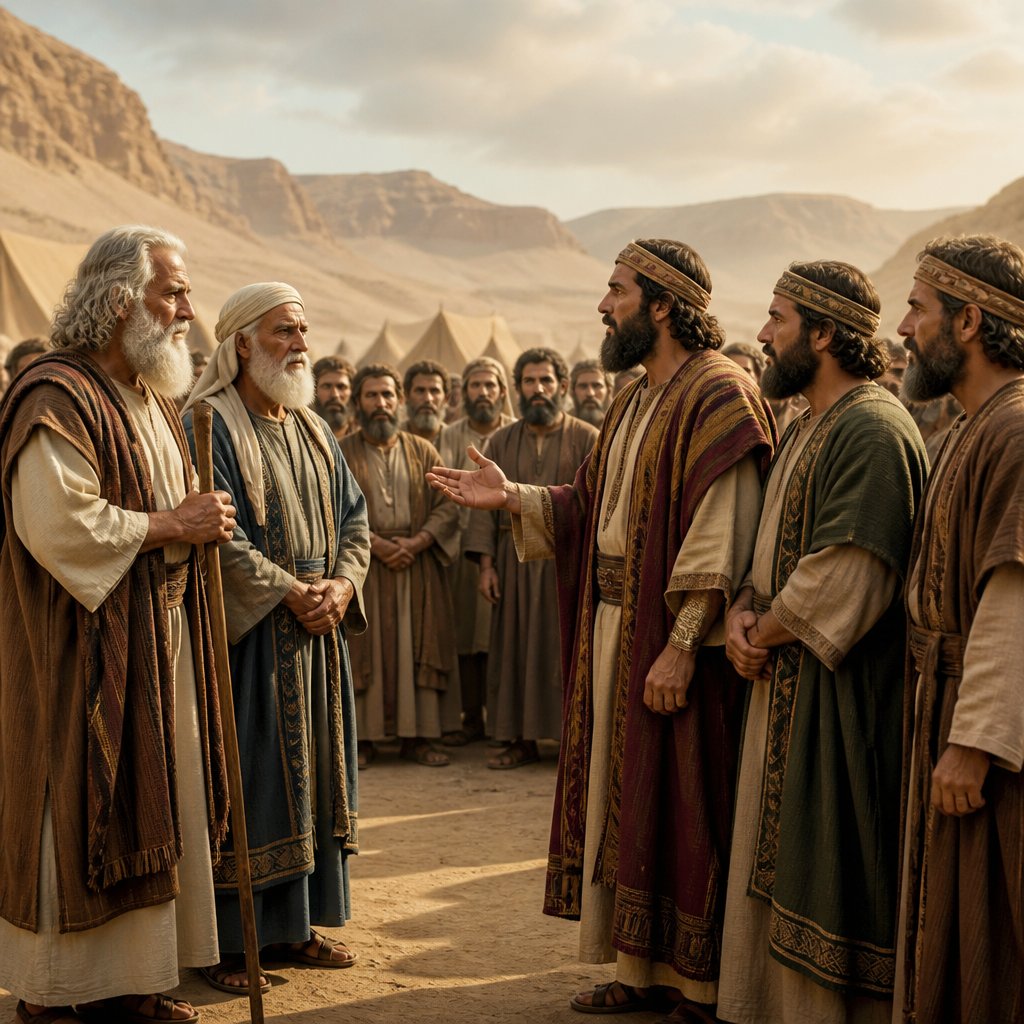
In the book of Numbers, chapter 16, we encounter an intense moment of rebellion against God’s ordained leaders. The account of Korah, Dathan, Abiram, and the two hundred and fifty other prominent men who rise up against Moses and Aaron is a stark reminder of the dangers of discontentment and the insidious nature of jealousy within the congregation of God's people. The verses state:
"Now Korah, the son of Izhar, the son of Kohath, the son of Levi, and Dathan and Abiram, the sons of Eliab, and On, the son of Peleth, sons of Reuben, took men: And they rose up before Moses, with certain of the children of Israel, two hundred and fifty princes of the assembly, famous in the congregation, men of renown: And they gathered themselves together against Moses and against Aaron, and said unto them, Ye take too much upon you, seeing all the congregation are holy, every one of them, and the Lord is among them: wherefore then lift ye up yourselves above the congregation of the Lord?" (Numbers 16:1-3, KJV).
**The Roots of Rebellion**
Korah's revolt is deeply rooted in pride and a misunderstanding of God's design. Korah was of the tribe of Levi, a tribe set apart for service in the tabernacle—a significant honor in itself. However, it appears that Korah was not satisfied with his God-given responsibilities. Instead of embracing his role within the community, he sought a position of greater authority and influence. This discontentment mirrored that of Dathan and Abiram, who viewed the leadership of Moses and Aaron as an unfair elevation above their peers.
In the human heart, there often lurks a desire for recognition and power; an ego that whispers discontent with our appointed stations. Korah and his allies seemingly believed that every individual in the congregation held equal status and stature before God, which, while true in a sense, neglected the truth that God has established order and authority through His chosen leaders.
**The Danger of Unity in Rebellion**
The gathering of two hundred and fifty renowned leaders highlights another critical aspect of this narrative: the power of collective dissent. Korah mobilized those influential in the community, appealing to their perceptions of fairness. Together, they presented their grievances not just against Moses and Aaron, but fundamentally against God’s appointed order. Their assertion—"Ye take too much upon you"—suggests a denial of the divine authority given to Moses and Aaron.
As believers, we must guard against the allure of popular opinion swaying us toward rebellion against God’s appointed leaders. The challenge is to recognize our leaders as God’s instruments while still exercising our own faith and convictions. Unity in rebellion can often seem justified, particularly when it is cloaked in the language of equality and righteousness. Nonetheless, it can lead to disastrous consequences—a lesson vividly illustrated in the unfolding events of Numbers 16.
**Lessons of Submission and Service**
The core of this passage does not merely revolve around the uprising but also shines light on our response to leadership. When we are faced with issues that disturb our peace or provoke our spirits, our challenge is to confront those feelings with a heart of prayer and submission rather than rebellion. Moses himself remains a model of humility and perseverance through this attack, praying for those who oppose him.
Furthermore, being a part of a congregation implies a responsibility to honor those in positions of authority, recognizing that they, too, are being led by the Lord. The holy congregation does not grant power to individuals but acknowledges and honors the leadership that God himself has established.
**Conclusion**
As we meditate on Numbers 16:1-3, let us reflect on our hearts. Are we harboring discontentment, jealousy, or a desire for undue recognition? Are we prepared to support our leaders, understanding the divine order and respecting God’s arrangements? May we pray for a spirit of unity and collaboration within our communities, recognizing that the Lord alone is the one who elevates and positions individuals for His purposes. Let us strive for a heart that honors the Lord’s design rather than one that seeks to elevate ourselves above the congregation of the Lord.
Want to reflect more on Numbers 16:1-3?
Continue your spiritual journey with Bible Chat — an AI-powered tool for exploring God's Word through conversation. Ask questions, discover connections, and deepen your understanding.
Get Our Apps


Numbers 16:1-3 Artwork

Numbers 16:1-3 - "Now Korah, the son of Izhar, the son of Kohath, the son of Levi, and Dathan and Abiram, the sons of Eliab, and On, the son of Peleth, sons of Reuben, took men: And they rose up before Moses, with certain of the children of Israel, two hundred and fifty princes of the assembly, famous in the congregation, men of renown: And they gathered themselves together against Moses and against Aaron, and said unto them, Ye take too much upon you, seeing all the congregation are holy, every one of them, and the Lord is among them: wherefore then lift ye up yourselves above the congregation of the Lord?"
"Now Korah, the son of Izhar, the son of Kohath, the son of Levi, and Dathan and Abiram, the sons of Eliab, and On, the son of Peleth, sons of Reuben, took men: And they rose up before Moses, with certain of the children of Israel, two hundred and fifty princes of the assembly, famous in the congregation, men of renown: And they gathered themselves together against Moses and against Aaron, and said unto them, Ye take too much upon you, seeing all the congregation are holy, every one of them, and the Lord is among them: wherefore then lift ye up yourselves above the congregation of the Lord?" - Numbers 16:1-3

Numbers 3:16 - "And Moses numbered them according to the word of the LORD, as he was commanded."
Numbers 32:16-18
Numbers 32:16-18

Numbers 3:41

"And Moses numbered them according to the word of the LORD, as he was commanded." - Numbers 3:16

Numbers 1:16 - "These were the renowned of the congregation, princes of the tribes of their fathers, heads of thousands in Israel."

1 corinthians 3:16-17

1 corinthians 3:16-17

1 corinthians 3:16-17

Picture of Numbers 21:1-3

Joshua 3:16

Genesis 3:16

John 3:16

John 3:16

John 3:16

John 3:16

John 3-16

John 3:16

John 3:16

1 Corinthians 3:16

Numbers 16:1 - "Now Korah, the son of Izhar, the son of Kohath, the son of Levi, and Dathan and Abiram, the sons of Eliab, and On, the son of Peleth, sons of Reuben, took men:"

1 Corinthians 3:16

1 Corinthians 3:16

1 Timothy 3:16

Numbers 3:1 - "These also are the generations of Aaron and Moses in the day that the LORD spake with Moses in mount Sinai."

create a mosaic that depicts numbers 8:1 to 12:16 do not show words

1 Chronicles 3:16 - "And the sons of Jehoiakim: Jeconiah his son, Zedekiah his son."

Numbers 1:3 - "From twenty years old and upward, all that are able to go forth to war in Israel: thou and Aaron shall number them by their armies."