The Consequence of Rebellion: Lessons from Korah's Rebellion
"And the earth opened her mouth, and swallowed them up, and their houses, and all the men that appertained unto Korah, and all their goods." - Numbers 16:32
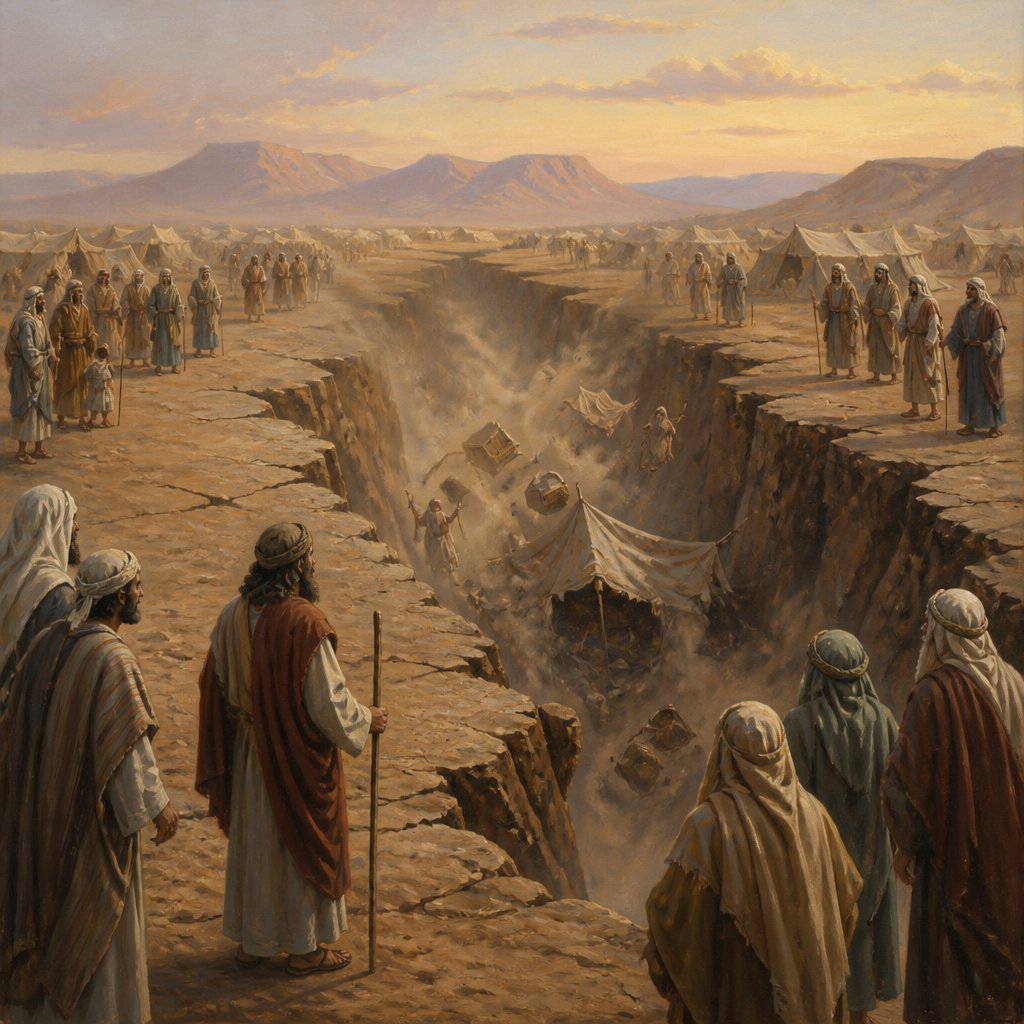
Numbers 16:32 (KJV) states, "And the earth opened her mouth, and swallowed them up, and their houses, and all the men that appertained unto Korah, and all their goods." This intense passage recounts one of the most severe divine judgments in ancient Israel. To fully understand its significance and the lessons that can be drawn from it, we must explore the context surrounding Korah’s rebellion, the nature of sin and consequences, and the grace offered even amid judgment.
Korah, a Levite, led a rebellion against Moses and Aaron, questioning their authority and implying that all of Israel was holy. His challenge was not merely personal; it reflected a deeper agenda. Korah wanted to elevate his position and that of his followers, believing they could approach God without the appointed mediators. This movement was rooted in pride and jealousy—poisonous traits that often lead to division and destruction.
In our modern context, we can see parallels in the way society often questions authority, challenges traditional structures, and seeks to usurp roles ordained by God. The temptation to elevate one’s own capabilities above those God has chosen is still prevalent. Yet, just as in the time of Korah, motives that may seem justified can lead to devastating consequences. What we often forget is that God’s authority established through His covenant remains unshaken, regardless of human rebellion.
The earth opening its mouth is a dramatic depiction of God’s immediate and severe response to rebellion. This moment serves as not only a judgment but a warning to all subsequent generations about the seriousness of defying God's chosen leadership. It underscores the reality that rebellion against God’s order is not only a personal affront but also a communal hazard. Those with Korah suffered not only for their own actions but also for their association with his insurrection. This brings sobering reminders about the company we keep. Little do we realize that fellowship with those undermining God’s order can lead to our own downfall.
Moreover, the swallowing of their households and goods points to a profound truth: sin, when left unchecked, can obliterate not just individuals but families and communities. It’s a call for vigilance regarding what we might condone or ignore because it seems harmless. The implications of our actions or inactions can be far-reaching, affecting far more than ourselves.
Yet, the end of Korah and his conspirators did not extinguish God's grace. Throughout the Scriptures, judgment is always accompanied by opportunities for repentance. Even as the ground consumed them, God provided a warning to the nation of Israel. Moses, the mediator, called out to the congregation, warning them to separate themselves from the tents of the rebels. This was a call to repentance— a moment to turn away from rebellion before the consequences became irreversible.
In our lives, we are called to examine ourselves: Are there areas where we might be resisting God’s authority? Are we associated with influences that challenge God’s call on our lives? We must heed the warning—choose wisely whom we align ourselves with and reflect God’s holiness in our actions and interactions.
Finally, the ultimate message of this passage is not one of despair but hope. God’s justice is perfect and reminds us of His authority. However, His mercy is abundant. Perhaps the question we should ask ourselves is: How can we avoid spiritual rebellion? The answer lies in embracing God’s structure, choosing humility over pride, and being willing to submit to leadership as God has ordained.
In conclusion, Numbers 16:32 is more than a narrative of doom; it's a profound lesson in faithfulness and the gravitas of walking in obedience to God's leading. Let us hold fast to the grace available to us, choosing the path of unity, humility, and devotion to God, ensuring that we don’t find ourselves on the wrong side of His judgment.
Want to reflect more on Numbers 16:32?
Continue your spiritual journey with Bible Chat — an AI-powered tool for exploring God's Word through conversation. Ask questions, discover connections, and deepen your understanding.
Get Our Apps


Numbers 16:32 Artwork

Numbers 16:32 - "And the earth opened her mouth, and swallowed them up, and their houses, and all the men that appertained unto Korah, and all their goods."
"And the earth opened her mouth, and swallowed them up, and their houses, and all the men that appertained unto Korah, and all their goods." - Numbers 16:32
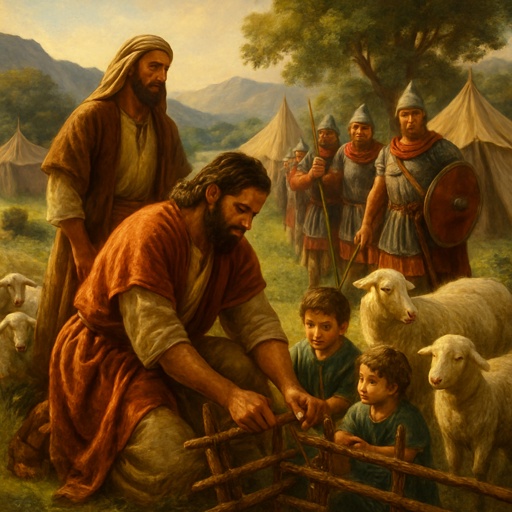
Numbers 32:16-18
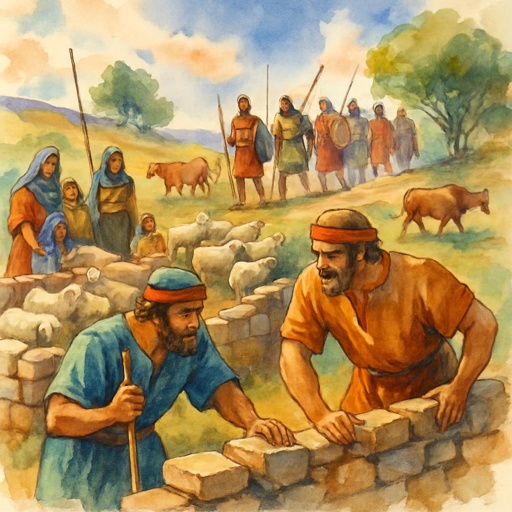
Numbers 32:16-18

Numbers 32:16 - "¶ And they came near unto him, and said, We will build sheepfolds here for our cattle, and cities for our little ones:"

Numbers 32:33

Numbers 32:38

Numbers 32:35 - "And Atroth, Shophan, and Jaazer, and Jogbehah,"
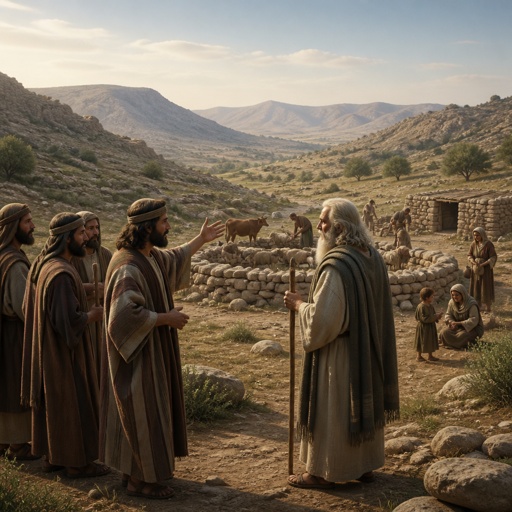
"¶ And they came near unto him, and said, We will build sheepfolds here for our cattle, and cities for our little ones:" - Numbers 32:16

Numbers 32:32 - "We will pass over armed before the LORD into the land of Canaan, that the possession of our inheritance on this side Jordan may be our's."

Numbers 14:32 - "But as for you, your carcases, they shall fall in this wilderness."

Numbers 32:37 - "And the children of Reuben built Heshbon, and Elealeh, and Kirjathaim,"

Numbers 26:32 - "And of Shemida, the family of the Shemidaites: and of Hepher, the family of the Hepherites."

Numbers 32:34 - "¶ And the children of Gad built Dibon, and Ataroth, and Aroer,"

Numbers 33:32 - "And they removed from Bene-jaakan, and encamped at Hor-hagidgad."

Numbers 7:32 - "One golden spoon of ten shekels, full of incense:"

Numbers 32:10 - "And the LORD'S anger was kindled the same time, and he sware, saying,"

Numbers 32:36 - "And Beth-nimrah, and Beth-haran, fenced cities: and folds for sheep."

Numbers 32:3 - "Ataroth, and Dibon, and Jazer, and Nimrah, and Heshbon, and Elealeh, and Shebam, and Nebo, and Beon,"

Draw map east of Jordan described in Numbers 32.

"And Atroth, Shophan, and Jaazer, and Jogbehah," - Numbers 32:35

Numbers 32:39 - "And the children of Machir the son of Manasseh went to Gilead, and took it, and dispossessed the Amorite which was in it."

"And Atroth, Shophan, and Jaazer, and Jogbehah," - Numbers 32:35

Numbers 32:40 - "And Moses gave Gilead unto Machir the son of Manasseh; and he dwelt therein."

Numbers 32:30 - "But if they will not pass over with you armed, they shall have possessions among you in the land of Canaan."

Numbers 21:32 - "And Moses sent to spy out Jaazer, and they took the villages thereof, and drove out the Amorites that were there."

Numbers 32:41 - "And Jair the son of Manasseh went and took the small towns thereof, and called them Havoth-jair."

Numbers 15:32 - "¶ And while the children of Israel were in the wilderness, they found a man that gathered sticks upon the sabbath day."

Numbers 16:18

Numbers 29:32 - "¶ And on the seventh day seven bullocks, two rams, and fourteen lambs of the first year without blemish:"