The Legacy of Leadership: A Reflection on Numbers 1:10
“Of the children of Joseph: of Ephraim; Elishama the son of Ammihud: of Manasseh; Gamaliel the son of Pedahzur.” — Numbers 1:10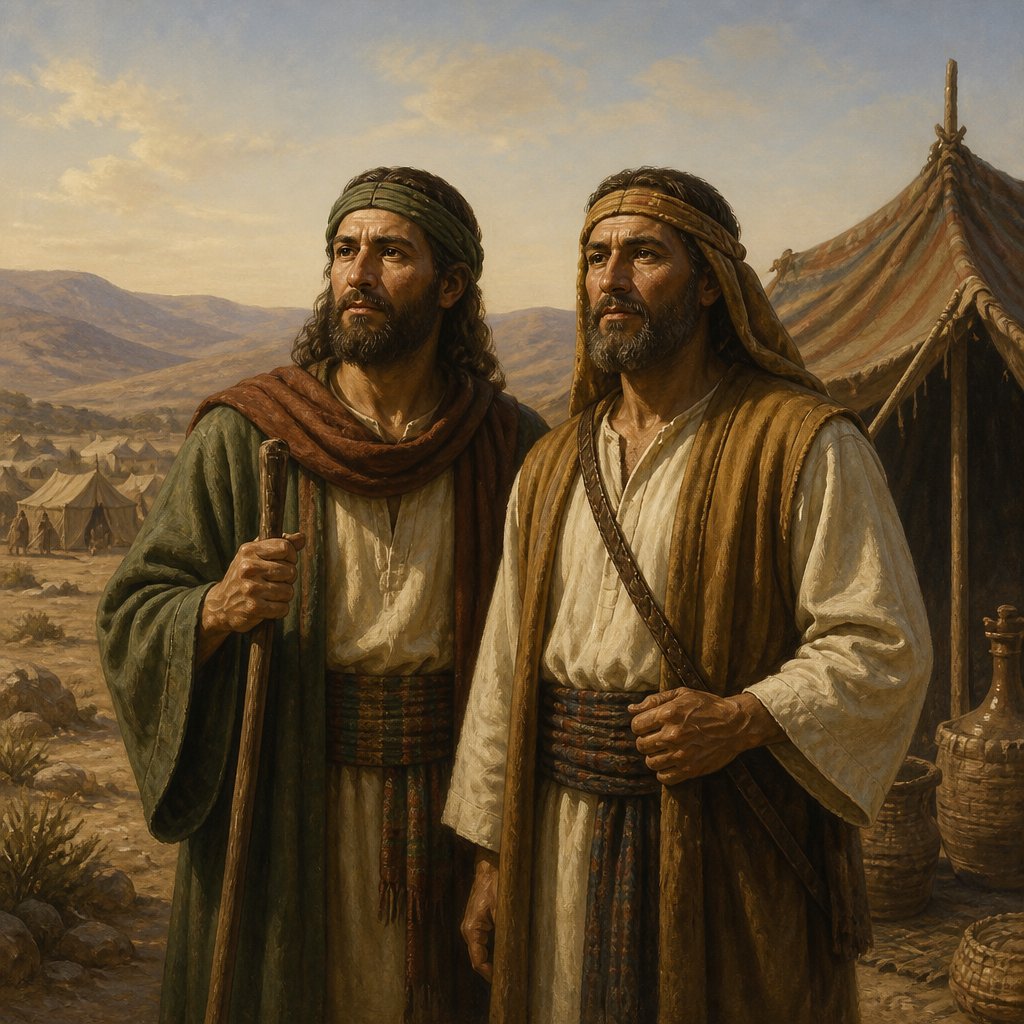
As we delve into the book of Numbers, we engage in a narrative rich with detail, particularly in its genealogies that reveal not just lineage but the sacredness of leadership and the responsibilities that come with it. The verse Numbers 1:10 states, ‘Of the children of Joseph: of Ephraim; Elishama the son of Ammihud: of Manasseh; Gamaliel the son of Pedahzur.’ This verse serves as a reminder of the significance of heritage and the calling that comes through generations.
In this context, we see two distinct leaders emerging from the tribes of Joseph: Elishama from Ephraim and Gamaliel from Manasseh. The inclusion of their names in this census is no trivial matter; it marks their roles as leaders within the assembly of Israel. Each name represents not only an individual but signifies the weight of responsibility laid upon them — a reminder that leadership is not merely a position of prestige but a divine assignment with a profound impact on the people of God.
Elishama and Gamaliel stand out for various reasons, emblematic of the values and traits expected from leaders. In the character of Elishama, we see a man whose very name means ‘God has heard.’ He leads with the assurance that God is attentive to their needs. This aspect invites us to reflect on our own leadership roles, whether in our families, communities, or workplaces. Are we cultivating environments where people feel heard, loved, and understood? Leadership, after all, should foster connection and strive to embody the compassion of Christ.
Gamaliel, on the other hand, carries the meaning ‘God is my reward.’ This shows us the core motivation for our leadership should not be power or control, but rather the understanding that our ultimate reward comes from God. In moments when leadership can become burdensome or thankless, it is essential to remember that our labor is not in vain. Each action taken in faith, each decision made with integrity, is seen and rewarded by the Lord. Gamaliel’s name serves as a reminder to reassess our motivations, ensuring that they are rooted in God's glory rather than self-serving ambitions.
Consider the responsibilities that come with being a leader. In the context of the Israelites, both Ephraim and Manasseh were significant tribes who played vital roles in the future of God’s people. Leaders have the potential to influence generations, either positively or negatively. This truth leads us to ponder how our actions and decisions might shape those who come after us. Just as these men were accountable for their tribes, we are held to a standard before God. It provokes deeper thought: how are we portraying the character of Christ through our leadership? Are we nurturing those around us to fulfill their God-given potential?
It is essential to realize that leadership within God’s kingdom does not come without its challenges. The wilderness that the Israelites traversed was fraught with obstacles and trials, and their leaders were called to navigate these difficulties with faith and integrity. In our own lives, we encounter wilderness moments that test our resolve and character. But just like Elishama and Gamaliel, we can seek God’s guidance and strength amid uncertainty.
Finally, it is crucial to acknowledge that every generation faces its own sets of challenges. The leadership demonstrated by Elishama and Gamaliel serves as a beacon for us today. As we nurture our personal relationships with God, let us also commit to leading others back to Him. Let us be prompt to listen, serve, and act in ways that foster unity and purpose among our peers.
In conclusion, Numbers 1:10 imparts wisdom that transcends time. As we reflect on the characteristics of these leaders, may we aspire to emulate their faithfulness and dedication to God’s calling. Let us remember that leadership is not just about leading people but about leading them towards the heart of God, knowing that He is ever-faithful and listening to our cries.
Get our apps


Artwork for Numbers 1:10

Numbers 1:10 - "Of the children of Joseph: of Ephraim; Elishama the son of Ammihud: of Manasseh; Gamaliel the son of Pedahzur."
"Of the children of Joseph: of Ephraim; Elishama the son of Ammihud: of Manasseh; Gamaliel the son of Pedahzur." - Numbers 1:10

Numbers 10:1 - "And the LORD spake unto Moses, saying,"
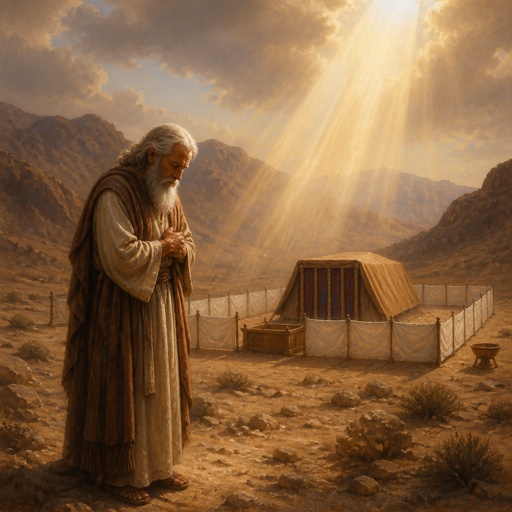
"And the LORD spake unto Moses, saying," - Numbers 10:1

Numbers 13:10 - "Of the tribe of Zebulun, Gaddiel the son of Sodi."

Numbers 25:10 - "¶ And the LORD spake unto Moses, saying,"

Numbers 21:10 - "¶ And the children of Israel set forward, and pitched in Oboth."

Numbers 33:10 - "And they removed from Elim, and encamped by the Red sea."

"Create a detailed and artistic mosaic image that depicts various scenes from the biblical book of Numbers (Bamidbar) chapters 8:1 to 12:1. The image should be divided into sections, each representing different events within these chapters, in a style that reflects traditional Jewish art and avoids Christian or Catholic imagery. Numbers 8:1-4: Show the lighting of the Menorah in the Tabernacle (Mishkan). Aaron, the High Priest, should be lighting the Menorah. Ensure that the seven-branched Menorah is prominently displayed. Numbers 8:5-26: Depict the consecration of the Levites (Leviím). Show the Levites being presented before the Tent of Meeting, having their heads shaved and being sprinkled with purifying water. Include elements such as offerings and the elders of Israel laying their hands on the Levites. Numbers 9:1-14: Illustrate the Israelites observing the Passover (Pesach) in the wilderness. Show families gathered around the Passover meal, with symbols of matzah and lamb. Also, include the people who were impure because of contact with a dead body and how they are consulting Moses about observing the Passover later. Numbers 9:15-23: Display the cloud covering the Tabernacle by day and the appearance of fire by night. Show the Israelites encamped around the Tabernacle, with their tents in the background, and the divine cloud and fire above. Numbers 10:1-10: Illustrate the making and use of the silver trumpets (chatzotzrot). Show the priests blowing the trumpets to signal the Israelites' movements and gather the assembly. Numbers 10:11-36: Depict the Israelites setting out from the wilderness of Sinai, following the cloud of the Lord. Show the ark of the covenant being carried by the Levites, leading the people. Numbers 11:1-35: Portray the incidents of the people's complaints and God's provision of quail. Include scenes of the people gathering quail and a representation of the fire that consumed some of the camp due to their complaints. Show Moses speaking to God, but ensure Moses' face is not visible. Numbers 12:1: Show the scene where Miriam and Aaron speak against Moses because of the Cushite woman he had married. Depict Miriam and Aaron in discussion, but do not show Moses' face. The entire mosaic should be harmonious and cohesive, with no individual faces of Moses visible and no words or numbers in the artwork. The style should reflect traditional Jewish artistic sensibilities and avoid any Christian or Catholic symbols."

"Create a detailed and artistic mosaic image that depicts various scenes from the biblical book of Numbers (Bamidbar) chapters 8:1 to 12:1. The image should be divided into sections, each representing different events within these chapters, in a style that reflects traditional Jewish art and avoids Christian or Catholic imagery. Numbers 8:1-4: Show the lighting of the Menorah in the Tabernacle (Mishkan). Aaron, the High Priest, should be lighting the Menorah. Ensure that the seven-branched Menorah is prominently displayed. Numbers 8:5-26: Depict the consecration of the Levites (Leviím). Show the Levites being presented before the Tent of Meeting, having their heads shaved and being sprinkled with purifying water. Include elements such as offerings and the elders of Israel laying their hands on the Levites. Numbers 9:1-14: Illustrate the Israelites observing the Passover (Pesach) in the wilderness. Show families gathered around the Passover meal, with symbols of matzah and lamb. Also, include the people who were impure because of contact with a dead body and how they are consulting Moses about observing the Passover later. Numbers 9:15-23: Display the cloud covering the Tabernacle by day and the appearance of fire by night. Show the Israelites encamped around the Tabernacle, with their tents in the background, and the divine cloud and fire above. Numbers 10:1-10: Illustrate the making and use of the silver trumpets (chatzotzrot). Show the priests blowing the trumpets to signal the Israelites' movements and gather the assembly. Numbers 10:11-36: Depict the Israelites setting out from the wilderness of Sinai, following the cloud of the Lord. Show the ark of the covenant being carried by the Levites, leading the people. Numbers 11:1-35: Portray the incidents of the people's complaints and God's provision of quail. Include scenes of the people gathering quail and a representation of the fire that consumed some of the camp due to their complaints. Show Moses speaking to God, but ensure Moses' face is not visible. Numbers 12:1: Show the scene where Miriam and Aaron speak against Moses because of the Cushite woman he had married. Depict Miriam and Aaron in discussion, but do not show Moses' face. The entire mosaic should be harmonious and cohesive, with no individual faces of Moses visible and no words or numbers in the artwork. The style should reflect traditional Jewish artistic sensibilities and avoid any Christian or Catholic symbols."

Numbers 10:26 - "And over the host of the tribe of the children of Asher was Pagiel the son of Ocran."

Numbers 10:19 - "And over the host of the tribe of the children of Simeon was Shelumiel the son of Zurishaddai."

Numbers 10:15 - "And over the host of the tribe of the children of Issachar was Nethaneel the son of Zuar."

Numbers 32:10 - "And the LORD'S anger was kindled the same time, and he sware, saying,"

Numbers 10:23 - "And over the host of the tribe of the children of Manasseh was Gamaliel the son of Pedahzur."

Numbers 29:10 - "A several tenth deal for one lamb, throughout the seven lambs:"

Numbers 36:10 - "Even as the LORD commanded Moses, so did the daughters of Zelophehad:"

Numbers 10:27 - "And over the host of the tribe of the children of Naphtali was Ahira the son of Enan."
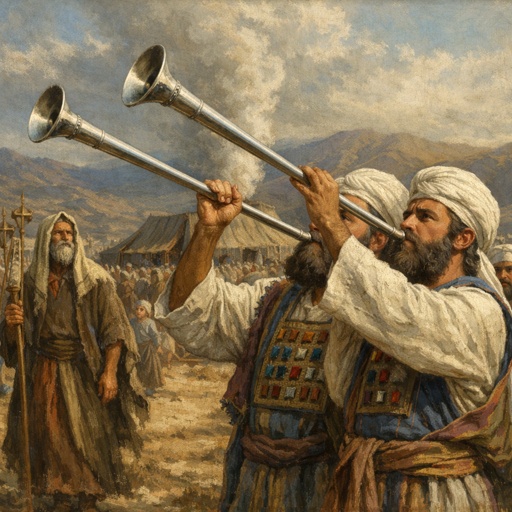
Blowing of the 2 silver trumpets of Numbers 10

Numbers 10:13 - "And they first took their journey according to the commandment of the LORD by the hand of Moses."

Numbers 10:16 - "And over the host of the tribe of the children of Zebulun was Eliab the son of Helon."

Numbers 10:20 - "And over the host of the tribe of the children of Gad was Eliasaph the son of Deuel."

Numbers 10:24 - "And over the host of the tribe of the children of Benjamin was Abidan the son of Gideoni."

Numbers 31:10 - "And they burnt all their cities wherein they dwelt, and all their goodly castles, with fire."

Numbers 10:34 - "And the cloud of the LORD was upon them by day, when they went out of the camp."
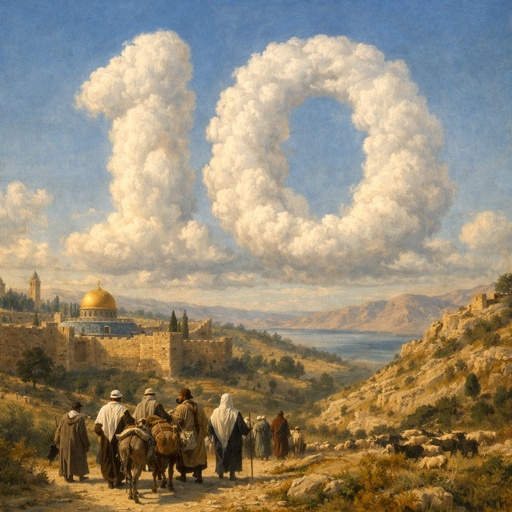
Israel set out and follow the cloud numbers 10

Numbers 30:10 - "And if she vowed in her husband's house, or bound her soul by a bond with an oath;"

Numbers 10:28 - "Thus were the journeyings of the children of Israel according to their armies, when they set forward."
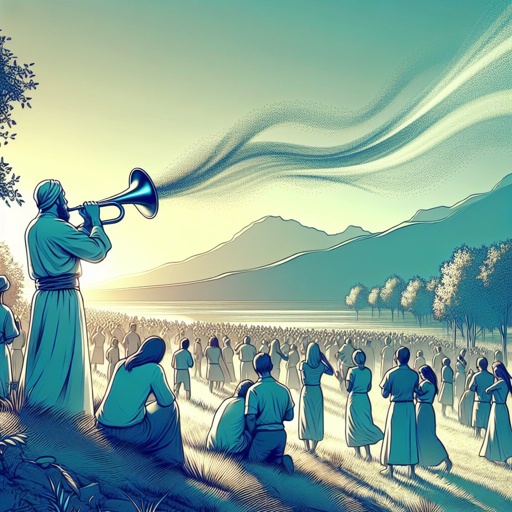
Numbers 10:7 - "But when the congregation is to be gathered together, ye shall blow, but ye shall not sound an alarm."

Numbers 10:36 - "And when it rested, he said, Return, O LORD, unto the many thousands of Israel."