When Thirst Invites Conflict: A Lesson from the Wilderness
“And there was no water for the congregation: and they gathered themselves together against Moses and against Aaron.” — Numbers 20:2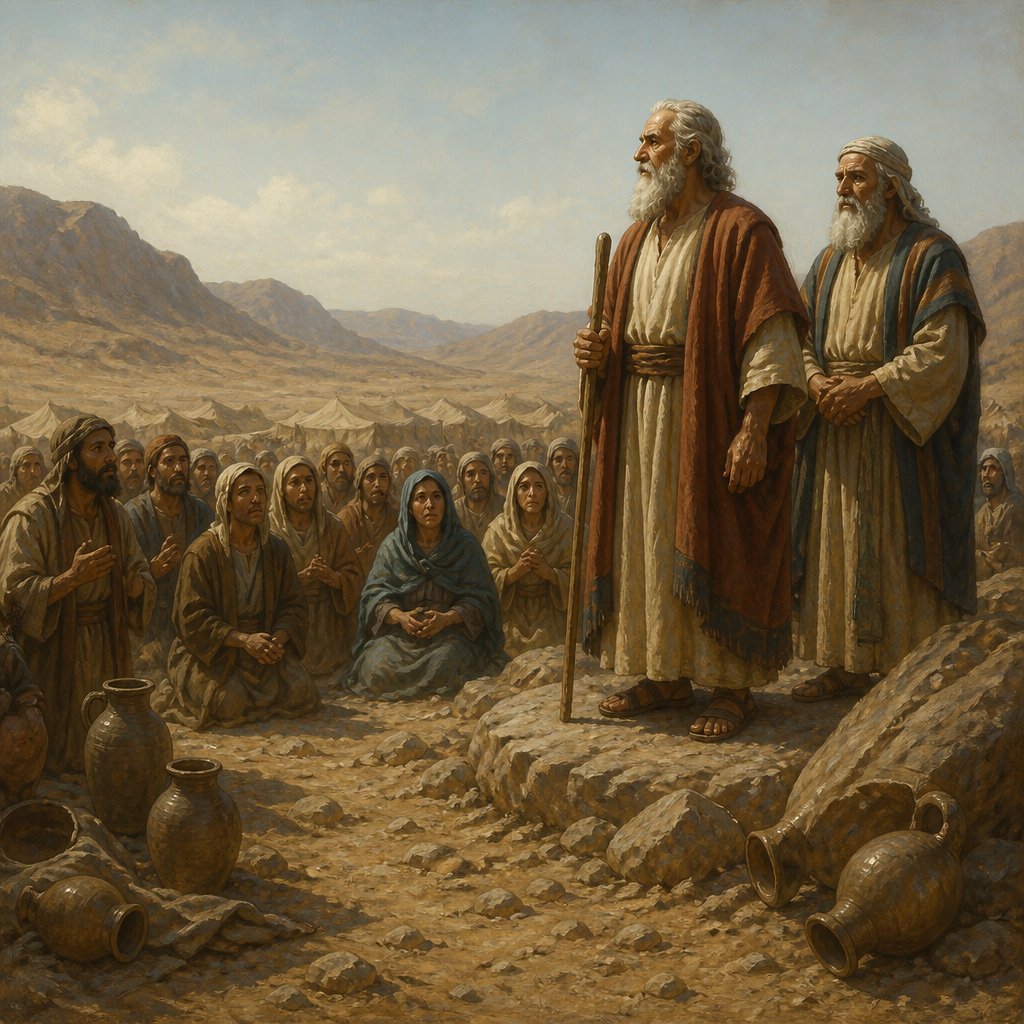
In the wilderness of Zin, the children of Israel faced yet another challenge that tested their faith and unity. Numbers 20:2 states, "And there was no water for the congregation: and they gathered themselves together against Moses and against Aaron." This moment in Israel's journey is significant not just for its surface-level discomfort, but for the deeper spiritual lessons it imparts about conflict, community, and divine provision.
Water has long been synonymous with life, sustenance, and the essential human condition. In the dry, arid wilderness, the absence of water would have been a matter of survival, provoking fear and anger among the Israelites. Their first response was not one of praise or trust but of blame and accusation. They turned against their leaders, Moses and Aaron, who had been called by God to lead them. This pivotal moment reveals the very human tendency to shift blame onto others rather than confront our fears or recognize our own shortcomings when faced with desperate circumstances.
In the narrative of Numbers, the Israelites had witnessed numerous miracles: the parting of the Red Sea, the provision of manna, and the abundance of quail when they complained about their dietary needs. Yet, despite all these affirmations of God's faithfulness, the lack of water in that moment led them to question their leaders and, by extension, the God who had provided for them. Their grievances reflected deeper spiritual struggles, as they lost sight of God’s character in the face of immediate physical need.
Reflecting on this verse, we may ask ourselves—how often do we gather against our 'Moses and Aaron' when we encounter discomfort or lack in our own lives? When faced with financial distress, health crises, or relational challenges, do we echo the cries of the Israelites, expressing our grievances toward those who are leading or shepherding us, instead of crying out to God in prayer? Just as the Israelites allowed their physical thirst to lead them into conflict, so too can we allow our own discomforts to fuel impatience and discontent with our leaders and those around us.
This incident brings to light the importance of patience and the need to cultivate a trust that transcends our immediate circumstances. In verse 3, we see the escalation of the situation as the people complained, saying, "Would God that we had died when our brethren died before the Lord!" Their statement underscores a tragic reality—they would rather reminisce about the past (even one marked by hardship) than trust in God's present provision.
The wilderness experiences serve as spiritual trials that can either redirect our hearts towards God or cause us to spiral into despair and entitlement. When we face trials, the path of faith requires us to rehearse God’s past faithfulness, rather than to dwell solely on our current discomforts.
Consider the teachings of James 1:2-4, which encourage us to "count it all joy, when ye fall into divers temptations; knowing this, that the trying of your faith worketh patience. But let patience have her perfect work, that ye may be perfect and entire, wanting nothing." In the wilderness, God’s intention was not simply to lead the Israelites to a land flowing with milk and honey; He intended to refine their hearts and teach them reliance on Him alone.
As we reflect on Numbers 20:2, let’s remind ourselves to take our grievances, complaints and frustrations directly to God, instead of allowing them to create division among ourselves and those in leadership. Each challenging journey intended for transformation may become a stumbling block of bitterness if we allow our hearts to grip tightly to our fears and disappointments.
Let us pray for the Spirit’s help in turning our cries of desperation into prayers of faithfulness. Instead of gathering against one another, may we gather at the foot of the cross, remembering the one who is our living water (John 4:14) and source of eternal sustenance. In Him, we find the strength to rise above conflict and emerge as a united body, empowered by His love, grace, and abundant provision.
Get our apps


Artwork for Numbers 20:2

Numbers 20:2 - "And there was no water for the congregation: and they gathered themselves together against Moses and against Aaron."
"And there was no water for the congregation: and they gathered themselves together against Moses and against Aaron." - Numbers 20:2

Numbers 2:20 - "And by him shall be the tribe of Manasseh: and the captain of the children of Manasseh shall be Gamaliel the son of Pedahzur."
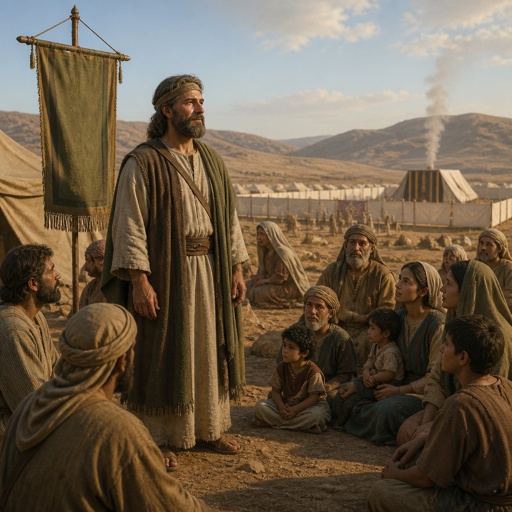
"And by him shall be the tribe of Manasseh: and the captain of the children of Manasseh shall be Gamaliel the son of Pedahzur." - Numbers 2:20

Numbers 20:20 - "And he said, Thou shalt not go through. And Edom came out against him with much people, and with a strong hand."

Numbers 20:7 - "¶ And the LORD spake unto Moses, saying,"

Numbers 34:20 - "And of the tribe of the children of Simeon, Shemuel the son of Ammihud."

Numbers 33:20 - "And they departed from Rimmon-parez, and pitched in Libnah."

Numbers 16:20 - "And the LORD spake unto Moses and unto Aaron, saying,"

Numbers 7:20 - "One spoon of gold of ten shekels, full of incense:"

Numbers 14:20 - "And the LORD said, I have pardoned according to thy word:"

Numbers 10:20 - "And over the host of the tribe of the children of Gad was Eliasaph the son of Deuel."

Numbers 4:20 - "But they shall not go in to see when the holy things are covered, lest they die."
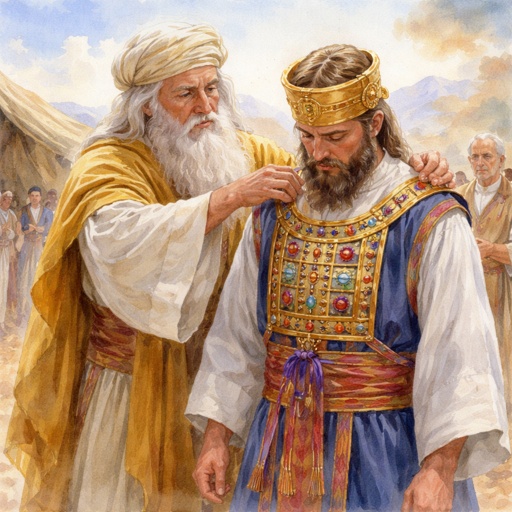
Putting Aaron’s priestly garment on Eleazar in Numbers 20

Numbers 20:9 - "And Moses took the rod from before the LORD, as he commanded him."

Numbers 35:20 - "But if he thrust him of hatred, or hurl at him by laying of wait, that he die;"

Numbers 20:13 - "This is the water of Meribah; because the children of Israel strove with the LORD, and he was sanctified in them."

Numbers 3:20 - "And the sons of Merari by their families; Mahli, and Mushi. These are the families of the Levites according to the house of their fathers."

Numbers 20:27 - "And Moses did as the LORD commanded: and they went up into mount Hor in the sight of all the congregation."

Numbers 21:20 - "And from Bamoth in the valley, that is in the country of Moab, to the top of Pisgah, which looketh toward Jeshimon."

Numbers 20:25 - "Take Aaron and Eleazar his son, and bring them up unto mount Hor:"

Numbers 20:23 - "And the LORD spake unto Moses and Aaron in mount Hor, by the coast of the land of Edom, saying,"

Numbers 23:20 - "Behold, I have received commandment to bless: and he hath blessed; and I cannot reverse it."
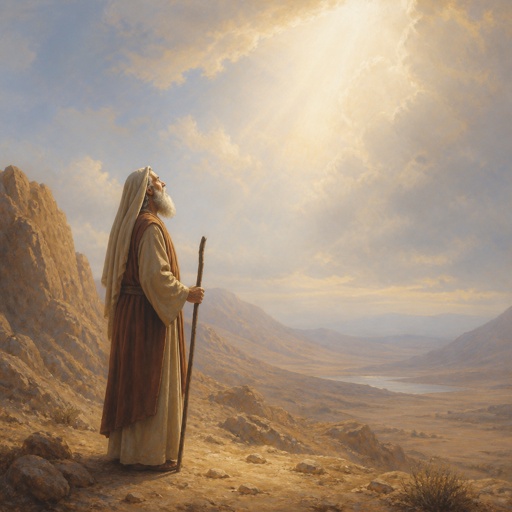
"¶ And the LORD spake unto Moses, saying," - Numbers 20:7
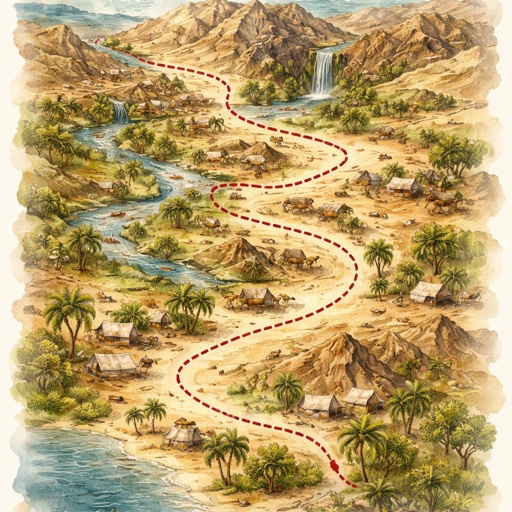
Draw me a travel map for Numbers 21:10-20

Numbers 20:22 - "¶ And the children of Israel, even the whole congregation, journeyed from Kadesh, and came unto mount Hor."

Numbers 29:20 - "¶ And on the third day eleven bullocks, two rams, fourteen lambs of the first year without blemish;"

Numbers 32:20 - "¶ And Moses said unto them, If ye will do this thing, if ye will go armed before the LORD to war,"

"For all the promises of God in him are yea, and in him Amen, unto the glory of God by us." - 2 Corinthians 1:20

Numbers 20:4 - "And why have ye brought up the congregation of the LORD into this wilderness, that we and our cattle should die there?"