Daughters of Destiny: Embracing the Legacy of Zelophehad
“For Mahlah, Tirzah, and Hoglah, and Milcah, and Noah, the daughters of Zelophehad, were married unto their father’s brothers’ sons:” — Numbers 36:11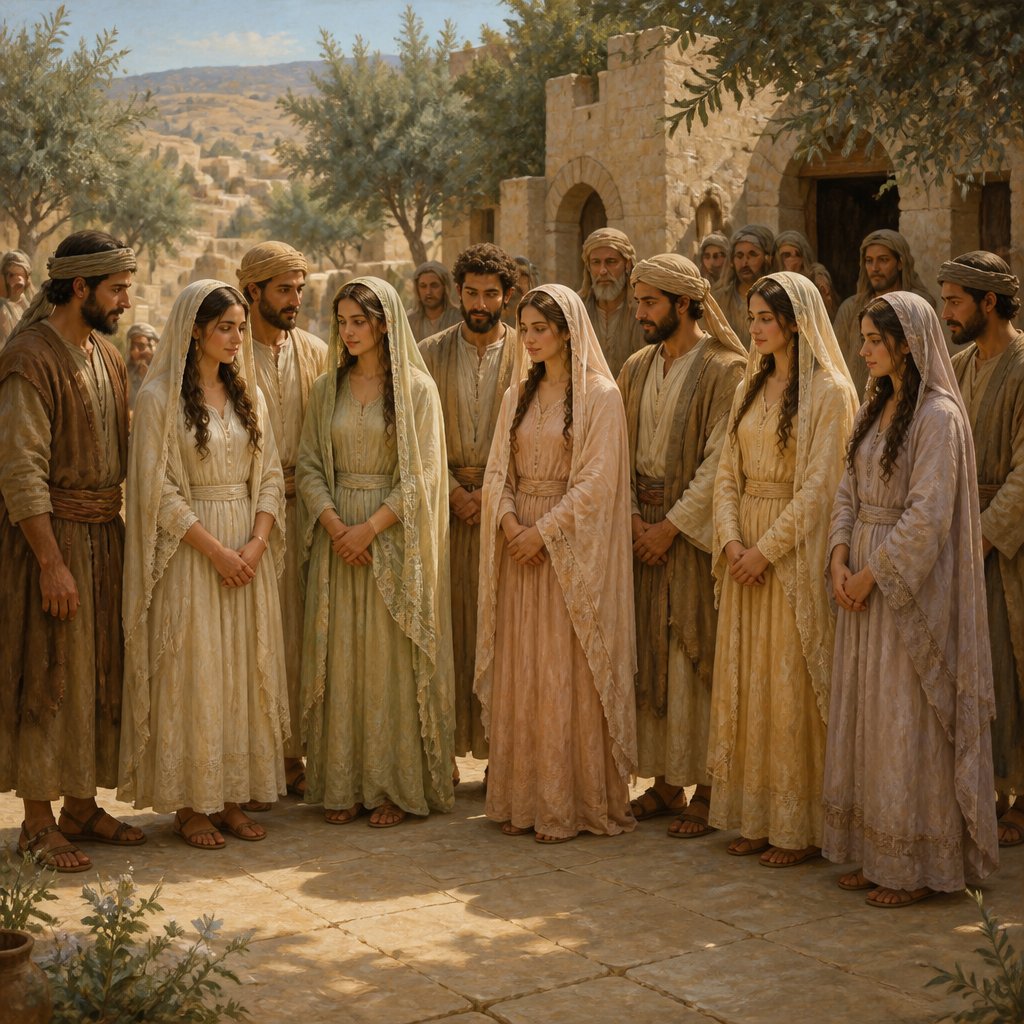
In Numbers 36:11, we encounter a pivotal moment in Israel’s history that resonates with themes of inheritance, legacy, and the roles of women in God's Kingdom. The verse states, "For Mahlah, Tirzah, and Hoglah, and Milcah, and Noah, the daughters of Zelophehad, were married unto their father's brothers' sons." This passage might seem to reflect a mere genealogical record at first glance, yet it reveals a profound truth about God’s intent for inclusion and the empowerment of women within His plan.
Zelophehad’s daughters were unique; they stood out in a time when women were given little consideration in matters of inheritance and land ownership. Their father had no sons, and yet they approached Moses and the leaders of Israel, boldly asking for their rightful inheritance. Their request was rooted not just in personal desire but in a desire for justice and recognition under God's law. It was their initiative that led to a change in the law of Moses, which granted women the right to inherit if there were no male heirs. This stands as a testament to the courage and faith of Mahlah, Tirzah, Hoglah, Milcah, and Noah.
These daughters were not merely passive receivers of fate; they actively shaped their destiny. They understood the significance of their family's lineage and the importance of their heritage in Israel. They recognized that their identities were tied to God's promise to Abraham, Isaac, and Jacob. Therefore, they went before Moses, embodying a belief that their voices mattered in the grand narrative of God's people. This act is both revolutionary and inspirational, encouraging us to advocate for our place in God’s plans despite societal norms.
In Genesis 12:2-3, God promised Abraham that he would make him a great nation and that through him, all the families of the earth would be blessed. The actions of Zelophehad's daughters underscore that God's promises extend to all, regardless of gender. Their story ignites a flame of hope for many who feel overlooked or marginalized today. God values each person, and His purpose can thrive through those deemed unlikely instruments.
As we delve deeper into the societal context of their decisions, we see that these women chose to marry within their family line to protect their inheritance, thereby ensuring its continual connection to their father’s lineage. They were not only preserving their father’s legacy but were also pioneering a path for future generations of women in Israel. Their marriages were not mere alliances of convenience but affirmations of identity and faithfulness to God’s promises. Through their actions, they forged a new understanding of familial roles in the context of faith and obedience.
This passage also encourages us to reflect on our roles and responsibilities within our families and communities. Each of us, like Mahlah, Tirzah, Hoglah, Milcah, and Noah, is called to be proactive stewards of what God has entrusted to us. Whether it’s in our relationships, our work, or our faith, we are encouraged to be bold in claiming our inheritance as children of God. We must advocate for justice and wisdom, uplifting voices that have been traditionally marginalized.
Furthermore, the legacy of these women transcends their mere names; it speaks to the greater truth of God’s kingdom. In Galatians 3:28, the Apostle Paul proclaims, "There is neither Jew nor Greek, neither bond nor free, neither male nor female: for ye are all one in Christ Jesus." As we meditate on the significance of Numbers 36:11, let us remember that our value in the kingdom of God is not dictated by our gender or societal position but by our identity as beloved children of the Most High.
In reflecting on the faith and actions of these remarkable daughters, may we be inspired to seek our place in God’s story. Just as they fought for their inheritance, may we strive to be faithful stewards of the promises God has extended to each of us. Let us honor their legacy by advocating for inclusion, justice, and the empowerment of all within our communities, ensuring that every voice is heard and every blessing is shared.
Get our apps


Artwork for Numbers 36:11

Numbers 36:11 - "For Mahlah, Tirzah, and Hoglah, and Milcah, and Noah, the daughters of Zelophehad, were married unto their father's brothers' sons:"
"For Mahlah, Tirzah, and Hoglah, and Milcah, and Noah, the daughters of Zelophehad, were married unto their father's brothers' sons:" - Numbers 36:11

Numbers 36 theme

"If they obey and serve him, they shall spend their days in prosperity, and their years in pleasures." - Job 36:11

Numbers 16:36 - "¶ And the LORD spake unto Moses, saying,"

Numbers 26:36 - "And these are the sons of Shuthelah: of Eran, the family of the Eranites."
Mark 11:36

Numbers 36:10 - "Even as the LORD commanded Moses, so did the daughters of Zelophehad:"

Numbers 4:36 - "And those that were numbered of them by their families were two thousand seven hundred and fifty."

Numbers 32:36 - "And Beth-nimrah, and Beth-haran, fenced cities: and folds for sheep."

Numbers 33:36 - "And they removed from Ezion-gaber, and pitched in the wilderness of Zin, which is Kadesh."

Romana 11:33-36

Numbers 7:36 - "¶ On the fifth day Shelumiel the son of Zurishaddai, prince of the children of Simeon, did offer:"

Numbers 10:36 - "And when it rested, he said, Return, O LORD, unto the many thousands of Israel."

Nehemiah 11:36 - "And of the Levites were divisions in Judah, and in Benjamin."

1 Chronicles 11:36 - "Hepher the Mecherathite, Ahijah the Pelonite,"

"¶ And the LORD spake unto Moses, saying," - Numbers 16:36

"And these are the sons of Shuthelah: of Eran, the family of the Eranites." - Numbers 26:36

Numbers 36:12 - "And they were married into the families of the sons of Manasseh the son of Joseph, and their inheritance remained in the tribe of the family of their father."

John 11:36 - "Then said the Jews, Behold how he loved him!"

Numbers 36:5 - "And Moses commanded the children of Israel according to the word of the LORD, saying, The tribe of the sons of Joseph hath said well."

Numbers 31:36 - "And the half, which was the portion of them that went out to war, was in number three hundred thousand and seven and thirty thousand and five hundred sheep:"

Numbers 15:36 - "And all the congregation brought him without the camp, and stoned him with stones, and he died; as the LORD commanded Moses."

Genesis 36:11 - "And the sons of Eliphaz were Teman, Omar, Zepho, and Gatam, and Kenaz."
Numbers 11

Numbers 36:13 - "These are the commandments and the judgments, which the LORD commanded by the hand of Moses unto the children of Israel in the plains of Moab by Jordan near Jericho."

Job 36:11 - "If they obey and serve him, they shall spend their days in prosperity, and their years in pleasures."

Psalm 8:3-6

Hebrews 11:36 - "And others had trial of cruel mockings and scourgings, yea, moreover of bonds and imprisonment:"

Romans 11:36 - "For of him, and through him, and to him, are all things: to whom be glory for ever. Amen."